
Baby Carrier Buying Guide: Types, Benefits, and How to Choose the Best One
Babywearing has become a beloved practice among modern parents, offering a practical way to keep little ones close while freeing up your hands for daily tasks. With so many options on the market, choosing the right baby carrier can feel overwhelming. This comprehensive guide explores the main types of baby carriers, their benefits, and expert advice on how to select the best carrier for your family’s needs.
Why Use a Baby Carrier?
Baby carriers are more than just a parenting trend—they're a tool rooted in tradition and backed by research. Babywearing supports the physical and emotional development of infants, strengthens parent-child bonds, and offers hands-free convenience for caregivers.
- Promotes Bonding: The close contact fosters attachment and helps babies feel secure.
- Soothes Babies: The gentle motion and warmth often calm fussy infants and may help them sleep.
- Physical Development: Ergonomic carriers support healthy hip and spine development.
- Hands-Free Parenting: Allows multitasking, making everyday activities easier.
- On-the-Go Convenience: Navigating crowded spaces or nature trails is easier with a carrier than a stroller.
Main Types of Baby Carriers
Understanding the various types of baby carriers is the first step in finding the perfect match. Below, we break down the four main categories, highlighting the pros, cons, and ideal use cases for each.
1. Wraps
Wraps are long pieces of fabric that you tie around your body, creating a snug pouch for your baby. They are highly customizable and suitable for newborns and infants.
- Pros: Offers a custom fit, excellent for newborns, evenly distributes weight, can be used in various carrying positions.
- Cons: Learning curve for tying, takes time to put on, fabric can feel hot in warm weather.
- Best For: Newborns, parents seeking versatility, those willing to learn wrapping techniques.
2. Ring Slings
Ring slings are made from a length of fabric with two rings sewn at one end. You thread the fabric through the rings to create a secure pouch, worn over one shoulder.
- Pros: Quick to put on and take off, adjustable, great for breastfeeding on the go, compact and portable.
- Cons: Weight is unevenly distributed (one shoulder), not ideal for long carries or heavier babies.
- Best For: Quick trips, newborns, breastfeeding mothers.
3. Soft-Structured Carriers (SSC)
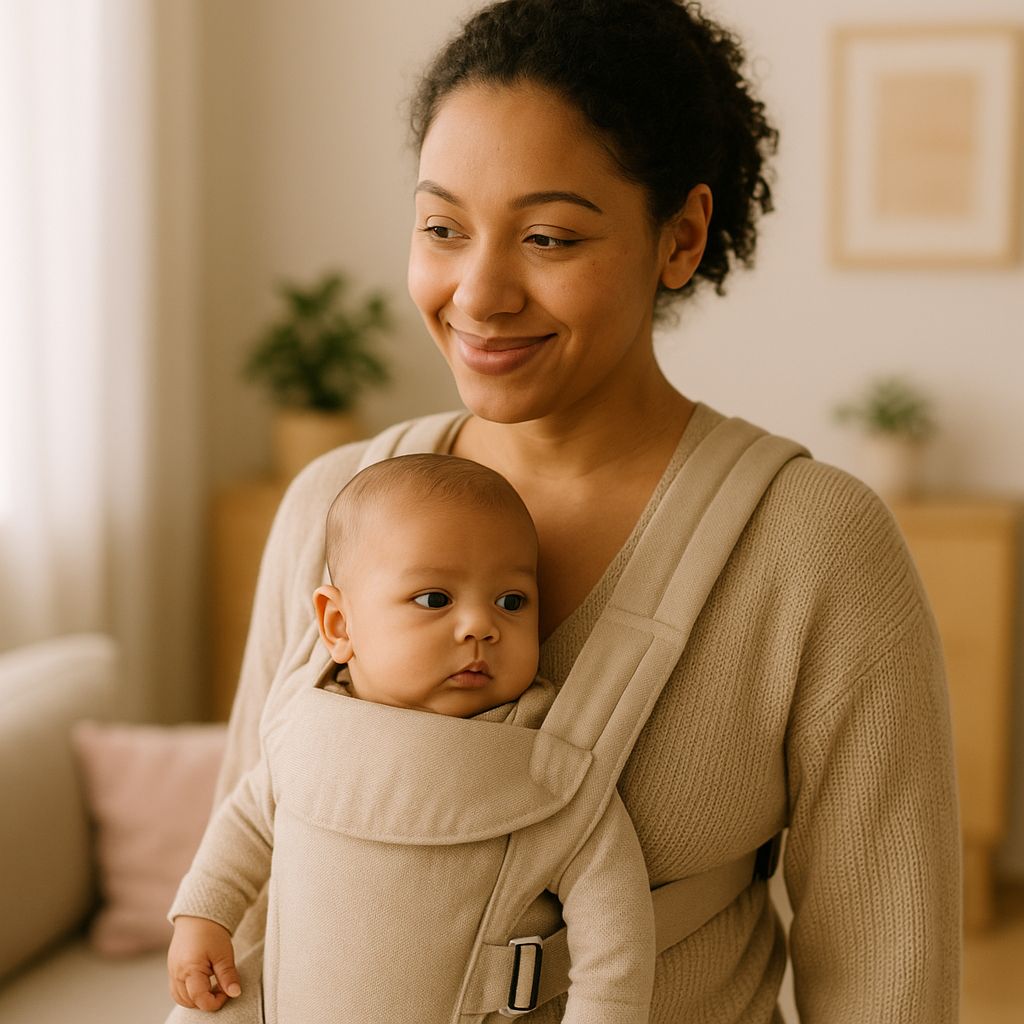
Soft-Structured Carriers (like the popular Ergobaby or BabyBjörn) have padded shoulder straps, waist belts, and buckles for easy adjustment. Most can be used from infancy (sometimes with an insert) through toddlerhood.
- Pros: Easy to use, offers ergonomic support, distributes weight across shoulders and hips, often grows with your child.
- Cons: Bulkier than wraps or slings, may not fit all body types perfectly, can be expensive.
- Best For: Parents seeking convenience, those carrying older babies or toddlers, long outings.
4. Mei-Tai Carriers
Mei-Tai carriers are a hybrid between a wrap and an SSC. They consist of a square or rectangular body panel with four straps (two for the shoulders, two for the waist) that you tie.
- Pros: Highly adjustable, offers ergonomic carrying positions, suitable for front and back carries.
- Cons: Learning curve for tying, less padding than SSCs.
- Best For: Parents who want adjustability and traditional styling.
5. Frame Backpacks
Frame backpacks are structured carriers designed for older babies and toddlers (usually 6 months+), featuring a metal frame for support. They’re ideal for hiking and long walks.
- Pros: Excellent support for heavy children, lots of storage, good for outdoor adventures.
- Cons: Bulky, not suitable for infants, higher price point.
- Best For: Active families, hiking, travel.
Key Benefits of Babywearing
Regardless of the type you choose, babywearing offers a host of developmental, emotional, and practical benefits:
- Supports Emotional Security: Being close to a caregiver helps regulate baby’s heart rate, breathing, and stress levels.
- Encourages Physical Development: Upright positioning aids digestion, reduces reflux, and promotes hip health when used correctly.
- Enhances Parental Confidence: Many parents report feeling more attuned to their baby’s needs when babywearing.
- Facilitates Breastfeeding: Certain carriers make discreet on-the-go feeding possible.
- Enables Multitasking: Keep your baby close while caring for older children, cooking, or running errands.
How to Choose the Best Baby Carrier
With so many options, selecting the right baby carrier means considering several factors:
1. Age and Weight Appropriateness
Check the manufacturer’s guidelines for age and weight. Some carriers are only suitable for newborns with inserts, while others are designed for toddlers.
2. Ergonomics and Support
Look for carriers that hold your baby in a natural “M” position—knees higher than their bottom, with legs spread. This is crucial for healthy hip and spine development, especially in the first year.
3. Comfort for Caregiver
Padded shoulder straps and a supportive waist belt can make a world of difference if you plan to carry your baby for extended periods. Try on different styles to see what feels best for your body type.
4. Adjustability and Fit
If more than one caregiver will use the carrier, choose a design with adjustable straps or fabric to ensure a safe fit for everyone.
5. Ease of Use
Some carriers require practice to use safely (like wraps), while others (like SSCs) are more intuitive. Consider how much time and effort you’re willing to invest in learning to use the carrier.
6. Climate and Material
Lightweight, breathable fabrics are essential for warmer climates, while padded or fleece-lined carriers provide extra warmth for winter outings.
7. Lifestyle and Activities
If you’re often on the go or enjoy hiking, a frame backpack may be ideal. For quick errands or breastfeeding, a ring sling or wrap could be more convenient.
8. Budget
Baby carriers range from affordable to high-end. While more expensive options often feature added comfort or versatility, there are excellent choices at every price point.
Baby Carrier Safety Tips
Safety should always be your top priority when babywearing. Follow these tips to ensure your baby stays secure and comfortable:
- Follow the T.I.C.K.S. Rule:
- Tight: Carrier should hold your baby snugly against you.
- In View at All Times: Baby’s face should be visible.
- Close Enough to Kiss: You should be able to kiss your baby’s head easily.
- Keep Chin Off Chest: At least a finger’s width between baby’s chin and chest.
- Supported Back: Baby’s back should be supported in a natural position.
- Check for wear and tear before each use.
- Follow the manufacturer’s instructions carefully.
- Ensure baby’s airway is always clear.
- Dress your baby appropriately for the weather, as carriers can be warm.
Comparing Popular Baby Carrier Brands
While the best baby carrier is one that fits your needs and body, here are a few well-known brands to consider:
- Ergobaby: Known for ergonomic SSCs with infant inserts.
- BabyBjörn: Offers user-friendly, adjustable SSCs.
- Boba: Popular for wraps and SSCs suitable for newborns.
- Tula: Stylish SSCs and ring slings, often with fun patterns.
- Moby: Famous for soft, stretchy wraps for newborns.
Frequently Asked Questions About Baby Carriers
- What is the safest type of baby carrier?
- The safest carrier supports your baby’s hips and spine ergonomically, fits your body well, and is used according to the manufacturer’s instructions. Soft-structured carriers and wraps are highly recommended.
- At what age can I start using a baby carrier?
- You can use a carrier from birth if it’s designed for newborns, sometimes with an insert. Always check the manufacturer's age and weight recommendations.
- How long can I carry my baby in a carrier?
- Babies can be carried for several hours a day as long as they and you are comfortable. Watch for signs of discomfort or overheating.
- Are baby carriers safe for baby’s hips?
- Yes, when used correctly. Choose carriers that support the thighs and allow your baby’s legs to spread naturally, forming an 'M' shape.
Conclusion
A baby carrier is an invaluable tool for nurturing connection, supporting development, and making life with a little one a bit easier. By understanding the types, benefits, and safety considerations, you can confidently choose a carrier that fits your family's unique needs and lifestyle. Whenever possible, try before you buy, and remember: the best baby carrier is the one that works for both you and your baby.