
Travel Sleep Tips for Babies: Making Rest Easy on the Go
Traveling with your baby can be exciting, but it often brings anxiety about sleep disruptions. Whether you're heading out for a family vacation, visiting relatives, or embarking on a road trip, maintaining your baby's sleep routine is key to enjoying a restful journey together. In this comprehensive guide, we'll share expert travel sleep tips for babies, including packing essentials, routines, troubleshooting advice, and ways to ease transitions—so your little one (and you!) can sleep soundly wherever life takes you.
Why Baby Sleep Can Be Challenging During Travel
Babies thrive on routine and familiar environments. Travel introduces new sights, sounds, smells, and schedules—all of which can disrupt your baby's sense of comfort. Sleep challenges may arise from:
- Unfamiliar sleeping arrangements
- Changes in time zones (jet lag)
- Noise or light in new places
- Excitement and stimulation during travel
- Altered nap and bedtime schedules
Understanding these challenges is the first step toward a smoother, more restful travel experience.
Pre-Travel Preparation: Setting Your Baby Up for Success
Before you leave, some thoughtful preparations can make all the difference. Here’s how to set the stage for healthy sleep:
- Stick to Regular Routines: In the days leading up to travel, keep sleep and feeding schedules as consistent as possible. This familiarity helps your baby feel secure.
- Gradually Adjust Sleep Times: If you’re traveling across time zones, begin shifting your baby’s sleep schedule by 15-30 minutes each day to ease the transition.
- Pack Sleep Essentials: Bring items that signal sleep to your baby—favorite blanket, stuffed animal, sleep sack, white noise machine, blackout curtains, and familiar pajamas.
- Prepare a Portable Sleep Space: Test out your travel crib or bassinet at home so your baby feels comfortable in it.
Travel Sleep Packing Checklist
Having the right essentials on hand can transform any space into a cozy sleep environment:
- Portable crib or bassinet
- Familiar bedding (sheet, blanket)
- Sleep sack or swaddle
- Favorite stuffed animal or lovey
- White noise machine or app
- Blackout shades or portable blinds
- Baby monitor (if needed)
- Nightlight
- Comfortable pajamas
- Pacifiers (if used)
- Extra diapers and wipes
On-the-Go Sleep: Car, Plane, and Train Tips
Car Travel
For road trips, plan your departure around nap times. Many babies sleep well in car seats thanks to the gentle motion. To optimize car sleep:
- Keep the car cool and comfortable.
- Use sun shades on windows to block bright light.
- Play white noise or soft music.
- Bring favorite comfort items within reach.
- Limit stops during nap times, if possible.
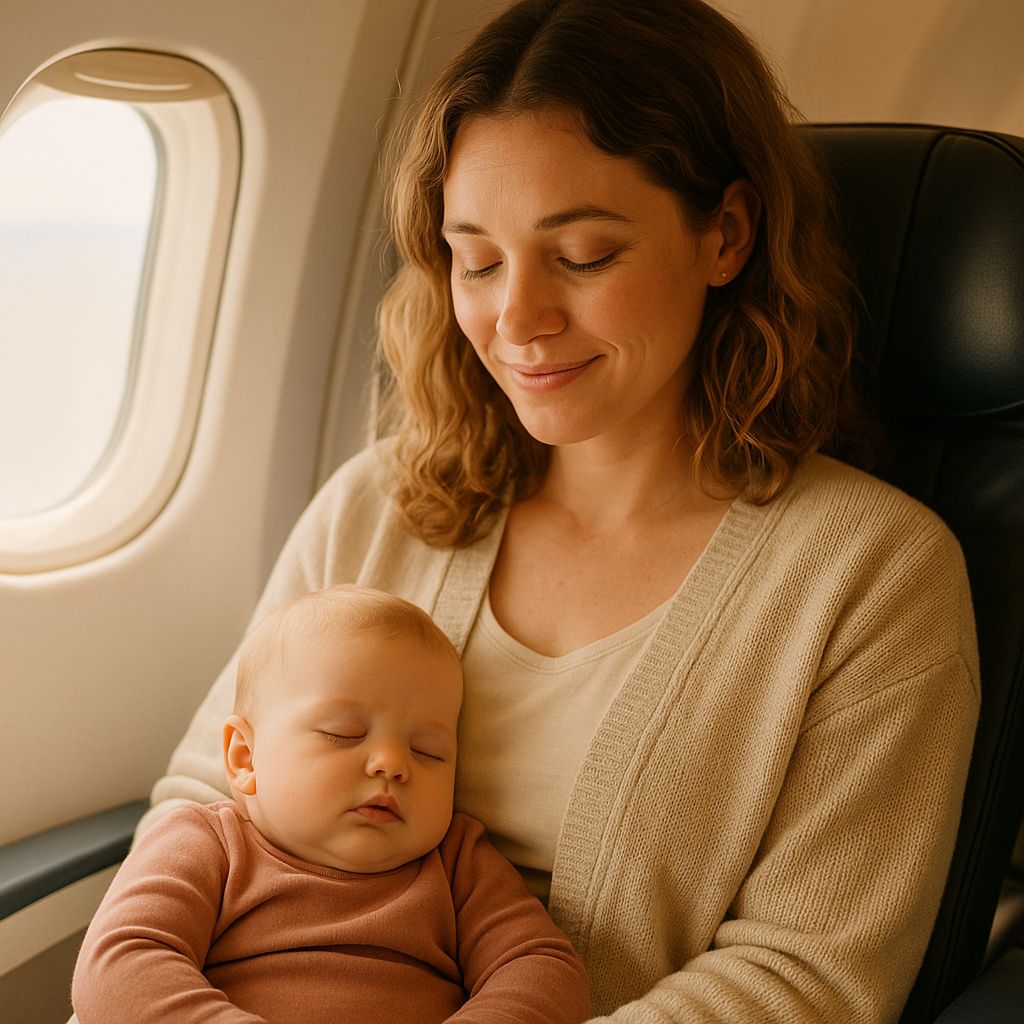
Airplane Travel
Flying with a baby requires extra planning for sleep:
- Book flights that align with nap or bedtime.
- Dress your baby in comfortable layers.
- Use a baby carrier for soothing and naps.
- Ask about bassinets for long-haul flights.
- Bring your baby’s sleep items for comfort.
- Feed during take-off and landing to ease ear pressure.
Train and Bus Travel
Similar to car travel, trains and buses can lull babies to sleep. Try to:
- Use a baby carrier for comfort.
- Keep noise and light to a minimum.
- Stick to nap routines as much as possible.
Creating a Sleep-Friendly Environment Wherever You Go
Babies sleep best in familiar, quiet, and dark environments. Here’s how to recreate your home sleep space while traveling:
- Set Up the Sleep Space First: Upon arrival, prioritize setting up your baby’s crib or bassinet with their own bedding and comfort items.
- Use Blackout Shades: Portable blackout curtains or shades can block unfamiliar light and help signal sleep time.
- White Noise: A white noise machine or app masks new sounds and soothes your baby.
- Maintain Bedtime Rituals: Keep pre-sleep activities consistent—bath, story, lullabies—no matter where you are.
- Keep Sleepwear Consistent: Dressing your baby in their usual pajamas helps signal it’s time for sleep.
Handling Sleep Disruptions and Troubleshooting
Travel can bring unexpected challenges. Here’s how to handle common sleep disruptions:
- Overstimulation: New sights and sounds can overwhelm your baby. Give them quiet time before naps and bedtime to unwind.
- Difficulty Settling: If your baby is restless, offer extra cuddles, use white noise, and keep the room dim.
- Night Wakings: Respond with patience. Reassure your baby, keep interactions calm, and stick to your usual settling methods.
- Unfamiliar Environment: Bring familiar scents and textures (bedding, lovey) to help your baby feel secure.
- Jet Lag: Gradually shift sleep times before travel, expose your baby to natural light during the day, and keep nighttime routines consistent.
Adjusting Expectations: Flexibility Is Key
Travel is an adventure, and even with the best preparation, sleep may be less than perfect. Some tips for managing expectations:
- Prioritize Sleep When Possible: Plan activities around naps and bedtime, but allow for some flexibility.
- Accept Temporary Changes: Your baby may need extra cuddles, shorter naps, or a shifted bedtime. This is normal.
- Stay Calm and Patient: Babies pick up on your stress. The more relaxed you are, the better your baby will adapt.
- Return to Routine After Travel: Once home, re-establish your regular sleep schedule and environment to help your baby readjust.
Age-Specific Travel Sleep Tips
Newborns (0-3 Months)
- Newborns often sleep well on the go, but need frequent feeds and diaper changes.
- Keep them swaddled and use a portable bassinet.
Infants (4-12 Months)
- Infants benefit from familiar routines and sleep cues.
- Bring their own bedding and comfort items.
- Use white noise and blackout shades to signal sleep.
Toddlers (12+ Months)
- Toddlers may resist sleep in new environments.
- Involve them in setting up their sleep space.
- Keep consistent bedtime rituals and limit screen time before bed.
Helpful Products for Traveling with Your Baby
- Portable Cribs & Bassinets: Lightweight and easy to assemble, these help recreate a home-like sleep space.
- White Noise Machines: Compact versions or apps are ideal for travel.
- Blackout Curtains: Portable options attach to hotel windows for darkness.
- Sleep Sacks: Safe, cozy, and familiar for your baby.
- Baby Monitor: Useful for larger accommodations.
- Travel Nightlights: Soothes your baby and helps with nighttime feedings.
Tips for Returning Home After Travel
Once you return, your baby may need a few days to readjust. Here’s how to smooth the transition back:
- Re-establish your usual sleep routine and environment.
- Offer extra comfort and patience if sleep is disrupted.
- Gradually adjust sleep times if jet lag was an issue.
- Keep naps and bedtime consistent to signal a return to normalcy.
Expert Advice: When to Seek Help
If your baby continues to struggle with sleep after travel, or if sleep disruptions last more than a week, consult your pediatrician or a certified sleep consultant. Persistent sleep issues may need tailored strategies, especially if your baby has underlying medical or developmental concerns.
Final Thoughts: Embracing the Adventure
Traveling with a baby is a wonderful way to create family memories. With preparation, a flexible mindset, and these expert travel sleep tips for babies, you’ll set the stage for restful nights and happy days—wherever your adventures take you. Remember, every family is unique, so trust your instincts and adapt these tips to suit your baby’s needs. Here's to peaceful sleep and joyful journeys!
Frequently Asked Questions
- How can I help my baby sleep well while traveling?
- Maintain familiar sleep routines, bring comfort items from home, and use portable sleep solutions like travel cribs. Stay flexible and patient as your baby adapts to new environments.
- What should I pack for my baby's sleep while traveling?
- Pack a portable crib, familiar bedding, favorite stuffed animals, white noise machine, blackout shades, and any sleepwear your baby prefers. These items help recreate their usual sleep environment.
- How do I handle jet lag with a baby?
- Gradually adjust your baby’s sleep schedule before travel, expose them to natural light during the day, and keep nighttime routines consistent. Be patient as your baby adapts to new time zones.
- Should I stick to my baby’s regular sleep schedule on vacation?
- It’s helpful to stick to your baby’s sleep schedule as much as possible, but flexibility is key. Prioritize naps and bedtime routines, but allow for some adjustment based on travel activities.
- What if my baby won't sleep in a new environment?
- Try to make the space feel familiar with their own bedding and comfort items. Use white noise to block unfamiliar sounds and maintain consistent sleep routines. It may take a few days for your baby to adjust.