
Introduction
In Indian households, feeding equals love. “Aur thoda khila do” is something almost every mom hears.
But is more feeding always better?
Let’s talk honestly about overfeeding and baby health.
What is Overfeeding in Babies?
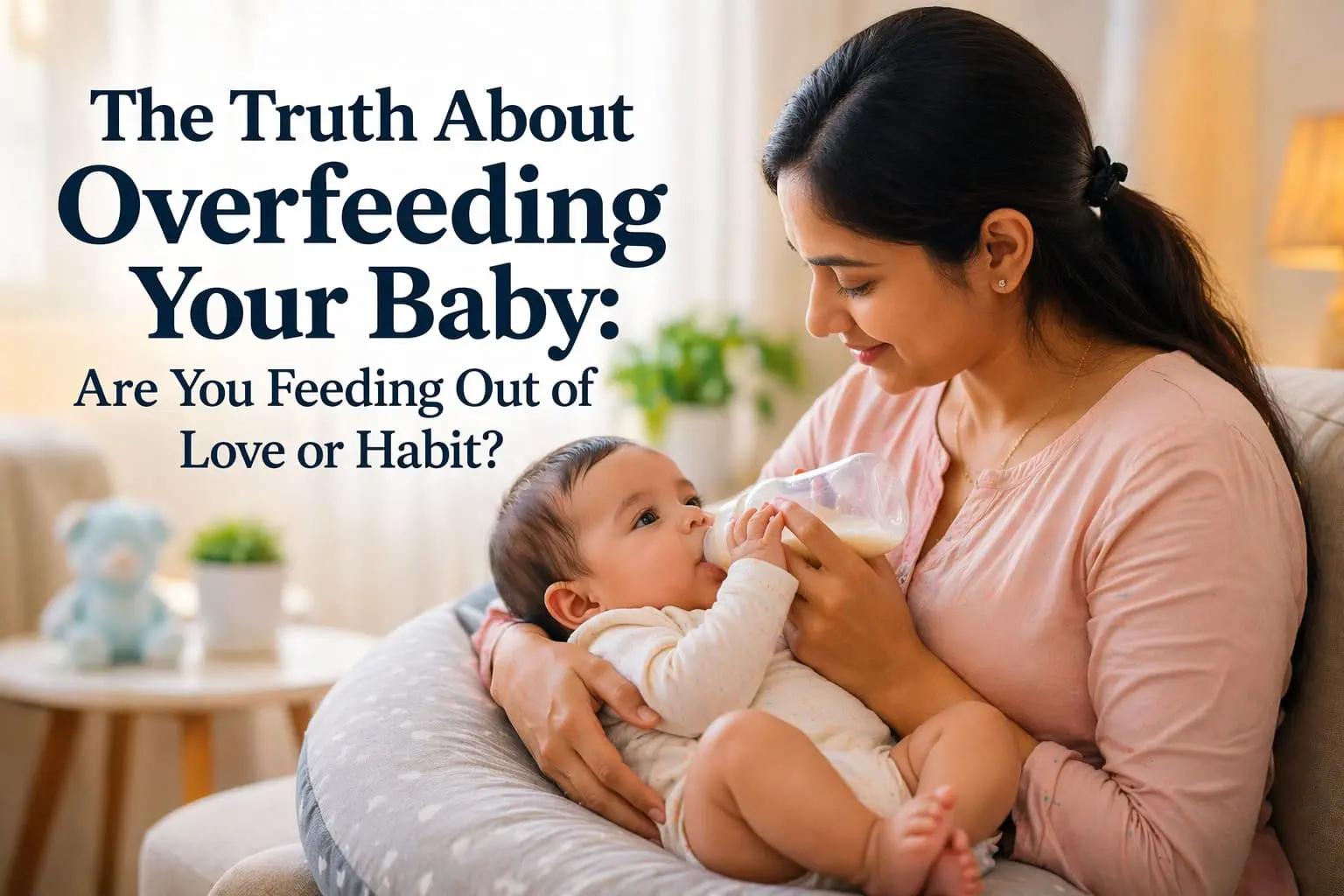
Overfeeding means feeding your baby beyond their natural hunger cues—often out of habit, emotional response, or external pressure.
Signs You Might Be Overfeeding
- Frequent spit-ups after feeding
- Gas and visible discomfort
- Baby turns head away but feeding continues
- Irregular sleep patterns
Why Overfeeding Happens
1. Misreading Cries
Not all crying means hunger. Babies cry for many reasons—discomfort, tiredness, or the need for attention.
2. Pressure from Family
Advice from dadi or nani often comes from love, but it can sometimes lead to overfeeding habits.
3. Fixed Feeding Schedules
Strict schedules may ignore your baby’s natural hunger and fullness cues.
Healthy Feeding Practices
1. Learn Hunger Cues
- Lip smacking
- Rooting reflex (turning head toward touch)
2. Follow Baby-Led Feeding
Let your baby decide how much to eat. Trust their natural instincts.
3. Use Proper Feeding Support
Choose the right feeding tools and support systems that make feeding comfortable for both baby and parent.
You can explore baby feeding and care solutions designed for safe and healthy feeding routines.
Do’s and Don’ts
✅ Do’s
- Feed when your baby shows hunger cues
- Always burp your baby after feeding
- Observe your baby’s behavior closely
Keeping essentials like baby bibs handy can make feeding and burping time much cleaner and stress-free.
❌ Don’ts
- Don’t force-feed your baby
- Avoid feeding just to stop crying
- Don’t compare your baby’s intake with others
When to Consult a Doctor
- Excessive vomiting
- Poor weight gain
- Severe discomfort after feeding
FAQs
1. Can overfeeding harm babies?
Yes, it can lead to digestive issues like gas, discomfort, and frequent spit-ups.
2. How do I know my baby is full?
Babies often turn their head away, stop sucking, or become calm when full.
3. Is crying always a sign of hunger?
No, babies cry for various reasons beyond hunger.
4. Should I follow a strict feeding schedule?
Flexible, baby-led feeding is usually more effective.
5. What about night feeds?
Feed your baby at night only if they show genuine hunger cues.
Conclusion
Feeding is love—but understanding your baby’s needs is true care.
Trust your baby’s signals and focus on balance ❤️