Tips to Handle Baby Ears During Flights: A Parent’s Guide to Happy Travels
Few things can strike fear into the heart of a traveling parent quite like the possibility of a fussy, uncomfortable baby on an airplane. One of the most common reasons for distress? Ear pain caused by pressure changes during takeoff and landing. If you’re gearing up for a flight with your little one, you’re probably wondering how to handle baby ears during flights and ensure a smoother journey for everyone involved. Let’s dive into expert-backed strategies to keep your baby comfortable, calm, and giggle-ready at 30,000 feet.
Why Do Babies Experience Ear Discomfort on Airplanes?
Before we get into the tips, it helps to understand why babies are particularly prone to ear pain while flying. The culprit is the Eustachian tube—a small passage that connects the middle ear to the back of the nose and throat. In adults, swallowing or yawning helps equalize pressure, but in babies, the Eustachian tube is smaller, more horizontal, and less efficient. This means that rapid changes in cabin pressure during takeoff and landing can lead to a painful buildup of pressure in their little ears.
How Can You Tell If Your Baby’s Ears Hurt?
- Increased irritability or crying, especially during descent or climb
- Pawing or tugging at their ears
- Difficulty feeding or refusing to suck
While not every baby will react the same way, being prepared can make all the difference.
Top Tips to Handle Baby Ears During Flights
1. Time Feedings Strategically
One of the simplest and most effective ways to help your baby equalize ear pressure is through sucking. Plan to breastfeed or offer a bottle during takeoff and landing. Sucking and swallowing activate the Eustachian tube and can relieve or prevent the build-up of pressure. If your baby uses a pacifier, this can be a great alternative, especially if they aren’t hungry at that moment.
2. Use a Pacifier (or a Clean Finger!)
Pacifiers are more than just a comfort item during flights—they can be a secret weapon against ear pain. If your baby doesn’t take a pacifier, offering a clean finger to suck on can also do the trick. The key is promoting the swallowing motion, which relieves the pressure.
3. Keep Your Baby Hydrated
Cabin air is notoriously dry, and dehydration can make secretions thicker, making it harder for your baby to clear their ears. Offer small, frequent feeds of breast milk, formula, or water (if your baby is over 6 months old and your pediatrician approves). This not only keeps them hydrated but also encourages swallowing.
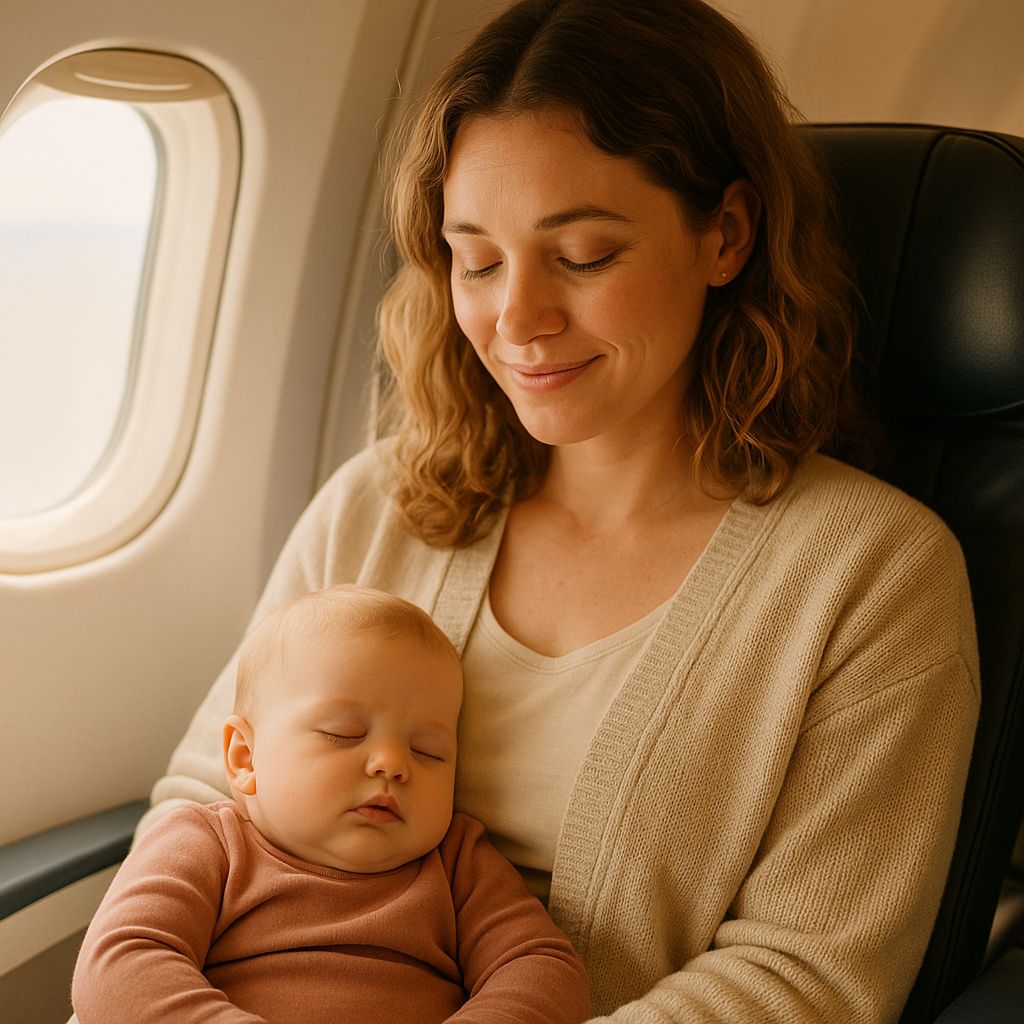
4. Try to Fly During Nap Times
Babies are generally happier and more relaxed when they’re well-rested. If possible, schedule flights during times when your baby usually naps. A calm or sleeping baby is less likely to be bothered by ear pressure, and if they do experience discomfort, the act of sucking while drifting off may help naturally relieve it.
5. Use Baby Ear Protection (With Caution)
There are specialized ear protection products, such as baby ear muffs or pressure-equalizing earplugs designed for children. While these can sometimes help muffle loud noises and reduce discomfort, always consult your pediatrician before using any insertable ear products on infants, as their ear canals are sensitive and still developing.
6. Keep a Calm Environment
Your baby is highly attuned to your mood. If you’re stressed, they may pick up on it. Bring along familiar comfort items (blankets, stuffed animals, or a favorite toy), and maintain your usual soothing routines. Gentle rocking, shushing, or white noise apps can help distract from discomfort.
7. Avoid Flying If Baby is Sick
If your baby has a cold, allergies, or an ear infection, their Eustachian tubes may be even more blocked. This can lead to increased pain and, rarely, complications such as a ruptured eardrum. If possible, reschedule your flight. If you must fly, consult your pediatrician—sometimes saline nasal drops or medication (for older infants) may be recommended.
8. Prepare for Security and Boarding
Arriving early and giving yourself plenty of time minimizes the rush and stress associated with air travel. Use a baby carrier or stroller to keep your hands free, and have bottles, pacifiers, or snacks easily accessible. The less flustered you are, the more you can focus on your baby’s needs.
9. Use Swallowing Games for Older Infants
If your baby is old enough for snacks (usually around 6 months), offer small bites of soft fruit, puffs, or even sips of water during takeoff and landing. Turning ear pressure relief into a game (e.g., "Can you make the silly swallowing face?") can keep things light-hearted and fun.
10. Know When to Seek Help
If your baby is extremely fussy, inconsolable, or shows signs of severe ear pain (such as high fever, fluid leaking from the ear, or persistent crying long after landing), consult a healthcare provider as soon as possible. Most ear discomfort resolves quickly, but it’s always best to err on the side of caution.
Bonus Packing List: What to Bring for Baby’s Ears on Flights
- Bottles (pre-filled if possible) or a ready-to-nurse setup
- Pacifiers (bring extras in case one gets dropped!)
- Favorite comfort items (blanket, toy, or lovey)
- Baby-safe ear protection (ask your doctor first)
- Small snacks or water for older infants
- Saline nasal spray (for stuffy noses)
- Antibacterial wipes for quick clean-ups
Frequently Asked Questions
- Why do babies experience ear pain during flights?
- Babies have smaller and less developed Eustachian tubes, making it harder for them to equalize ear pressure during altitude changes, especially during takeoff and landing. This often leads to discomfort or pain.
- What can I do if my baby cries due to ear pain on a plane?
- Offer breast or bottle feeding, use a pacifier, or gently encourage swallowing. These actions help open the Eustachian tubes and relieve pressure.
- Are there any products to protect my baby’s ears during flights?
- Yes, there are specialized ear protection products like baby ear muffs or pressure-equalizing earplugs, but always consult your pediatrician before using them on infants.
- Is it safe to fly with a baby who has a cold or ear infection?
- Flying with a sick baby can worsen ear pain and discomfort. Consult your pediatrician before traveling if your baby shows signs of illness.
Final Thoughts: Happy Skies Ahead!
While the thought of flying with a baby can be nerve-wracking, a little preparation and understanding of how to manage your baby’s ears during flights can make a world of difference. Remember, most babies bounce back quickly from ear discomfort, and with these tips up your sleeve, you’re well on your way to a peaceful flight for your baby—and you!
Safe travels and don’t forget to pack those giggles!