
Talking to Your Baby: Benefits and Techniques
Have you ever found yourself narrating your day to your newborn or singing silly songs during diaper changes? If so, you’re doing much more than just filling the silence. Talking to your baby is one of the most powerful tools you have for nurturing their development. Decades of research show that early, consistent, and loving communication has far-reaching effects on a child’s language skills, social-emotional health, and even future academic success.
Why Talking to Your Baby Matters
Babies are born ready to learn. Even before they can utter their first word, their brains are busy absorbing the sounds, rhythms, and emotions embedded in your speech. By engaging in regular conversations, you’re helping to build the neural pathways that will serve as the foundation for future learning. Here’s how talking to your baby makes a lasting impact:
- Language Development: The more words babies hear, the larger their vocabulary and the stronger their language skills become. Early exposure to speech helps babies learn the rules of language, such as grammar and syntax, long before they start talking.
- Cognitive Growth: Communication isn’t just about words—it’s about making connections. Talking to your baby stimulates brain development, improves memory, and strengthens problem-solving abilities.
- Social-Emotional Bonding: Responsive conversations help babies feel valued and loved, laying the groundwork for secure attachment. This emotional bond is crucial for healthy social and emotional development.
- Academic Success: Studies show that early language exposure correlates with higher IQ scores and better performance in school years later.
The Science Behind Parent-Baby Communication
Dr. Betty Hart and Dr. Todd Risley’s groundbreaking research in the 1990s found that children who heard more words from their parents in early childhood had higher IQs and larger vocabularies. More recent studies using MRI imaging reveal that conversational turns—back-and-forth exchanges between parent and baby—are especially powerful for brain development.
“Babies are not passive listeners. They are active participants in communication, absorbing language, social cues, and emotional signals from the very beginning.” – Dr. Dana Suskind, author of Thirty Million Words
Techniques for Talking to Your Baby
Not sure how to start? Here are evidence-based strategies to make the most of your interactions:
1. Use "Parentese" (Infant-Directed Speech)
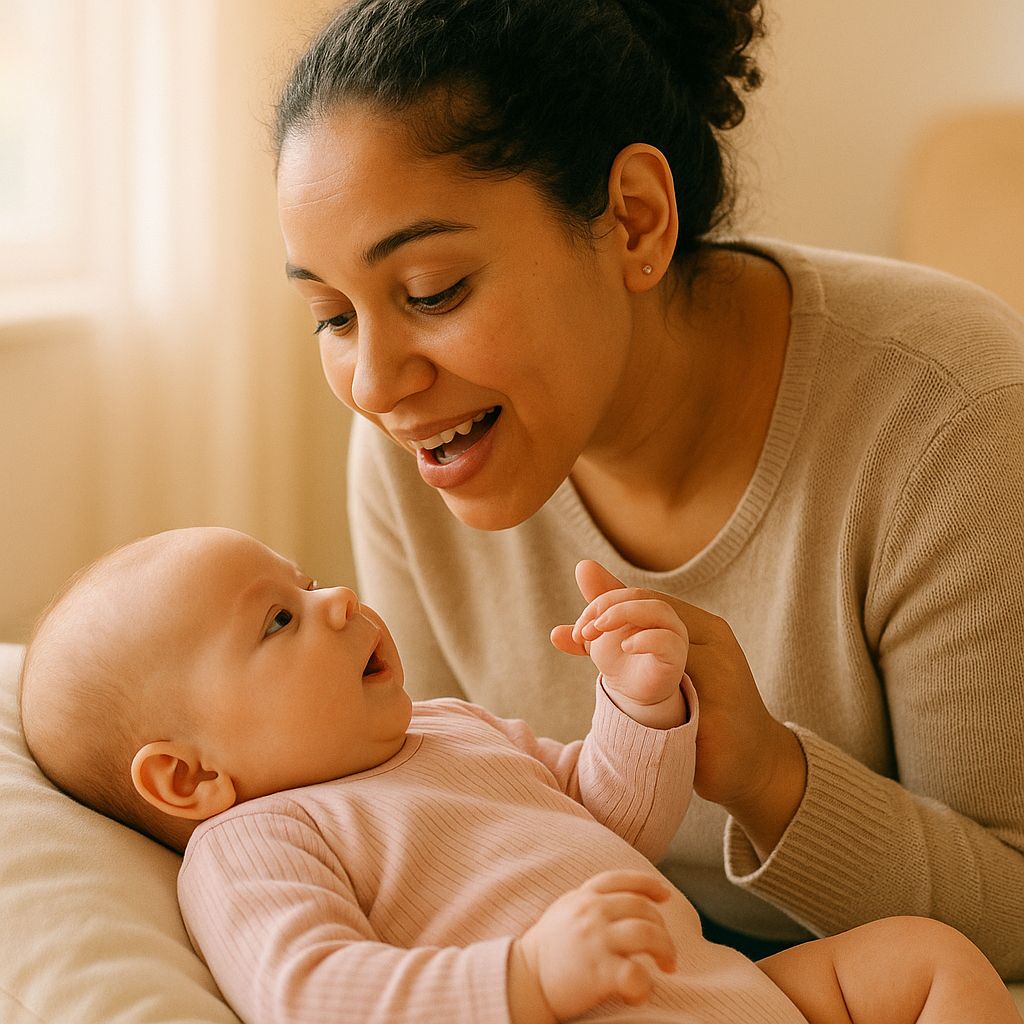
Parentese is the sing-song, high-pitched, exaggerated style that adults naturally use with babies. Research shows that parentese captures a baby’s attention and helps them process language more effectively than regular speech.
- Speak slowly and clearly
- Exaggerate your intonation
- Use simple, repetitive words
- Smile and make eye contact
2. Narrate Everyday Activities
Turn routine tasks into language lessons by describing what you’re doing. For example, “Now we’re putting on your blue socks. One foot, two feet!” This exposes your baby to a rich vocabulary and helps them associate words with actions and objects.
3. Imitate and Expand
If your baby coos or babbles, imitate their sounds and add a little more. For example, if your baby says “ba,” you might respond, “Ba-ba, yes! Are you telling me about your bottle?” This teaches the basics of conversation and encourages vocal experimentation.
4. Ask Questions (and Answer Them)
Ask your baby questions, even if they can’t answer yet. “Are you hungry? Should we get your bottle?” Pause as if waiting for a response, then answer for them. This models turn-taking and the rhythm of conversations.
5. Read Aloud Every Day
Reading is a fantastic way to introduce new words and concepts. Choose simple board books with bright pictures, and point to objects as you name them. Don’t worry if your baby chews on the book—it’s all part of learning!
6. Sing and Rhyme
Babies love music. Singing lullabies, nursery rhymes, or even made-up songs helps babies learn the rhythm and melody of language. Rhymes and repetition make it easier for babies to recognize and remember new words.
7. Follow Your Baby’s Lead
Pay attention to what catches your baby’s eye and talk about it. If they stare at the ceiling fan, say, “You see the fan spinning! Round and round it goes.” This shows your baby that their interests matter and encourages curiosity.
Everyday Moments Are Teaching Moments
You don’t need special toys or structured lessons to support your baby’s language development. Everyday routines—feeding, bathing, changing, or going for a walk—are perfect opportunities for conversation.
- During diaper changes: “Let’s take off your diaper. Oh, it’s a little wet! Now you’re all clean and dry.”
- At mealtime: “Here comes your spoon! Yum, applesauce. Do you like it?”
- On walks: “Look at the big red truck! It’s driving down the street. Can you hear it honk?”
These interactions, repeated dozens of times each day, add up to a powerful learning experience.
Common Concerns and Myths
“Isn’t it silly to talk to a baby who can’t talk back?”
Not at all! Babies are listening and learning from the very beginning. Responsive communication lays the foundation for all future conversations.
“What if I’m not a talkative person?”
You don’t have to be a chatterbox. Focus on quality, not quantity. Narrate what you’re doing, respond to your baby’s cues, and enjoy the moments of connection.
“Should I correct my baby’s ‘baby talk’?”
There’s no need to correct babbling or early words. Instead, model the correct pronunciation by repeating their attempt in the correct form. For example, if your baby says “ba,” you might say, “Yes, that’s your ball!”
Multilingual Families: The Power of Bilingual Talk
Growing up in a multilingual environment offers tremendous cognitive benefits. Babies can distinguish between languages from birth and easily learn multiple languages if regularly exposed. The key is consistency—speak to your baby in the language(s) you are most comfortable with, and don’t worry about confusing them. They will naturally sort out the differences over time.
Encouraging Both Parents and Caregivers to Participate
Fathers, grandparents, and other caregivers play an equally important role in language development. Each person brings a unique vocabulary and communication style, enriching your baby’s learning environment. Encourage everyone who spends time with your baby to talk, read, and sing often.
When to Seek Help
Every baby develops at their own pace, but it’s important to watch for key milestones. By 12 months, most babies:
- Respond to their name
- Babble with sounds that resemble speech
- Use gestures like waving or pointing
- Understand simple words like “no” or “bye-bye”
If you’re concerned about your child’s hearing or language development, talk to your pediatrician or a speech-language pathologist. Early intervention is always beneficial.
Practical Tips to Get Started Today
- Make eye contact and smile when you talk to your baby.
- Pause to give your baby a chance to respond, even if it’s just with a coo or smile.
- Describe what you see, hear, and do throughout the day.
- Read, sing, and play interactive games like peekaboo.
- Limit background noise and screen time to help your baby focus on your voice.
Conclusion: The Gift of Conversation
Talking to your baby may seem simple, but it is one of the most profound investments you can make in their future. Every word, song, and story helps build your child’s brain, strengthens your bond, and sets the stage for a lifetime of learning. So go ahead—narrate your day, sing your heart out, and enjoy the magical journey of early communication. Your words are the most precious gift you can give.