
Safe Storage Tips for Baby Essentials at Home
Welcoming a new baby into your home brings pure joy and a fair share of new gear! From adorable onesies to bottles, diapers, and toys, your baby’s essentials can quickly fill up every corner. But with a little organization and a focus on safety, you can create a calm, clutter-free, and hazard-free environment for your little one to thrive. In this comprehensive guide, we’ll walk you through expert-level safe storage tips for baby essentials at home, with practical solutions for every room and situation.
Why Safe Storage Matters for Baby Essentials
Babies are naturally curious and love to explore their surroundings. Proper storage isn’t just about tidying up; it’s an essential part of baby-proofing your home and keeping your child safe from potential hazards. Well-organized storage also makes your daily routines smoother, saves you time, and helps prevent loss or damage to costly baby gear.
General Safe Storage Principles for Baby Items
- Accessibility vs. Safety: Store everyday essentials like diapers and wipes within easy reach for adults but out of your baby’s reach.
- Separation of Hazardous Items: Never store baby items with cleaning chemicals, sharp objects, or medicines.
- Use Childproof Locks: Install safety latches on cabinets and drawers that contain baby items or hazardous materials.
- Label Everything: Use clear, easy-to-read labels so anyone caring for your baby knows where to find and return items.
- Opt for Clear Containers: Transparent bins make it simple to spot what you need and keep track of supplies at a glance.
- Regularly Declutter: Rotate outgrown clothes, expired products, and rarely used toys to keep storage manageable and safe.
Nursery Storage: Creating a Safe Sanctuary
Your baby’s nursery is the heart of your storage strategy. Here’s how to keep it organized and secure:
1. Clothes and Linens
- Use drawer dividers for organizing onesies, socks, and hats by size and type.
- Store out-of-season or larger clothing in labeled, lidded bins under the crib or in the closet.
- Keep a laundry hamper with a lid to contain soiled items and prevent tipping.
2. Diapers and Changing Supplies
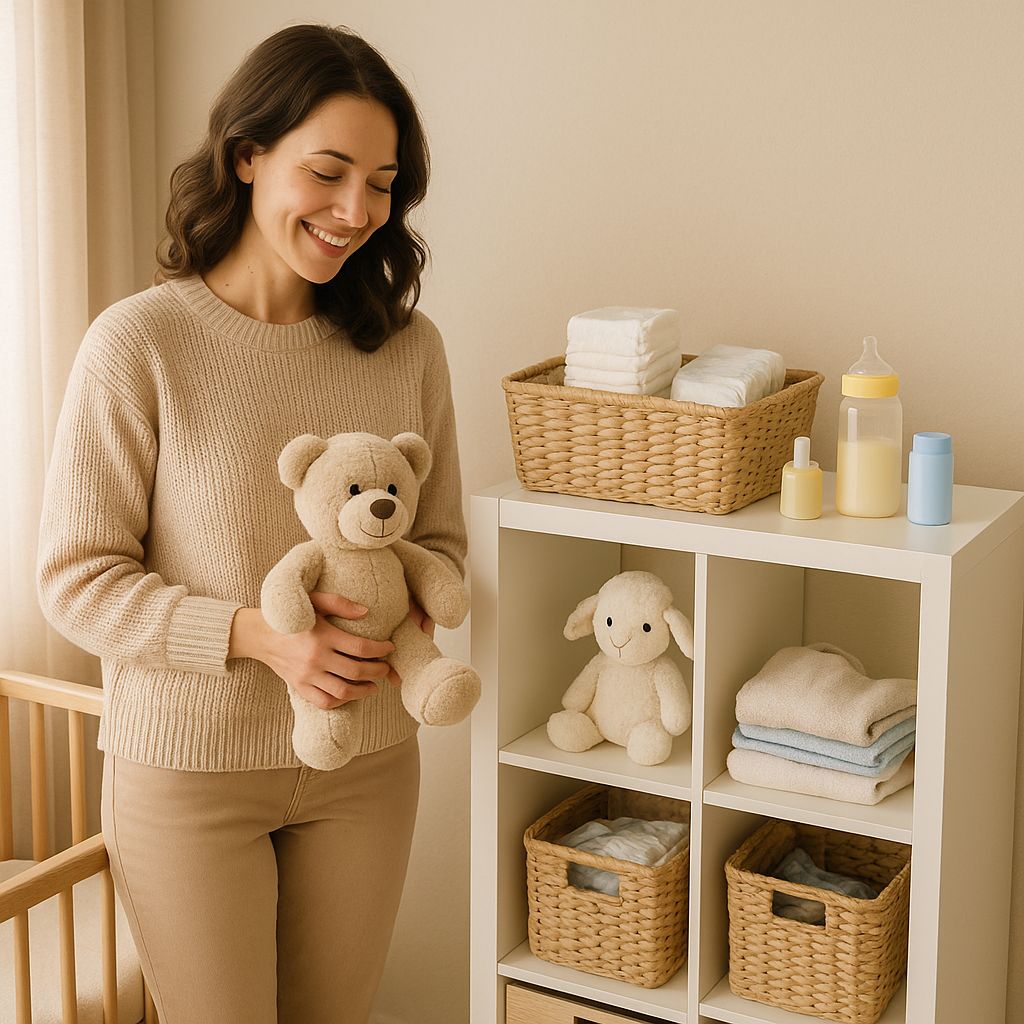
- Designate a changing station with all essentials (diapers, wipes, creams) within arm’s reach.
- Use wall-mounted shelves or caddies for easy access and to free up floor space.
- Store diaper pail away from the baby’s sleeping area to reduce odors and risk of tipping.
3. Toys and Books
- Choose soft-sided bins for toys to avoid bumps and pinched fingers.
- Keep small toys and items with choking hazards on higher shelves, out of baby’s reach.
- Rotate toys regularly to reduce clutter and maintain interest.
Bathroom Storage: Hygiene and Hazard Prevention
Bathrooms can pose many risks for babies. Here’s how to safely store baby bath essentials:
- Install childproof locks on cabinets containing shampoos, soaps, and medications.
- Use a caddy or basket for baby bath supplies and keep it on a high shelf or in a locked cupboard when not in use.
- Hang hooded towels and washcloths on low, sturdy hooks for easy access post-bath.
- Never leave standing water or cleaning products within a child’s reach.
Kitchen Storage: Safe Feeding and Food Prep
The kitchen is a busy hub, and it’s important to keep baby feeding supplies separate from adult items and chemicals.
- Dedicate a baby-only drawer or cabinet for bottles, nipples, spoons, and plates. Use a childproof latch for added security.
- Store formula, baby food, and snacks on a high shelf, away from cleaning products and hot appliances.
- Use dish racks or baskets for air-drying sterilized bottles and utensils.
- Check food expiration dates regularly and dispose of expired products promptly.
On-the-Go: Safe Storage for Travel and Outings
Whether you’re heading to Grandma’s or the park, a well-packed diaper bag is your best friend. Here’s how to organize for safety and convenience:
- Use zippered pouches for separating clean and dirty items.
- Pack travel-size containers for lotions and creams to save space and prevent spills.
- Keep medications and small items in a sealed, labeled compartment.
- Check your bag regularly to remove items that are no longer needed or have expired.
Baby Gear Storage: Keeping Big Items Safe
- When not in use, fold and secure strollers, playpens, and bouncers to prevent accidental collapse or tipping.
- Store car seats, carriers, and swings in a closet or on a low, stable shelf. Avoid high shelves where items could fall.
- Check gear for loose parts and cleanliness before each use, especially after storage.
Creative Space-Saving and Organization Tips
- Utilize over-the-door organizers for shoes, hats, or bath items.
- Hang pocket organizers inside closet doors for pacifiers, socks, or small toys.
- Choose multi-use furniture (like ottomans with hidden storage) to maximize space in small nurseries or apartments.
Decluttering and Rotating Baby Essentials
Babies grow quickly, and so do their needs. Make a habit of reviewing your baby’s essentials monthly:
- Donate or store outgrown clothes and gear for future use or siblings.
- Dispose of expired medicines, formula, and food items.
- Rotate toys and books to keep things fresh and reduce clutter.
Baby-Proofing Your Storage Spaces
- Install magnetic or adhesive safety locks on cabinets and drawers.
- Anchor heavy furniture and storage units to the wall with anti-tip straps.
- Keep cords, plastic bags, and small objects out of reach.
- Double-check that all bins and containers have secure lids and aren’t cracked or broken.
Safe Storage Tips for Multiple Children
If you have more than one child at home, your storage needs become even more complex! Color-code bins by child, store items for older siblings higher up, and involve older kids in keeping shared spaces tidy and safe.
Conclusion: A Safer, More Organized Home
Taking time to implement these safe storage tips for baby essentials at home will give you peace of mind and more time to enjoy with your little one. Remember, organization is a journey, not a destination! Regularly review your storage setup, involve all caregivers, and don’t hesitate to adapt as your family grows and changes. A safe, clutter-free home is the best gift you can give your baby—and yourself.
Frequently Asked Questions
- What are the best storage solutions for baby clothes?
- The best storage solutions for baby clothes include drawer dividers, hanging organizers, labeled bins, and vacuum-sealed bags for off-season items. Always keep everyday clothes within easy reach and store outgrown clothes separately to avoid clutter.
- How do I keep baby feeding supplies safe in the kitchen?
- Store baby feeding supplies in a dedicated cabinet or drawer with childproof latches. Keep items like bottles, formula, and utensils away from cleaning supplies and hot surfaces. Regularly sterilize and check expiry dates to maintain hygiene.
- What should I avoid when storing baby essentials?
- Avoid using heavy boxes or high shelves for frequently-used baby items, storing essentials near hazardous materials, or overstuffing storage spaces. Always keep small items and choking hazards out of your child’s reach.
If you found these tips helpful, share this article with fellow parents or save it for your nursery planning checklist. Happy organizing!