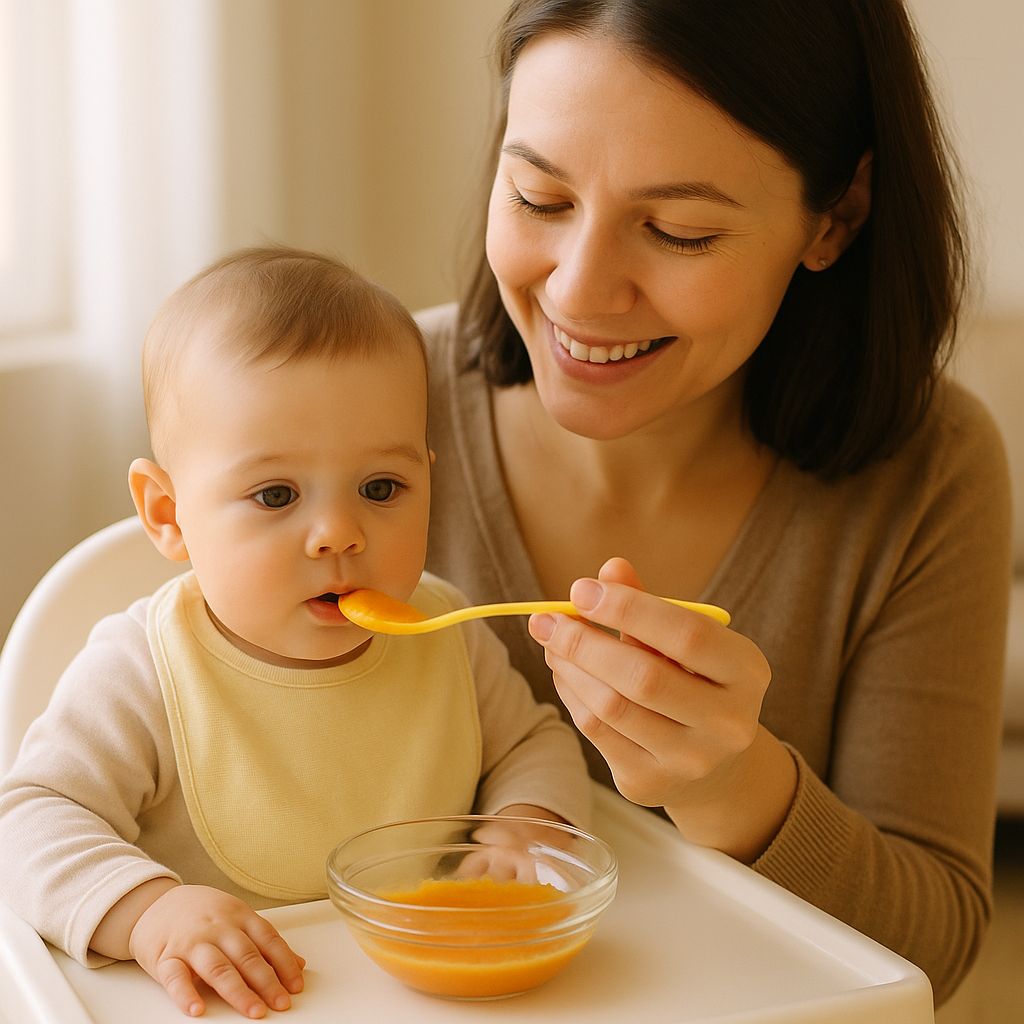

Safe Introduction of Solid Foods: A Parent’s Guide
Introducing your baby to solid foods is an exciting milestone—one that’s often filled with anticipation, curiosity, and, let’s face it, a little bit of anxiety. If you’re wondering when and how to start solids safely, you’re not alone! This guide will walk you through everything you need to know about the safe introduction of solid foods, including signs of readiness, choosing first foods, preventing allergies and choking, and setting your little one up for feeding success.
When Should You Start Solid Foods?
While the World Health Organization (WHO) and the American Academy of Pediatrics (AAP) recommend exclusive breastfeeding (or formula feeding) for the first 6 months, every baby develops at their own pace. Most babies are ready for solid foods around 6 months old, but the key is to watch for readiness cues rather than just the calendar.
Signs Your Baby Is Ready for Solids
- Sits up with minimal support and has good head control
- Shows interest in food (watches you eat, reaches for food, opens mouth when food approaches)
- Loses the tongue-thrust reflex (doesn’t automatically push solids out with their tongue)
- Can close lips around a spoon and move food to the back of the mouth to swallow
Tip: If your baby was born prematurely or has health concerns, consult your pediatrician for personalized guidance.
How to Start: Baby’s First Foods
Choosing your baby’s first foods can feel overwhelming—should you start with rice cereal, vegetables, fruits, or meats? The good news: there’s no single “right” first food. The main goal is to offer single-ingredient, iron-rich foods one at a time.
Iron Is Important!
By around 6 months, babies’ natural iron stores begin to drop. That’s why iron-rich foods are a great place to start:
- Iron-fortified infant cereals (oatmeal, barley, or rice cereal)
- Pureed meats (beef, chicken, turkey)
- Cooked and pureed beans or lentils
- Mashed tofu or well-cooked eggs
Other Great First Foods
- Pureed vegetables (sweet potatoes, carrots, peas, squash)
- Mashed fruits (bananas, avocados, pears, apples)
- Full-fat plain yogurt (for babies over 6 months)
Introduce one new food every 3-5 days to monitor for allergies or sensitivities.
Purees vs. Baby-Led Weaning: What’s Best?
There’s no one-size-fits-all method—many parents choose purees, baby-led weaning (BLW), or a combination. Here’s a quick rundown:
Puréed Foods
- Start with thin, smooth textures and gradually thicken as your baby gets used to eating.
- Feed with a soft-tipped spoon, allowing baby to guide the pace.
Baby-Led Weaning (BLW)
- Offers soft, appropriately-sized finger foods for babies to feed themselves.
- Encourages self-regulation, fine motor skills, and family meals.
- Examples: Soft-cooked vegetable sticks, ripe banana spears, scrambled egg pieces.
Safety first! BLW is not recommended before 6 months, and foods must be soft and in shapes babies can grasp easily.
Preventing Choking: Top Safety Tips
Choking is a major concern for parents, but with a few precautions, you can make mealtime safe and enjoyable:
- Always supervise your baby during meals—never leave them alone with food.
- Have your baby sit upright (not reclined) in a high chair or on your lap.
- Offer soft, easily mashable foods that your baby can squish between their fingers.
- Cut foods into small, age-appropriate pieces (e.g., quartered grapes, shredded meats).
- Avoid hard, round, sticky, or tough foods. Choking hazards include:
- Whole grapes, cherry tomatoes, and large berries (cut or mash them!)
- Nuts, popcorn, chips, pretzels
- Chunks of raw vegetables or hard fruit
- Chunks of meat or cheese
- Nut butters (spread thinly or mix into other foods)
Learn infant choking first aid—it’s a skill every parent and caregiver should have.
Introducing Allergens: What the Latest Research Says
For years, parents were advised to delay allergenic foods like peanuts, eggs, and fish. But new research shows that early introduction (after 6 months) may actually help prevent allergies—especially in high-risk babies.
How to Introduce Common Allergens Safely
- Introduce one common allergen at a time (e.g., peanut, egg, dairy, wheat, soy, fish, sesame, tree nuts, shellfish).
- Start with a small amount and watch for reactions for a few days before trying another new food.
- Mix allergenic foods into familiar foods (e.g., thin peanut butter in oatmeal).
- If your baby has severe eczema or a known allergy, talk to your pediatrician before introducing allergens.
Signs of an allergic reaction include hives, vomiting, swelling, difficulty breathing, or sudden lethargy. Seek emergency help if you see these symptoms.
How Much and How Often? Feeding Milestones
Solid foods are meant to complement, not replace, breast milk or formula in the first year. Here’s what to expect:
- 6–7 months: Start with 1–2 tablespoons of food once a day, then gradually increase to 2–3 meals a day.
- 8–9 months: Offer 2–3 meals plus a snack, increasing variety and textures.
- 10–12 months: Most babies eat 3 meals and 1–2 snacks a day. Offer family foods in safe sizes and textures.
Let your baby’s appetite and cues guide portion sizes—they’re very good at self-regulating!
Mealtime Tips: Making Solids Fun and Stress-Free
- Let your baby explore food—even if it gets messy! Playing with food is part of learning.
- Eat together as much as possible; babies learn by watching you.
- Don’t force-feed. Allow your baby to accept or refuse food—no pressure!
- Introduce a variety of flavors and textures to help prevent picky eating later.
- Offer water in a small cup with meals (not juice or sugary drinks).
- Be patient—some babies need several tries before accepting a new food.
Frequently Asked Questions
- When is the best time to start solid foods?
- Most babies are ready around 6 months, but watch for readiness signs like sitting with support, good head control, and interest in food.
- What foods should I introduce first?
- Single-ingredient, iron-rich foods like pureed meats, iron-fortified cereals, and cooked vegetables are great first choices.
- How can I prevent choking?
- Always supervise meals, offer soft and small pieces, and avoid common choking hazards like whole grapes, nuts, and large chunks of food.
- How do I introduce common allergens?
- Start with small amounts of one allergen at a time, monitoring for reactions. Early introduction can help reduce allergy risk.
When to Call Your Pediatrician
- Your baby isn’t interested in solids by 7–8 months
- Shows signs of food allergy or intolerance (rash, vomiting, swelling, diarrhea)
- Coughs, gags, or chokes persistently during feeding
- Has difficulty swallowing or chewing
Final Thoughts
Introducing solids is a journey—expect a few funny faces, food flings, and messy moments! Keep the focus on fun, safety, and exposure to a variety of foods. Every baby is different, so trust your instincts and your baby’s cues. If you have questions or concerns, your pediatrician is your best resource. Happy feeding adventures!