
Physical Development Stages in Babies Explained
Watching your baby grow is a remarkable journey filled with anticipation, joy, and sometimes a little anxiety. Understanding the physical development stages in babies can help parents and caregivers support their child's growth and recognize normal variations. This comprehensive guide examines the milestones from birth through toddlerhood, providing expert insights, tips, and reassurances for every step.
Why Physical Development Matters
Physical development refers to the progression of gross and fine motor skills, strength, coordination, and bodily control in babies. These milestones are not only exciting but are crucial for overall development, enabling children to explore their environment, learn, and interact with others. The stages of physical development lay the foundation for future skills, independence, and confidence.
Understanding Developmental Milestones
Developmental milestones are behaviors or physical skills seen in infants and children as they grow and develop. While all babies follow a similar sequence, the exact timing varies. Milestones provide a framework for tracking progress and identifying potential delays.
Newborn Phase (0-2 Months)
- Reflexes: Newborns exhibit reflexes such as the Moro (startle), rooting, sucking, and grasping. These are automatic responses that aid in survival.
- Limited Movement: Movements are mostly jerky and uncoordinated, with the baby unable to control their head or limbs.
- Head Control: By 1-2 months, babies may briefly lift their head when lying on their stomach.
Infant Stage (2-6 Months)
- Improved Head Control: Around 3 months, babies gain better control, holding their head steady when upright.
- Tummy Time Benefits: Supervised tummy time helps strengthen neck, shoulder, and arm muscles.
- Rolling Over: Most babies begin to roll from tummy to back around 4 months, and from back to tummy by 5-6 months.
- Grasping Objects: Fine motor skills emerge as babies start reaching for and grasping toys.
Early Mobility (6-9 Months)
- Sitting: By 6 months, many babies can sit with support, progressing to sitting independently by 8 months.
- Reaching and Transferring: Babies learn to transfer objects from hand to hand, enhancing coordination.
- Beginning to Crawl: Crawling typically starts between 6 and 10 months, though some babies may scoot or roll instead.
Advanced Mobility (9-12 Months)
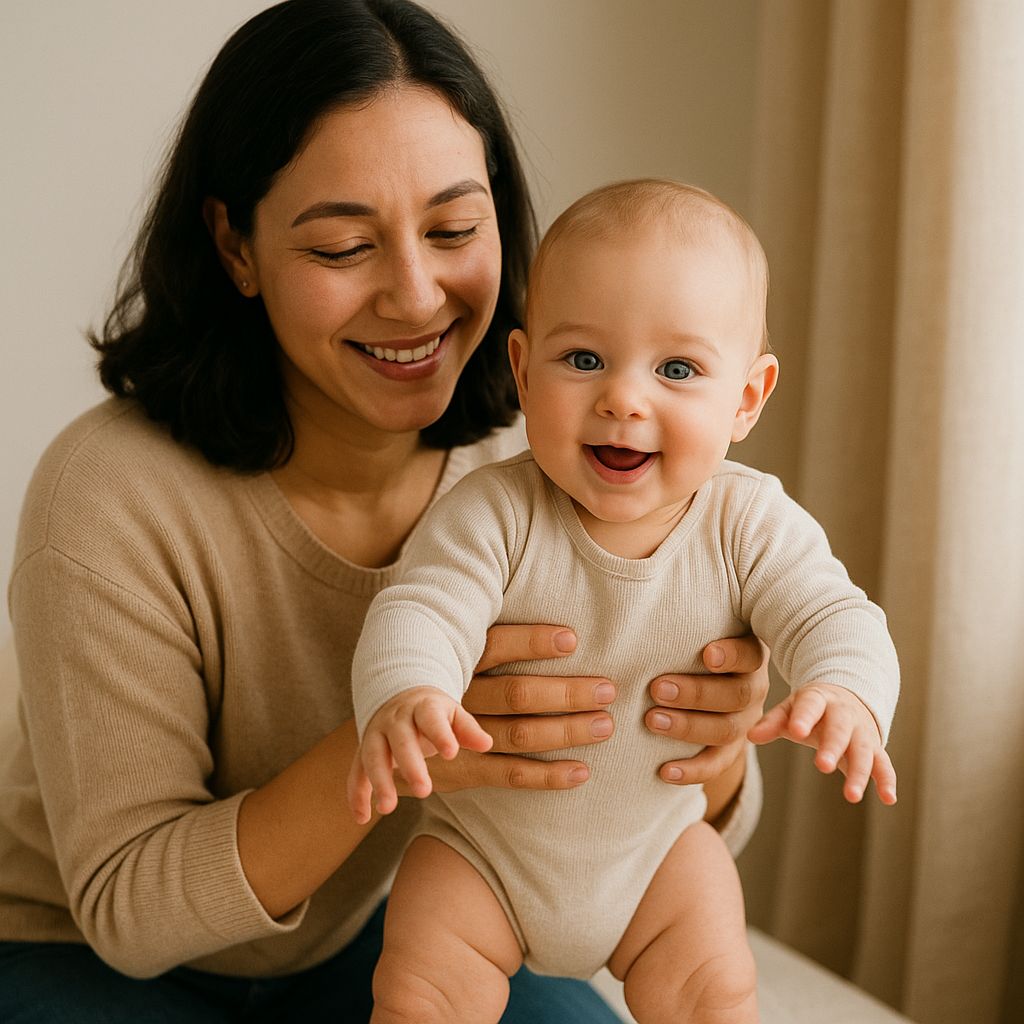
- Pulling Up: Babies often pull themselves to a standing position using furniture.
- Cruising: Many begin to 'cruise' by walking sideways while holding onto furniture.
- Standing Independently: Around 12 months, some babies stand without support for brief periods.
- First Steps: Walking often begins between 12 and 15 months.
Toddler Stage (12-24 Months)
- Confident Walking: Walking improves, becoming more coordinated.
- Climbing: Toddlers start climbing stairs, furniture, and playground equipment.
- Running and Jumping: By 18-24 months, running, jumping, and kicking become common.
- Fine Motor Skills: Toddlers master skills like stacking blocks, turning pages, and using utensils.
Gross vs. Fine Motor Skills
Physical development encompasses two primary types of motor skills:
- Gross Motor Skills: Involve large muscle groups used for sitting, crawling, walking, running, and jumping.
- Fine Motor Skills: Involve smaller movements, such as grasping, pinching, manipulating objects, and self-feeding.
Both types progress alongside each other and are equally important for independence and learning.
Factors Influencing Physical Development
Several factors influence how quickly and smoothly babies progress through physical stages:
- Genetics: Each child inherits a unique set of physical traits and tendencies.
- Health and Nutrition: Proper nutrition and health care support optimal growth.
- Environment: Safe, stimulating environments encourage exploration and movement.
- Parental Interaction: Responsive caregiving, encouragement, and play promote progress.
Supporting Your Baby's Physical Development
Parents and caregivers play a pivotal role in nurturing physical development. Here are practical strategies:
- Tummy Time: Start as early as possible, gradually increasing duration. It strengthens muscles needed for crawling and sitting.
- Safe Exploration: Provide a safe, uncluttered space for movement and exploration.
- Interactive Play: Use age-appropriate toys that encourage reaching, grasping, and movement.
- Encouragement: Celebrate achievements and offer gentle support without pushing.
- Routine Health Checks: Regular pediatric visits monitor growth and development.
Recognizing and Addressing Developmental Delays
While variations are normal, persistent delays may signal underlying issues. Early identification and intervention are key. Some signs to watch for include:
- No head control by 3 months
- Not rolling over by 6 months
- Not sitting by 9 months
- Not crawling or standing with support by 12 months
- Not walking by 18 months
If concerned, consult your pediatrician. Early interventions, such as physical therapy, can make a significant difference.
Frequently Asked Questions
- What are the main physical development stages in babies?
The main stages include newborn reflexes, head control, rolling, sitting, crawling, standing, and walking. Each stage marks a new level of physical ability and independence. - When should my baby start crawling?
Most babies start crawling between 6 and 10 months, but some may skip this stage and move directly to walking. Variations are common and usually not a cause for concern. - How can I support my baby's physical development?
Provide plenty of supervised tummy time, safe spaces for movement, age-appropriate toys, and encouragement. Respond to your baby's cues and consult your pediatrician if you have concerns. - What signs indicate a developmental delay?
If your baby consistently misses milestones, such as not lifting their head by 3 months, not sitting by 9 months, or not walking by 18 months, consult your pediatrician for assessment. - Are some babies faster or slower in physical development?
Yes, each baby develops at their own unique pace. Genetics, temperament, and environment all influence development. A wide range of normal exists for physical milestones.
Common Myths About Physical Development
- Myth: All babies must crawl before they walk.
Fact: Some babies skip crawling and develop walking skills first. Both paths are normal. - Myth: Faster development means higher intelligence.
Fact: Physical milestones are not predictors of later intelligence. - Myth: Babies should walk by their first birthday.
Fact: Walking between 12 and 18 months is normal.
When to Seek Professional Help
Most variations in development are benign, but persistent delays or regressions warrant professional evaluation. Trust your instincts and reach out to your pediatrician if you notice concerning signs. Early intervention can address issues and support your child's growth.
Conclusion
Physical development stages in babies represent an exciting and essential aspect of early childhood. Understanding the sequence and variations helps parents support their children confidently, recognize normal progress, and address challenges promptly. Remember, every baby is unique, and milestones are guidelines—not deadlines. Create a nurturing, stimulating environment, celebrate each achievement, and enjoy the journey.