
Organizing Baby Essentials for Quick Access: A Parent’s Guide to Stress-Free Days
Welcoming a new baby brings immense joy—and, let’s be honest, a fair amount of chaos. Between feeding, diaper changes, and soothing sleepy cries, parents quickly realize the value of being able to grab the right item at a moment’s notice. An organized system for baby essentials isn’t just about aesthetics; it’s about making your day smoother, saving precious time, and reducing stress. In this comprehensive guide, we’ll show you expert strategies for organizing baby essentials for quick access, no matter your space or budget.
Why Organizing Baby Essentials Matters
Imagine a midnight diaper blowout or a feeding session with a hangry infant—would you rather be frantically searching for wipes or calmly reaching into a well-stocked caddy? An organized setup:
- Reduces stress and decision fatigue
- Increases safety by avoiding clutter and misplaced items
- Makes it easier for partners, babysitters, and grandparents to help
- Ensures essentials are always within easy reach during emergencies
Step 1: Identify Your Baby’s Daily Essentials
The first step in any organizational project is knowing exactly what you need. Every family is unique, but most parents should keep the following within quick reach:
- Diapering: Diapers, wipes, creams, disposable bags, and a changing pad
- Feeding: Bottles, formula or breastmilk, bibs, burp cloths, and nursing accessories
- Comfort: Pacifiers, favorite toys, swaddles, and a blanket
- Clothing: Extra onesies, socks, and hats
- Health: Thermometer, baby nail clippers, and infant medication
Step 2: Design Activity Zones for Maximum Efficiency
Organize your baby’s essentials by creating clearly defined “activity zones” throughout your home:
1. Diapering Station
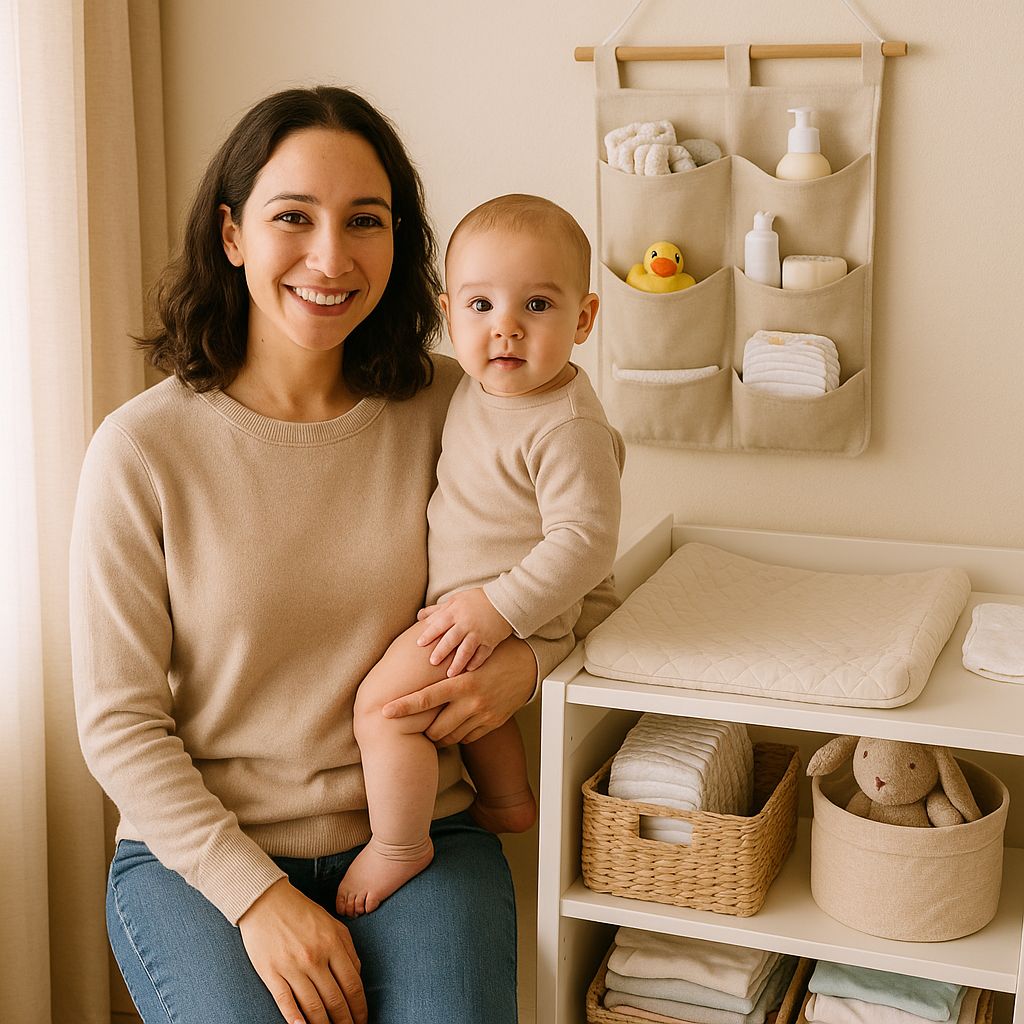
Whether you use a changing table, dresser top, or a portable caddy, keep all diapering supplies together. Use drawer dividers or small baskets for diapers, wipes, and creams. Hang a small organizer nearby for extra clothes and burp cloths.
2. Feeding Zone
Designate a kitchen cabinet or cart for formula, bottles, breast pump parts, and cleaning supplies. For breastfeeding, keep a basket with nursing pads, water bottle, snacks, and nipple cream in your favorite nursing spot.
3. Sleep & Comfort Corner
On or near the crib, store swaddles, pacifiers, and a white noise machine. Use a hanging organizer for quick-grab items and keep a spare sheet nearby for quick bedding changes.
4. On-the-Go Grab Bag
Prepare a diaper bag or backpack with travel-sized essentials: a few diapers, wipes, a change of clothes, a snack, and a pacifier. Restock after each outing so you’re always ready to leave the house quickly.
Step 3: Smart Storage Solutions for Every Space
Whether you have a spacious nursery or a cozy apartment, these storage ideas will keep your baby essentials organized and accessible:
Clear Containers & Labels
Store small items in clear, stackable bins so you can see what’s inside. Label each bin for diapers, wipes, cream, clothing, and more. This helps everyone in the household find and return items to the right place.
Rolling Carts
A three-tier rolling cart can be moved from nursery to living room, keeping essentials handy during daytime naps and playtime. Assign one shelf each for diapering, feeding, and extras.
Over-the-Door Organizers
Maximize vertical space in closets or behind doors with pocket organizers. Store shoes, medicines, socks, or small toys here to free up drawer space.
Drawer Dividers
Use adjustable dividers or small boxes inside drawers to separate onesies, socks, bibs, and hats. This prevents rummaging and messes during those late-night changes.
Wall Hooks and Shelves
Install sturdy hooks for diaper bags, swaddles, or towels. Floating shelves are great for displaying books and keeping frequently used items off countertops.
Step 4: Set up Systems for Maintenance and Flexibility
Organization isn’t a one-time task—your system should adapt as your baby grows. Here’s how to keep your setup working smoothly:
- Regular Restock: Refill diaper caddies and feeding stations daily or weekly.
- Declutter Often: Remove outgrown clothes, expired products, and unused items every month.
- Rotate Supplies: Place the most-used items at the front of bins and drawers.
- Involve the Family: Teach your partner, older siblings, and caregivers where things belong.
Step 5: Tips for Organizing on a Budget
You don’t need fancy baskets or designer furniture to organize baby essentials. Try these budget-friendly hacks:
- Repurpose small boxes, jars, or food containers for storage.
- Use zippered pouches for separating diaper bag items.
- DIY labels with washi tape and a marker.
- Shop thrift stores or buy/sell groups for affordable storage solutions.
Organizing Baby Essentials in Small Spaces
Apartment dwellers, rejoice! Even the tiniest spaces can be functional with clever organization:
- Choose multi-purpose furniture, like a crib with built-in drawers.
- Hang storage baskets from wall hooks.
- Use an ottoman that doubles as toy storage.
- Store seasonal or rarely used items in bins under the crib or bed.
Creating a Peaceful, Clutter-Free Nursery
An organized nursery isn’t just practical—it’s calming for both you and your baby. Aim for “just enough” storage: keep only what you need within reach, and store or donate the rest. Add a personal touch with soft baskets, soothing colors, and photos to create a space you love spending time in.
Organizing for Outings: The Ultimate Diaper Bag Checklist
Keep your diaper bag packed and by the door with these essentials:
- 2-3 diapers
- Travel wipes
- Changing pad
- Plastic bags for dirty clothes
- Spare outfit
- Bottle or sippy cup
- Snack or formula
- Pacifier and small toy
- Travel-size hand sanitizer
Restock after every outing so you’re always ready for the next adventure.
Safety Tips When Organizing Baby Essentials
- Store medicines and creams out of baby’s reach and in childproof containers.
- Secure heavy items on lower shelves or in drawers.
- Avoid overfilling cribs with stuffed animals or blankets.
- Check for loose or broken storage containers regularly.
When to Reorganize Your Space
As your baby grows, their needs will change. Update your organizational system when:
- Your baby moves to a new diaper size
- You introduce solids or new feeding tools
- Your baby becomes mobile and safety needs shift
- Your family’s routine evolves (return to work, travel, etc.)
Conclusion: Less Searching, More Snuggling
Organizing baby essentials for quick access isn’t about perfection—it’s about creating a home that supports your family’s unique rhythm. With smart zones, clear storage, and regular maintenance, you’ll spend less time searching and more time snuggling. Remember: the best system is one that works for you, so don’t be afraid to tweak, re-label, and adjust as your parenting journey unfolds.
Frequently Asked Questions
- What are the most important baby essentials to keep within reach?
- Diapers, wipes, feeding supplies, a change of clothes, pacifiers, and basic medical items should always be easily accessible in your main baby care area.
- How can I organize baby items in a small space?
- Use vertical storage, over-the-door organizers, and multi-purpose containers to maximize your space. Regularly declutter and only keep necessities within arm’s reach.
- How often should I reorganize my baby essentials?
- Check your organization system every few weeks, or whenever your baby's needs change—for example, when starting solids or outgrowing diaper sizes.
- What are some essential items for a grab-and-go diaper bag?
- Pack diapers, travel wipes, a changing pad, spare clothes, a pacifier, a small toy, and any feeding essentials like bottles or snacks.
Remember, every baby and family is different. Choose systems that fit your lifestyle, and don’t hesitate to ask for help or inspiration from fellow parents. Happy organizing!