
Montessori Toys for Babies: A Beginner’s Guide
As parents, we strive to give our children the best possible start in life. Among the many educational philosophies, the Montessori method stands out for its child-centered approach and emphasis on fostering independence and natural development. Montessori toys, in particular, have gained popularity for their ability to nurture a baby’s curiosity and growth. If you're new to Montessori principles or are seeking the best Montessori toys for your baby, this comprehensive beginner’s guide will help you make informed choices for your child's earliest years.
What Are Montessori Toys?
Montessori toys are inspired by the educational philosophy of Dr. Maria Montessori, an Italian physician and educator. These toys are designed to encourage children to explore, discover, and learn independently. They focus on promoting cognitive, motor, and sensory development through hands-on play. Unlike many mainstream toys that light up and make sounds, Montessori toys are intentionally simple, fostering concentration and creativity.
Key Features of Montessori Toys
- Natural Materials: Toys are often made from wood, metal, cotton, or other natural materials, making them safe for babies to touch and mouth.
- Simplicity: Montessori toys are not flashy. They typically feature basic shapes and colors, emphasizing function over form.
- Purposeful Design: Each toy focuses on developing a specific skill, such as grasping, stacking, or sorting.
- Self-Correcting: Many Montessori toys allow babies to see and correct their own mistakes, encouraging problem-solving.
- Open-Ended Play: These toys encourage creativity and imagination, rather than dictating a single way to play.
Why Choose Montessori Toys for Babies?
Babies are natural explorers. Every touch, sound, and movement is part of their learning process. Montessori toys support this exploration by providing materials that are developmentally appropriate and safe. They help your baby:
- Develop fine and gross motor skills
- Enhance sensory awareness
- Build concentration and patience
- Foster independence and confidence
- Encourage problem-solving and critical thinking
The Montessori method teaches that children learn best when they are actively engaged in their environment. Thoughtfully chosen toys can turn everyday playtime into powerful learning experiences.
Montessori Principles for Choosing Baby Toys
When selecting Montessori toys for babies, consider these guiding principles:
- Follow Your Baby’s Interests: Observe what attracts your baby and provide toys that match their developmental stage and curiosity.
- Simplicity is Key: Avoid toys with too many features, sounds, or bright lights. Simple toys encourage focus and deeper exploration.
- Natural Materials: Opt for wood, cotton, metal, glass, and other natural materials instead of plastics. These are safer and provide richer sensory experiences.
- Encourage Independence: Choose toys that your baby can manipulate on their own, fostering self-confidence and autonomy.
- Support Developmental Milestones: Select toys that help your baby practice new skills, like reaching, grasping, mouthing, transferring, and crawling.
Top Montessori Toys for Babies by Age Stage
0-3 Months: Visual & Sensory Stimulation
- High-Contrast Cards: Black-and-white images stimulate newborn vision and encourage focus.
- Montessori Mobiles: Visual mobiles like the Munari and Gobbi mobiles support visual tracking and concentration.
- Soft Cloth Balls: Grasping and kicking soft, lightweight balls help develop gross motor skills.
3-6 Months: Grasping & Mouthing
- Grasping Beads: Wooden beads strung together are perfect for tiny hands and safe for mouthing.
- Natural Rubber Teethers: Soothe sore gums and promote sensory exploration.
- Wooden Rattles: Simple rattles offer auditory feedback and are easy to grasp.
6-12 Months: Coordination & Movement
- Object Permanence Box: Helps babies understand that objects exist even when out of sight, enhancing cognitive development.
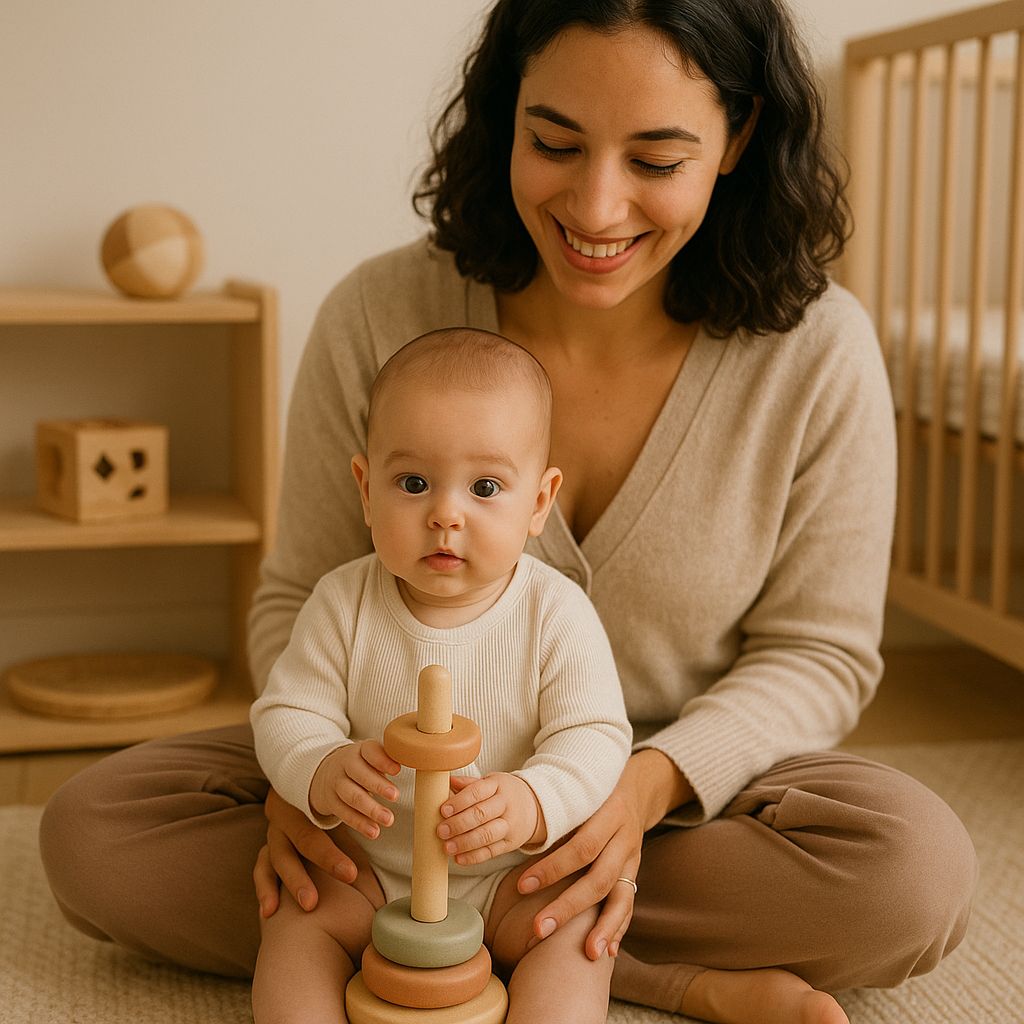
- Stacking Rings: Develops hand-eye coordination, spatial awareness, and problem-solving.
- Push & Pull Toys: Encourage crawling and walking while supporting balance and motor skills.
- Imbucare Boxes: Introduce shapes and sizes, teaching babies about fitting objects into corresponding holes.
How to Set Up a Montessori Play Space at Home
A Montessori playroom doesn’t require expensive materials or a large space. Focus on creating a calm, organized, and accessible environment:
- Low Shelves: Place toys within your baby’s reach so they can choose what interests them.
- Minimalist Design: Keep the space clutter-free. Offer a few toys at a time and rotate them regularly.
- Soft Play Mats or Rugs: Provide a comfortable area for tummy time and movement.
- Natural Light: Bright, airy spaces support alertness and engagement.
- Safe Exploration: Ensure all toys and furniture are baby-safe and free from hazards.
Frequently Recommended Montessori Toys for Babies
While the market is full of options, these classic Montessori baby toys are highly recommended by educators and parents alike:

Montessori Mobiles
Visual mobiles like Munari, Octahedron, Gobbi, and Dancers stimulate sight and focus.

Wooden Rattles & Grasping Toys
Safe, tactile, and perfect for developing grip and auditory senses.

Object Permanence Box
Teaches babies that objects still exist even when hidden, building cognitive skills.

Wooden Stacking Rings
Develops fine motor skills, spatial reasoning, and concentration.

Imbucare Boxes
Encourages shape recognition, dexterity, and problem-solving.
Safety Tips for Montessori Baby Toys
- Always check age recommendations and inspect toys for loose parts or damage.
- Choose toys finished with non-toxic paints, dyes, or oils.
- Supervise babies during play, especially when introducing new objects.
- Clean toys regularly, following manufacturer guidelines.
How to Rotate Montessori Toys
Montessori philosophy emphasizes “less is more.” Presenting too many toys at once can overwhelm your baby and hinder deep exploration. Instead, offer four to six toys at a time, observing what your baby is drawn to. Every couple of weeks, rotate toys to renew their interest and introduce new challenges as their skills progress.
DIY Montessori Toys for Babies
You don’t have to break the bank to provide Montessori-inspired playthings. Simple household items can double as effective toys:
- Scarves or Pieces of Fabric: For sensory play and peek-a-boo.
- Homemade Shakers: Fill a sealed container with rice or beans for a safe rattle.
- Wooden Spoons: For grasping and mouthing.
- Measuring Cups: For nesting or stacking.
Ensure all DIY toys are safe, free from choking hazards, and age-appropriate for your baby.
Frequently Asked Questions About Montessori Toys for Babies
- What makes a toy 'Montessori'?
- Montessori toys are designed to foster independent, hands-on learning. They are typically simple, made from natural materials, and focus on one skill at a time, allowing babies to explore and discover at their own pace.
- Are Montessori toys safe for babies?
- Yes, authentic Montessori toys prioritize safety by using non-toxic, natural materials and have designs that avoid small, hazardous parts. Always check the age recommendations and inspect toys regularly for wear.
- At what age can I introduce Montessori toys to my baby?
- You can introduce Montessori toys from infancy. Start with simple, high-contrast visual toys and gradually introduce objects that encourage grasping, mouthing, and movement as your baby grows.
- Do Montessori toys help with my baby's development?
- Absolutely. Montessori toys are thoughtfully designed to support developmental milestones like sensory exploration, hand-eye coordination, motor skills, problem-solving, and independence.
- How many Montessori toys should I provide at once?
- Less is more in the Montessori philosophy. Offer a few carefully chosen toys at a time and rotate them regularly to keep your baby engaged and prevent overstimulation.
Conclusion: Nurturing Growth Through Play
Montessori toys offer babies more than just entertainment—they provide the building blocks for a lifetime of learning. By choosing toys that align with the Montessori philosophy, you’re encouraging your child to become an independent, curious, and capable learner. Remember, the best toy is one that meets your baby’s unique needs and interests. Observe, follow their lead, and enjoy the magic of Montessori-inspired play together.
For more guides and recommendations on early childhood development, explore other articles in our product guides category on Growing Giggles.