
How to Keep Baby Toys Germ-Free During Monsoon
The monsoon rains bring a welcome relief from scorching summer heat, but they also bring humidity, dampness, and a surge in germs. For parents, this means extra vigilance in maintaining a clean and healthy environment for their babies—especially when it comes to toys.
Why Monsoon Calls for Extra Toy Hygiene
Monsoon weather creates the perfect conditions for bacteria, viruses, and mold to thrive. Babies, especially those who love mouthing toys, are at higher risk of exposure to these germs. Dampness can linger on toys, turning playtime into a potential health hazard. Maintaining germ-free toys during monsoon is crucial to protect your little one from seasonal illnesses like colds, coughs, and stomach bugs.
Understanding Toy Types and Cleaning Needs
- Plastic Toys: Easy to rinse and disinfect, but can harbor moisture in crevices.
- Soft Toys: Absorb moisture and are prone to mold. Require thorough washing and drying.
- Wooden Toys: Sensitive to water; need gentle cleaning and quick drying.
- Battery-Operated/Electronic Toys: Cannot be submerged. Need careful surface cleaning.
Safe Cleaning Solutions for Baby Toys
It’s important to choose cleaning products that are effective against germs but gentle for your baby. Here are some parent-approved options:
- Baby-Safe Disinfectants: Use products labeled as safe for infant items, free from harsh chemicals.
- Natural Cleaners: Vinegar and baking soda are great for killing germs and deodorizing.
- Soap and Water: Mild, unscented soap works well for most toys.
- Alcohol Wipes: Useful for quick cleaning, but ensure full evaporation before baby handles the toy.
Step-by-Step Toy Cleaning Routine
- Gather Supplies: Mild soap, disinfectant, clean cloths, brushes, towels.
- Separate Toys: Group toys by material (plastic, soft, wood, electronic).
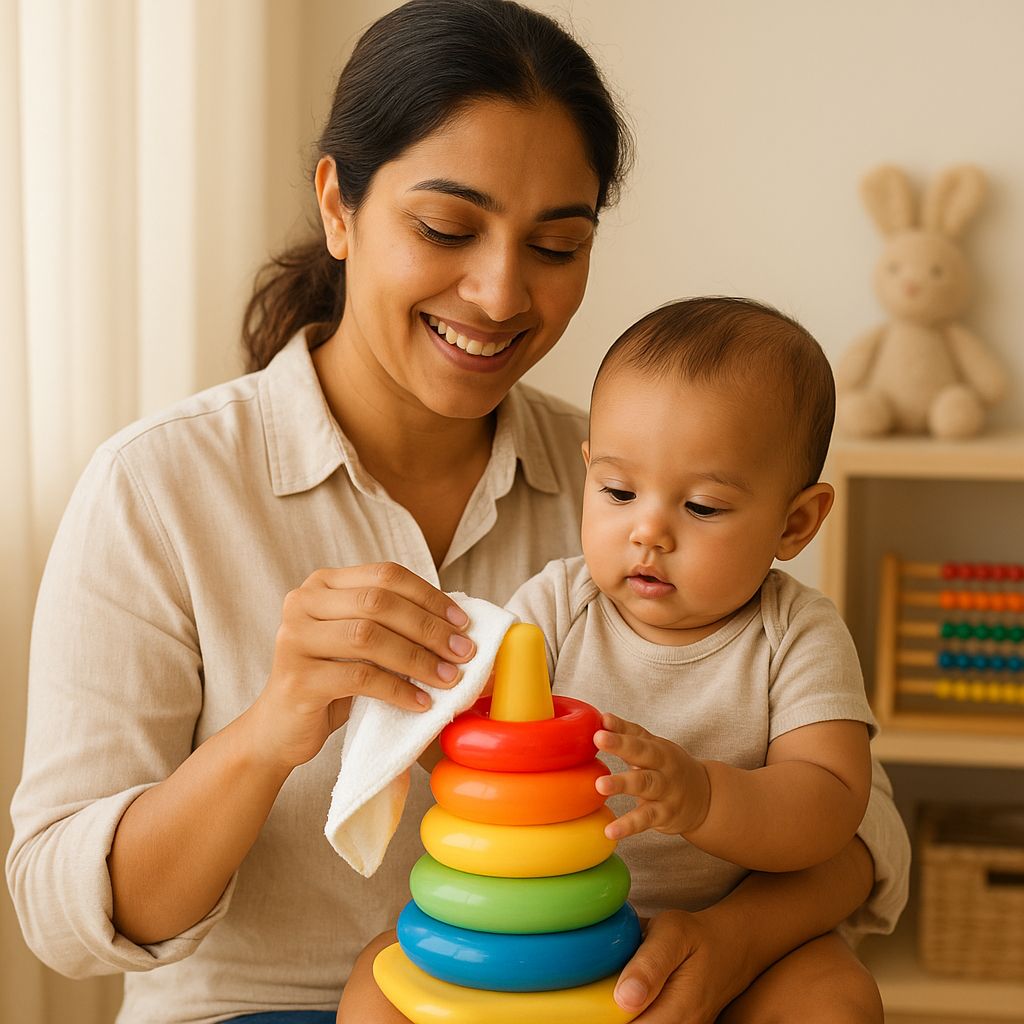
- Wash Plastic Toys: Submerge in soapy water, scrub, rinse, and air dry.
- Clean Soft Toys: Machine wash or hand wash with gentle detergent, squeeze out excess water, and dry under a fan or in sunlight.
- Wipe Wooden Toys: Use a damp cloth with mild soap, dry immediately.
- Sanitize Electronics: Wipe surfaces with disinfectant, avoid water near battery compartments.
- Disinfect: For extra protection, spray or wipe with baby-safe disinfectant.
- Dry Thoroughly: Ensure all toys are completely dry before returning them to the play area.
Expert Tips for Monsoon Toy Hygiene
- Establish a Daily Routine: Clean frequently used toys daily, especially those your baby puts in their mouth.
- Deep Clean Weekly: Set aside time each week for a thorough clean of all toys.
- Check for Mold: Inspect toys for any signs of mold or mildew. Discard any affected items immediately.
- Use Moisture Absorbers: Place silica gel packets in toy storage areas to reduce humidity.
- Rotate Toys: Limit the number of toys in use at any one time to make cleaning easier.
Drying Techniques for Rainy Days
Getting toys dry during monsoon can be tricky. Here’s how you can ensure thorough drying:
- Use Fans: Place toys under a ceiling or standing fan for rapid drying.
- Sunlight: Whenever possible, dry toys in the sun. UV rays help kill germs.
- Absorbent Towels: Pat dry with clean, absorbent towels.
- Dehumidifier: If available, run a dehumidifier in your baby’s playroom.
Storage Solutions to Beat Dampness
Proper storage is half the battle against monsoon moisture. Try these strategies:
- Avoid Floor Storage: Keep toys off the floor, especially in rooms prone to dampness.
- Use Airtight Boxes: Store cleaned and dried toys in plastic containers with tight lids.
- Open Shelving: Allow air circulation around toys to prevent moisture build-up.
- Silica Gel: Place packets in storage boxes to absorb excess moisture.
- Regular Checks: Inspect storage areas for signs of condensation or mold.
Choosing the Right Cleaning Frequency
The frequency of cleaning depends on the type of toy and how often it’s used:
- Daily: Pacifiers, teething rings, and any toys frequently mouthed.
- Weekly: All other toys, especially those kept in common play areas.
- Monthly: Toys stored away or rarely used (clean before giving to baby).
What to Avoid When Cleaning Baby Toys
- Harsh Chemicals: Avoid bleach or strong disinfectants unless diluted and rinsed thoroughly.
- Soaking Wooden Toys: Water can warp and damage wood.
- Unlabeled Cleaners: Never use products not specifically labeled as baby-friendly.
- Leaving Toys Wet: Always dry toys completely to prevent mold.
DIY Natural Cleaning Recipes
For parents who prefer chemical-free solutions, here are safe, effective recipes:
- Vinegar Solution: Mix equal parts white vinegar and water. Spray and wipe toys for a natural disinfectant.
- Baking Soda Paste: Combine baking soda with water to scrub stubborn stains and deodorize.
- Lemon Juice: Dilute lemon juice in water for a fresh scent and antibacterial action.
Always rinse toys with clean water after using these solutions, and dry thoroughly.
Signs a Toy Needs Immediate Attention
- Visible Dirt or Grime: Clean immediately.
- Musty Smell: Indicates mold—wash or discard.
- Sticky Surfaces: Clean even if not visibly dirty.
- Baby Illness: Disinfect toys after any illness episode.
Educating Older Children
If you have older siblings, teach them to keep their own and baby’s toys clean. Encourage handwashing before and after play, and explain why toy hygiene is important during monsoon.
When to Replace Toys
Despite best efforts, some toys may be too worn, damaged, or moldy to salvage. It’s safest to replace these rather than risk your baby’s health. Look for signs of permanent stains, cracks, or persistent odors.
Keeping Playtime Safe
Clean toys are just one part of monsoon wellness. Make sure your baby’s play area is dry, well-ventilated, and regularly sanitized. Avoid letting your child crawl or play in damp areas, and wipe down surfaces before play.
Conclusion: Small Steps, Big Protection
Keeping baby toys germ-free during monsoon doesn’t have to be overwhelming. With regular cleaning, careful storage, and a little planning, you can ensure your child’s playthings stay safe and hygienic. Remember, your efforts today protect your baby from tomorrow’s illnesses—so keep those giggles going all season long!
Frequently Asked Questions
- How often should I clean baby toys during monsoon?
- During the monsoon, it’s best to clean frequently used toys every day and deep clean all toys at least once a week to prevent germs and mold.
- What disinfectants are safe for baby toys?
- Look for mild, non-toxic disinfectants specifically labeled for baby products, or use diluted vinegar and baking soda solutions for natural cleaning.
- Can soft toys be washed during the rainy season?
- Yes, soft toys can be washed. Use gentle detergent and ensure thorough drying, preferably in a well-ventilated area or under a fan to avoid dampness.
- How do I prevent mold on toys during monsoon?
- Store toys in dry, airy spaces, avoid leaving them on damp surfaces, and clean them regularly. Silica gel packets can help absorb moisture in toy storage boxes.
- Is it safe to use bleach for disinfecting baby toys?
- Bleach can be used in very diluted form (1 tablespoon per gallon of water), but rinse toys thoroughly with clean water afterwards. Always check manufacturer guidelines first.