
The Importance of Talking and Reading to Your Baby: Nurturing Early Language Development
From the moment your baby is born, their brain is primed to learn, grow, and connect. Among the most powerful tools at your disposal are your voice and the stories you share. Talking and reading to your baby isn’t just a heartwarming bonding ritual; it’s a scientifically proven way to lay the groundwork for language, emotional health, and lifelong learning.
Why Early Communication Matters
Decades of research show that the first few years of life are a critical window for brain development. During this period, the brain forms synapses—the connections between neurons—at a rapid pace. Language exposure plays a central role in shaping these neural networks. Babies who hear more words, conversations, and stories develop stronger language and cognitive skills.
But the benefits go beyond words. By talking and reading with your baby, you’re also:
- Building emotional bonds and trust
- Setting the stage for social skills
- Helping your baby recognize sounds, rhythms, and patterns
- Stimulating curiosity and imagination
- Providing comfort and security through your voice
The Science Behind Talking and Reading to Babies
Babies are natural learners. Even before they can speak, they are listening, watching, and absorbing the world around them. Studies using brain imaging technology have found that babies exposed to frequent conversation and reading show more robust neural activity in the language centers of the brain (Harvard Center on the Developing Child, 2023).
One landmark study, often referred to as the “30 million word gap,” found that by age three, children from language-rich environments had heard up to 30 million more words than children from less verbal households. This “word gap” is linked to differences in vocabulary, literacy, and school readiness.
How Talking and Reading Boosts Development
1. Language and Literacy Skills
Every time you narrate your actions, describe objects, or read a story, you’re introducing your baby to new words and concepts. This exposure helps babies learn:
- How language works (grammar, syntax, tone)
- The meaning of words and phrases
- How to express needs and emotions
2. Cognitive Growth
Hearing language helps babies make sense of their environment. Reading, in particular, introduces children to ideas, cultures, and concepts beyond their everyday experiences, sparking curiosity and imagination.
3. Social and Emotional Development
Interactive conversation—where you pause for your baby’s coos, smiles, and babbles—teaches the back-and-forth nature of communication. These exchanges help your baby feel valued and secure, laying the foundation for healthy relationships later in life.
Practical Ways to Talk and Read with Your Baby
Talking Throughout the Day
You don’t need fancy scripts or flashcards. Simply narrate your day as you move through routines:
- During diaper changes: “Let’s put on your clean diaper. It feels soft and dry!”
- At mealtime: “Here’s your banana. It’s yellow and squishy. Can you taste it?”
- While getting dressed: “This shirt has blue stripes. One arm, then the other!”
Respond to your baby’s sounds, giggles, or cries. Make eye contact, exaggerate facial expressions, and use a singsong voice. These interactions teach your baby the rhythm and joy of conversation.
Making Storytime Special
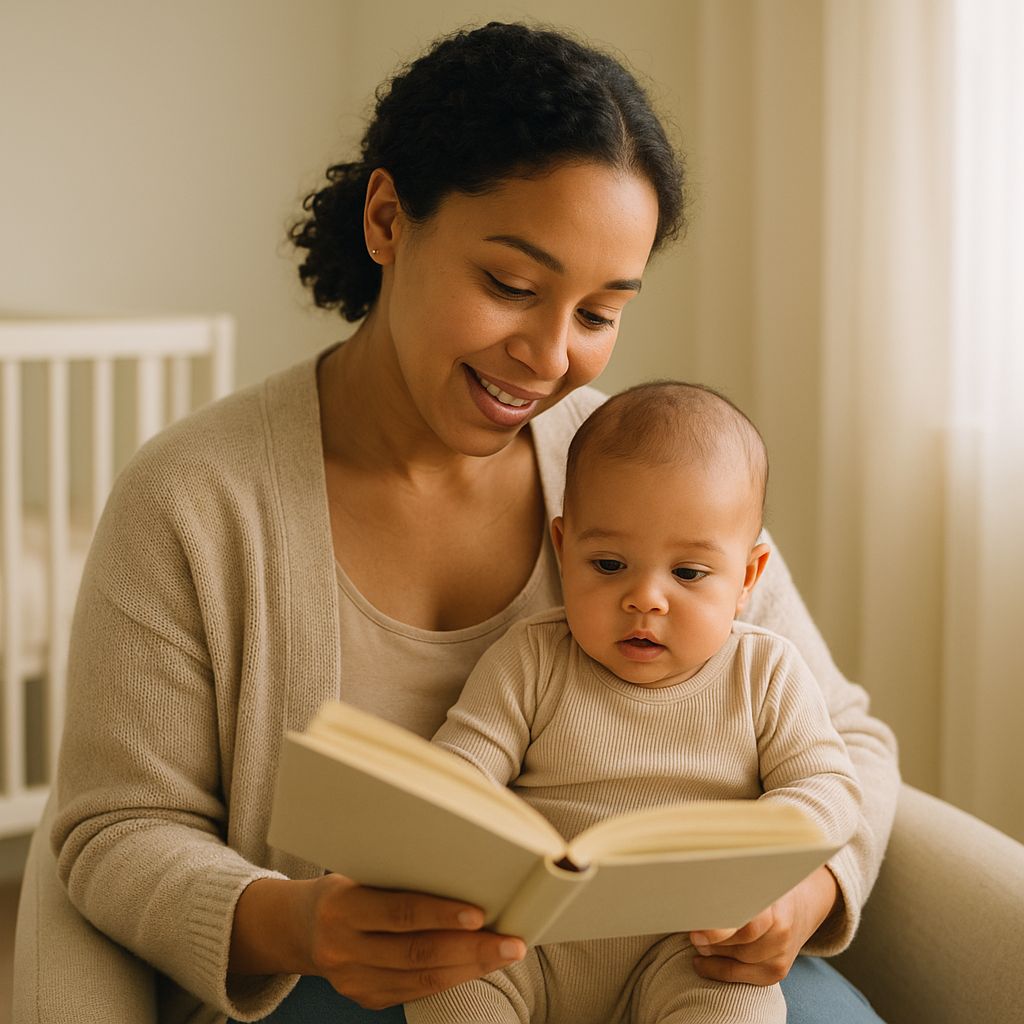
Reading doesn’t have to be a formal event. Even a few minutes a day makes a difference. Here’s how to make the most of storytime:
- Start early: Babies enjoy hearing your voice, even if they don’t understand the words.
- Choose age-appropriate books: Board books, cloth books, or picture books with simple, bright illustrations are ideal for infants.
- Engage the senses: Touch-and-feel books, lift-the-flap stories, and sing-along rhymes make reading interactive.
- Follow your baby’s cues: It’s okay if your baby wants to skip pages or look at the same picture over and over. Repetition is how they learn.
- Make it playful: Use different voices, point to pictures, and invite your baby to touch or turn the pages.
Creating a Language-Rich Environment
Every caregiver—parents, grandparents, siblings, and babysitters—can nurture a baby’s language growth. Here are some practical strategies:
- Label everything: Name objects, actions, and emotions as you encounter them throughout the day.
- Sing songs and nursery rhymes: Music introduces rhythm, rhyme, and new vocabulary in a fun way.
- Tell stories from your life: Share memories or family tales, even if your baby is too young to understand.
- Limit screen time: Babies learn best from real-life interactions, not screens.
- Read daily: Make storytime a cherished part of your routine, such as before naps or bedtime.
The Power of Multilingual Communication
If your family speaks more than one language, you’re giving your baby a tremendous gift. Exposing infants to multiple languages:
- Enhances cognitive flexibility
- Supports problem-solving and multitasking skills
- Fosters cultural identity and connection
Speak, read, and sing in the language you’re most comfortable with. Babies are equipped to learn multiple languages from birth, and research shows there are no negative effects on overall language development.
Overcoming Common Concerns
“I’m not a strong reader.”
It’s your voice and attention that matter most—not perfect pronunciation or reading. Looking at pictures, naming objects, and making up stories are all valuable forms of communication.
“My baby doesn’t seem interested.”
Babies’ attention spans are short and unpredictable. Even brief interactions—singing a song, describing a toy, or reading a page or two—add up over time. Follow your baby’s lead and enjoy the moment together.
“We don’t have many books at home.”
Many libraries offer free children’s books and storytime sessions. You can also swap books with friends or make your own by drawing pictures and telling simple stories.
Milestones: What to Expect as Your Baby Grows
| Age | Language Milestone | How You Can Help |
|---|---|---|
| 0-3 months | Turns toward voices, coos, smiles | Talk, sing, and make eye contact |
| 4-6 months | Babbles, responds to name, laughs | Imitate sounds, read simple books |
| 7-12 months | Imitates speech sounds, understands “no”, may say “mama” or “dada” | Name objects, play peekaboo, read daily |
| 12-18 months | Says a few words, understands simple commands | Ask questions, encourage pointing, read interactive stories |
| 18-24 months | Uses two-word phrases, follows directions | Expand on words, name feelings, enjoy rhymes and songs |
Red Flags: When to Seek Support
Every child develops at their own pace, but talk to your pediatrician if you notice:
- No response to sounds or voices by 6 months
- No babbling by 9 months
- No words by 15 months
- Loss of speech or social skills at any age
Early intervention and speech therapy can make a significant difference if delays are detected.
Nurturing a Lifelong Love of Language
Talking and reading to your baby is one of the most powerful ways you can nurture their growth, confidence, and curiosity. These simple, joyful interactions shape your child’s future, setting them on a path to strong communication, emotional resilience, and academic success.
Remember, there’s no “perfect” way to talk or read. What matters most is your warmth, attention, and willingness to share the gift of language every day.
Resources for Parents and Caregivers
- Zero to Three: Building Language Skills
- Reading Rockets: Early Language and Literacy Development
- CDC Positive Parenting Tips: Infants
For more expert advice and tips on early childhood development, subscribe to the Growing Giggles newsletter or explore our resources for parents and caregivers.