
How to Encourage Crawling in Babies: Expert Strategies & Tips
Crawling is a fundamental milestone in your baby’s physical and cognitive development. It’s more than just a means of locomotion — crawling helps build the coordination, strength, and sensory awareness that lay the foundation for future skills like walking, running, and even reading. As a parent, understanding how to encourage crawling in babies can help your child reach their full developmental potential.
Why Crawling Matters in Infant Development
Crawling is often the first independent movement that allows babies to explore their world. Here are some key benefits:
- Motor Development: Crawling strengthens muscles in the arms, legs, back, and neck, crucial for future activities like sitting, standing, and walking.
- Coordination: The cross-pattern movement (opposite hand and knee) develops coordination between the left and right sides of the body and brain.
- Sensory Integration: Crawling exposes babies to different textures, temperatures, and surfaces, enhancing sensory processing.
- Cognitive Growth: As babies crawl, they learn cause and effect, spatial awareness, and problem-solving skills.
When Do Babies Typically Crawl?
Most babies start crawling between 6 and 10 months. However, every child is unique. Some may begin earlier, some later, and a few might skip crawling altogether and move directly to walking or other modes of mobility like scooting or rolling. While skipping crawling isn’t necessarily problematic, encouraging your baby to crawl gives them crucial developmental benefits.
Signs Your Baby is Ready to Start Crawling
- Pushing up on hands and knees during tummy time
- Rocking back and forth in the hands-and-knees position
- Reaching for toys just out of reach
- Rolling over independently
- Showing curiosity about their surroundings
If your baby exhibits these behaviors, they may be close to crawling!
How to Encourage Crawling in Babies
1. Prioritize Tummy Time
Tummy time is crucial for developing the muscles needed for crawling. Place your baby on their stomach for short periods throughout the day, starting as early as newborn stage. Supervise closely and gradually increase the duration as your baby gets stronger. Try to make tummy time engaging by placing toys or mirrors within reach.
2. Create a Safe and Stimulating Environment
A safe, open space allows babies to explore and practice mobility. Remove hazards, cover sharp corners, and ensure the floor is clean. Use a soft, padded mat or rug to cushion falls. Place interesting objects at various distances to motivate movement.
3. Use Motivational Toys and Objects
Babies are naturally curious. Use brightly colored toys, musical objects, or soft books just out of reach to encourage your baby to move toward them. Rotate toys to maintain interest.
4. Demonstrate Crawling
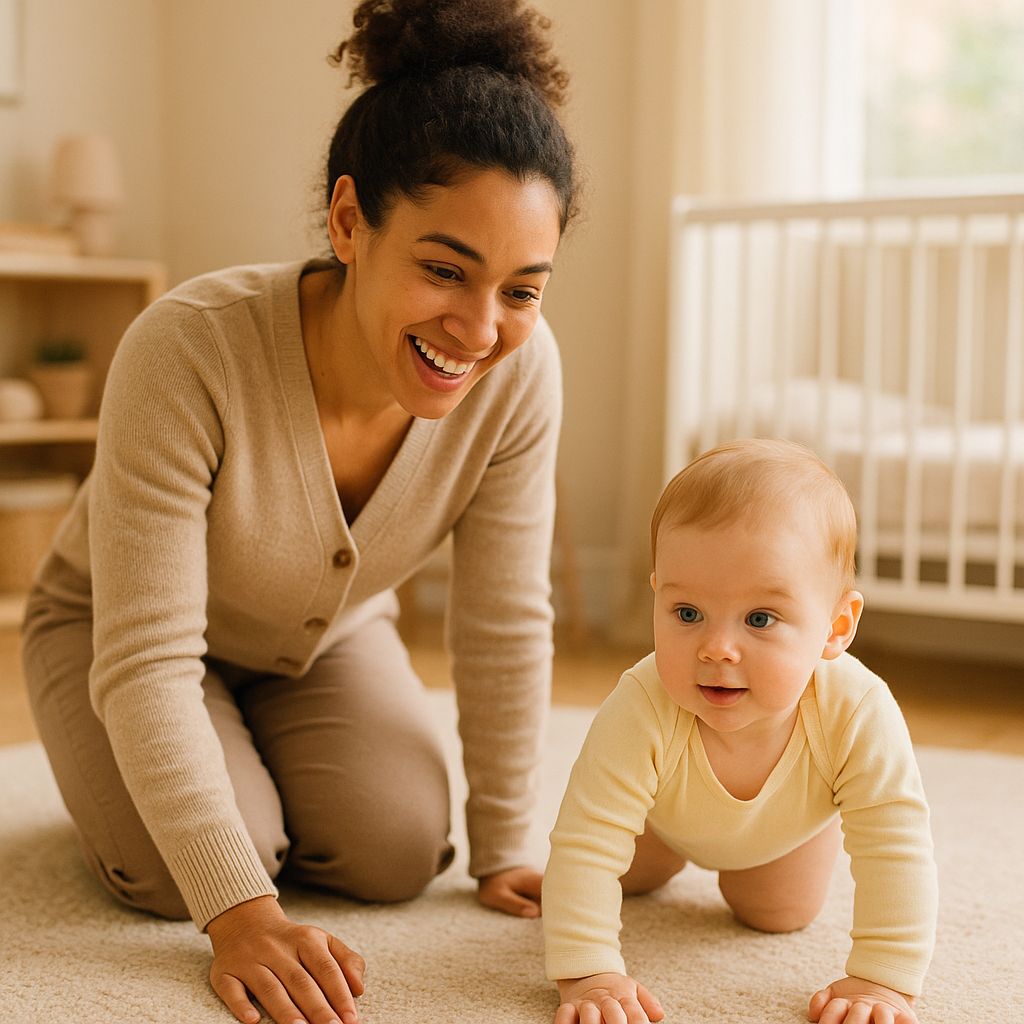
Get down on the floor and crawl alongside your baby! Babies learn by imitation, so modeling crawling can spark their interest. Make it a playful activity by talking, singing, or making funny faces.
5. Encourage Reaching and Shifting Weight
Place toys to the side or above your baby’s head during tummy time to promote reaching, weight shifting, and eventually moving onto hands and knees.
6. Minimize Time in Containers
Limit time spent in bouncers, swings, car seats, and strollers when your baby is awake. These devices restrict movement and can delay motor milestones. Allow as much supervised floor time as possible.
7. Use Obstacles and Tunnels
Once your baby is comfortable on their hands and knees, create soft obstacles like pillows or low cushions to crawl over. Play tunnels are fun and encourage forward movement.
8. Give Positive Reinforcement
Cheer, clap, and praise your baby’s efforts. Positive feedback builds confidence and motivates further attempts.
9. Practice Daily
Consistency is key. Aim for multiple short sessions of crawling practice each day, gradually increasing duration as your baby’s endurance grows.
Fun Crawling Activities for Babies
- Crawling Chase: Crawl after your baby, encouraging them to move forward.
- Toy Trail: Place a line of toys leading across the room.
- Tunnel Time: Use a fabric tunnel or make one from boxes for your baby to crawl through.
- Obstacle Course: Set up soft pillows and blankets for your baby to navigate over and around.
- Mirror Play: Position a baby-safe mirror just out of reach.
Safety Tips for Crawling Babies
- Remove small objects and choking hazards from the floor.
- Cover electrical outlets and secure cords.
- Install baby gates at stairs and doorways.
- Supervise crawling sessions closely.
- Ensure floor surfaces are clean and free of debris.
Common Concerns About Crawling
Some parents worry if their baby isn’t crawling by a certain age, or if their baby uses alternative methods like scooting or rolling. Here’s what experts say:
- Late Crawling: Many babies crawl later than the average range. If your baby is developing other skills and has no signs of delay, it’s usually not a concern.
- Skipping Crawling: Some babies skip crawling altogether. Encourage crawling, but don’t force it. If your baby moves in other ways and meets other milestones, this is often normal.
- Asymmetrical Crawling: Crawling with one leg out or dragging one side can be normal initially. If this persists, consult your pediatrician.
When to Seek Professional Advice
If your baby isn’t showing signs of crawling or doesn’t attempt any form of independent movement by 12 months, or if you notice persistent asymmetry or weakness, consult your pediatrician. Early intervention can address underlying issues and support optimal development.
Frequently Asked Questions
- At what age do babies typically start crawling?
Most babies begin crawling between 6 and 10 months, though some may start earlier or later, and some may skip crawling altogether. - Is it normal if my baby doesn’t crawl?
Yes, some babies may skip crawling and move directly to walking or other forms of movement. However, it’s important to encourage crawling as it supports development. - How much tummy time should my baby have each day?
Aim for at least 20-30 minutes of tummy time daily, broken into short sessions. Increase gradually as your baby grows and gets stronger. - What are signs my baby is ready to crawl?
Look for signs like pushing up on hands and knees, rocking back and forth, and showing interest in moving toward objects. - Should I be concerned if my baby isn’t crawling by 12 months?
If your baby isn’t crawling by 12 months or shows other delays in motor development, consult your pediatrician to rule out underlying issues.
Final Thoughts: Supporting Your Baby’s Crawling Journey
Encouraging crawling in babies is about creating opportunities for movement, providing a safe and stimulating environment, and celebrating every attempt. While each child develops at their own pace, your support and patience are vital. Remember, crawling is not just about mobility—it’s a critical step in building your baby’s physical, cognitive, and sensory foundation.
If you have concerns about your baby’s development or crawling timeline, don’t hesitate to reach out to your pediatrician or a child development specialist. With expert guidance and consistent encouragement, your baby will thrive on their journey toward independent movement.
References
- American Academy of Pediatrics. (2023). Developmental Milestones.
- Centers for Disease Control and Prevention. (2023). Important Milestones: By the End of 1 Year.
- National Institute of Child Health and Human Development. (2022). Infant Physical Development.