
How to Dry Baby Clothes Properly in Monsoon: Expert Tips for Parents
Monsoon is a magical season—gentle rains, lush greenery, and the joy of cozy indoor moments. But for parents, it also brings the challenge of keeping baby clothes clean, dry, and hygienic. If you’ve ever struggled with damp laundry, musty odors, or mold spots on your little one’s onesies, you know drying baby clothes during monsoon requires extra care and smart strategies.
Why Drying Baby Clothes in Monsoon is Tricky
The monsoon months bring high humidity, frequent showers, and little sunlight. This combination makes it difficult for clothes to dry naturally outdoors. For babies, whose skin is extra sensitive, wearing damp or improperly dried clothes can lead to rashes, fungal infections, or allergies. To keep your baby comfortable and safe, you need reliable techniques to ensure their clothes are thoroughly dry.
Risks of Improperly Dried Baby Clothes
- Mold and Mildew: Damp clothes can harbor bacteria and fungi, causing skin irritation or infection.
- Musty Odors: Clothes not dried properly develop unpleasant smells, making them uncomfortable for babies.
- Hygiene Issues: Residual moisture attracts dust and allergens, impacting your baby’s health.
- Fabric Damage: Prolonged dampness weakens fibers, reducing the lifespan of clothes.
Step-by-Step Guide: Drying Baby Clothes in Monsoon
1. Wash with Care
- Choose Mild Detergents: Use hypoallergenic detergents that rinse out easily, leaving less residue.
- Use Warm Water: Washing with warm water helps kill germs and reduces moisture retention.
- Spin Dry: Ensure your washing machine’s spin cycle is running at optimal speed to extract maximum water.
2. Pre-Drying Preparation
- Shake Out Clothes: After washing, shake each piece to loosen fibers and improve air circulation.
- Separate Layers: Avoid piling clothes. Spread them out to ensure each piece gets ventilation.
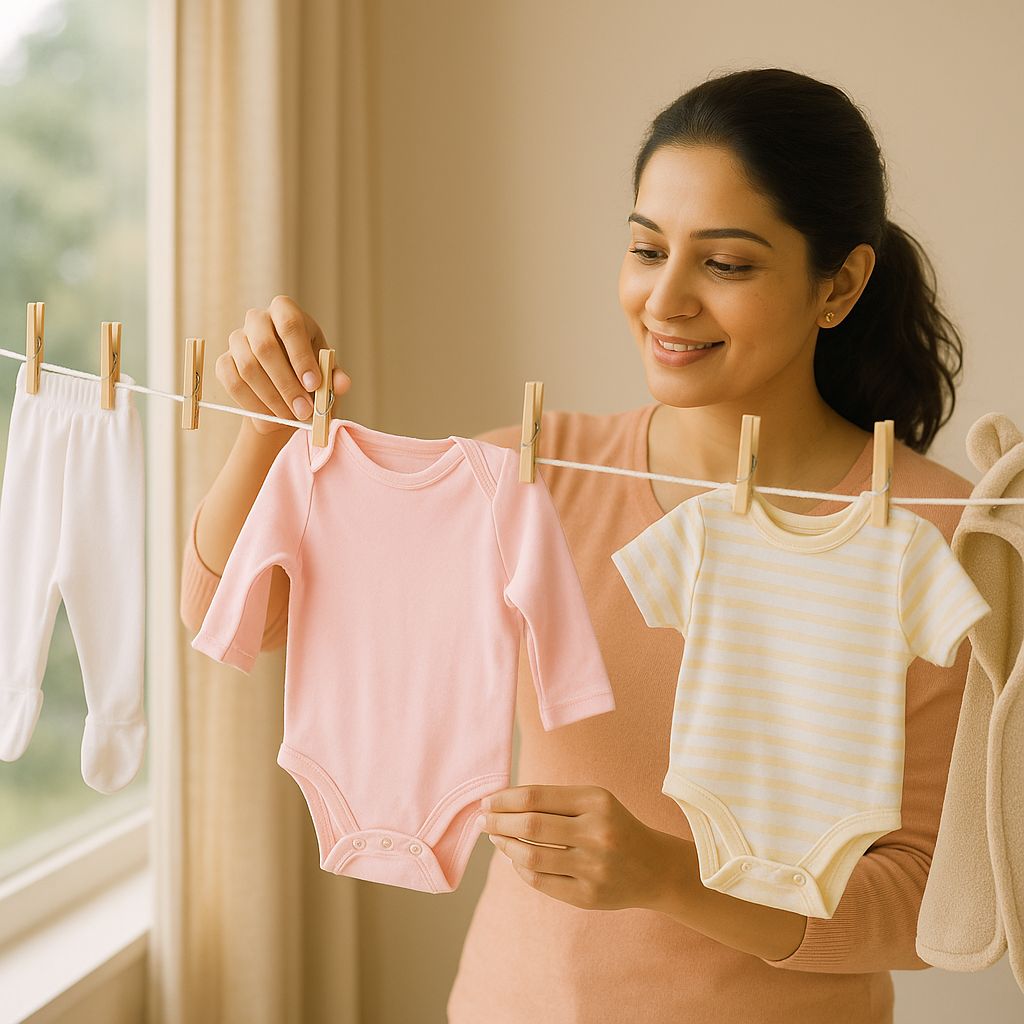
- Use Cloth Hangers: Hang clothes vertically. This lets gravity pull water down and out.
3. Indoor Drying Solutions
With outdoor drying often impossible, indoor drying becomes your best bet.
- Dedicated Drying Space: Pick a well-ventilated room, ideally with windows or an exhaust fan.
- Portable Clothes Racks: Invest in foldable drying racks that can be moved to sunny spots or under ceiling fans.
- Ceiling Fans: Run fans at medium speed to circulate air. Point fans toward drying clothes for faster results.
- Dehumidifiers: These devices absorb excess moisture from the air, making drying faster and preventing musty odors.
- Avoid Bathrooms: Bathrooms are already humid. Opt for living rooms or bedrooms where humidity is lower.
4. Dryer Machines: Are They Safe?
Electric dryers are a boon during monsoon, but use them wisely:
- Use Gentle Cycles: Baby clothes are delicate. Choose the lowest heat setting.
- Don’t Overload: Dry small batches to avoid crumpling and ensure even drying.
- Dry with Soft Towels: Adding a clean towel absorbs extra moisture and speeds up drying.
5. Sunlight—When You Can Get It!
Whenever the clouds part and the sun peeks out, take advantage:
- Quick Sun Exposure: Even a few hours of sunlight can help kill bacteria and freshen clothes.
- Window Sills & Balconies: Place clothes near sunny windows, balconies, or verandas.
- UV Lamps: If sunlight is rare, UV sanitizing lamps can help disinfect clothes (use with caution and keep away from direct baby contact).
6. Natural Remedies for Freshness
- Essential Oils: Add a few drops of lavender or tea tree oil to rinse water for natural antimicrobial properties.
- Vinegar: Add a teaspoon of white vinegar in the final rinse to prevent musty odor and soften clothes.
- Baking Soda: Sprinkle baking soda in the drying area to absorb extra moisture.
7. Preventing Mold and Odor
- Store Only Dry Clothes: Never store damp clothes. If unsure, iron lightly (without steam) to finish drying.
- Silica Gel Packs: Place moisture absorbers or silica gel packs in cupboards and drawers.
- Open Cupboards Regularly: Allow air circulation to prevent mold growth.
- Wash Regularly: Don’t let dirty clothes pile up; frequent small loads help manage drying easier.
8. Quick Drying Hacks for Parents
- Layered Drying: Lay clothes on towels, roll tightly, and squeeze. This absorbs excess water.
- Ironing: For urgent drying, iron clothes on low heat (avoid steam), but only after partial air drying.
- Microwave Drying: For small items like socks or mittens, wrap in a dry towel and microwave for a few seconds (always check fabric suitability; avoid synthetics).
- Hair Dryer: Use on low heat for quick spot drying, especially for collars or cuffs.
Safety & Hygiene Tips for Monsoon Laundry
- Choose Breathable Fabrics: Cotton dries faster and is gentle on baby skin.
- Frequent Outfit Changes: Change baby’s clothes regularly to avoid prolonged exposure to dampness.
- Monitor for Skin Issues: Watch for rashes, redness, or irritation. Consult your pediatrician if needed.
- Clean Drying Racks: Wipe racks and hangers with disinfectant before every use.
- Keep Laundry Area Clean: Regularly clean and disinfect the area to prevent bacteria and mold.
Storing Baby Clothes After Drying
- Cool, Dry Cupboards: Store clothes in a cool, dry place away from walls prone to damp.
- Moisture Absorbers: Use natural moisture absorbers like charcoal or silica gel.
- Regular Airing: Air out stored clothes every few days to maintain freshness.
- Use Ziplock Bags: For extra protection, keep clothes in large ziplock bags, especially for special outfits.
Monsoon Laundry Checklist for Parents
- Wash baby clothes frequently in small loads.
- Use gentle detergents and warm water.
- Spin dry clothes thoroughly.
- Dry indoors in a well-ventilated area or use a dryer.
- Ensure clothes are fully dry before storing.
- Monitor for mold and odors.
- Keep drying racks and storage spaces clean.
Bonus: Eco-Friendly Monsoon Drying Tips
- Reuse Towels: Absorb excess moisture in clothes with old towels before hanging to dry.
- Air Dry Whenever Possible: Use natural air circulation and sunlight, even for a short time.
- Minimal Use of Electric Dryers: Use energy-efficient settings and dry in batches to save electricity.
Common Mistakes to Avoid
- Storing clothes before they are completely dry.
- Drying clothes in humid areas like bathrooms.
- Overloading the dryer or drying rack.
- Using harsh chemicals or detergents.
- Neglecting to clean drying equipment regularly.
Conclusion: Keep Your Baby Happy & Dry All Monsoon Long!
Drying baby clothes in monsoon may feel like a daunting task, but with these expert tips, you can keep your little one’s wardrobe fresh, dry, and hygienic. Remember, prioritizing cleanliness and dryness isn’t just about comfort—it’s about your baby’s health. Invest in good drying racks, try indoor drying solutions, and always check clothes before storing. A little extra effort during the rainy season will go a long way in keeping those giggles growing!
Frequently Asked Questions
- Why is drying baby clothes during monsoon challenging?
- The high humidity and frequent rainfall during monsoon make it hard for clothes to dry completely. Dampness can lead to mold, bacteria, and skin irritations, especially for babies.
- Can I use a dryer for baby clothes in monsoon?
- Yes, a dryer is a safe and effective option during monsoon. Ensure you use the gentle cycle and avoid overloading to protect delicate fabrics.
- How can I prevent mold growth on baby clothes?
- Ensure clothes are thoroughly dry before storing, use mild detergents, and keep the drying area well-ventilated. Avoid leaving damp clothes in piles.
- Are air fresheners or dehumidifiers safe for drying baby clothes?
- Dehumidifiers are helpful and generally safe. Avoid air fresheners with strong chemicals near baby clothes. Opt for natural ventilation and sunlight when possible.
- What is the best way to store baby clothes during monsoon?
- Store only fully dried clothes in clean, dry cupboards. Adding silica gel packs or moisture absorbers helps maintain dryness and prevent musty odors.
Share Your Monsoon Laundry Hacks!
Have you discovered a unique way to dry baby clothes during the rainy season? Share your tips in the comments and help other parents navigate monsoon laundry with ease!