
Foods That Are Unsafe for Babies: A Comprehensive Guide for Parents
Introducing solids to your baby is an exciting milestone, but it also comes with a host of new questions and concerns—especially about food safety. As parents and caregivers, keeping your little one safe is always top of mind. Certain foods can pose serious health risks for babies, from choking hazards to foodborne illnesses and allergic reactions. In this comprehensive guide, we’ll break down exactly which foods are unsafe for babies, why they should be avoided, and how to offer safe, nutritious meals as your child grows.
Why Are Some Foods Unsafe for Babies?
Babies have unique nutritional needs and developing immune and digestive systems. Foods that are safe for older children and adults can sometimes be dangerous for infants. The main concerns include:
- Choking hazards: Babies are still learning to chew and swallow safely.
- Foodborne pathogens: Some foods can harbor bacteria or spores that a baby’s body can’t yet handle.
- Allergens and intolerance: Introducing certain foods too early or improperly can trigger allergic reactions.
- Digestive immaturity: Babies can’t always digest complex foods or certain proteins, which can cause discomfort or harm.
Foods That Are Unsafe for Babies Under 12 Months
Below are the main foods you should avoid giving your baby in their first year, along with explanations of why they’re risky and age-appropriate alternatives.
1. Honey
- Risk: Honey can contain spores of Clostridium botulinum, which may cause infant botulism—a rare but potentially fatal illness.
- When to introduce: After your baby’s first birthday.
- Safe alternatives: Unsweetened purees, mashed fruits.
2. Whole Nuts and Chunks of Nut Butters
- Risk: Whole nuts and thick dollops of nut butter can cause choking.
- When to introduce: Ground nuts or smooth, thinly spread nut butters can be offered from 6 months, but whole nuts should be avoided until age 4.
- Safe alternatives: Smooth nut butters thinned with water or breastmilk; nut flours mixed into foods.
3. Cow’s Milk as a Drink
- Risk: Cow’s milk is low in iron and can irritate the digestive tract or even cause anemia in infants under 12 months.
- When to introduce: As a drink after 12 months. Small amounts of yogurt or cheese can be introduced after 6 months.
- Safe alternatives: Breastmilk or infant formula remains the main drink until 1 year.
4. Unpasteurized Dairy Products and Juices
- Risk: Unpasteurized products may contain harmful bacteria like Salmonella or E. coli.
- When to introduce: Only offer pasteurized dairy and juices; unpasteurized products should be avoided entirely in early childhood.
5. Choking Hazards
- Risk: Hard, round, or sticky foods can easily block a baby’s airway.
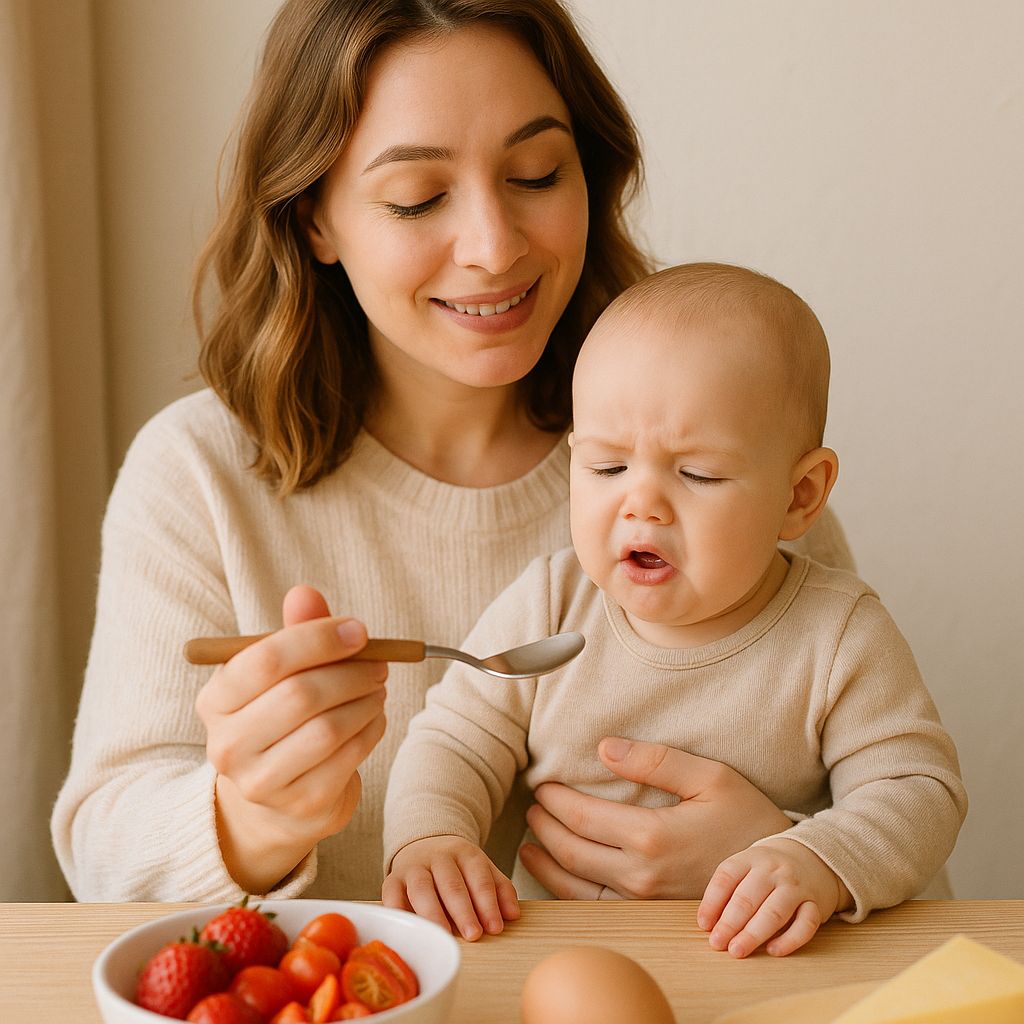
- Examples to avoid: Whole grapes, cherry tomatoes, popcorn, marshmallows, chunks of raw fruits/veggies, hard candies, hot dog slices, large pieces of meat or cheese.
- Safe alternatives: Cut grapes and cherry tomatoes into small pieces; steam or cook hard fruits/veggies; shred meats and cheese; always supervise meals.
6. Raw or Undercooked Eggs, Meat, Fish, and Shellfish
- Risk: Raw or undercooked animal products may contain bacteria or parasites.
- When to introduce: Fully cooked eggs, meats, and fish can be introduced around 6 months.
- Safe alternatives: Ensure all animal products are well-cooked; avoid raw seafood until older childhood.
7. Certain Cheeses
- Risk: Soft cheeses made from unpasteurized milk (like brie, camembert, blue cheese) may contain Listeria.
- When to introduce: Only offer pasteurized cheeses after 6 months, in small, manageable pieces.
8. High-Salt and High-Sugar Foods
- Risk: Babies’ kidneys can’t process excess salt; sugar increases the risk of tooth decay and poor eating habits.
- Examples to avoid: Processed foods, salty snacks, cured meats, sugary desserts, sweetened beverages.
- Safe alternatives: Offer natural, unsalted, and unsweetened foods.
9. Certain Fish High in Mercury
- Risk: High mercury levels can affect neurological development.
- Examples to avoid: Shark, swordfish, king mackerel, tilefish.
- Safe alternatives: Low-mercury fish like salmon, pollock, and light canned tuna.
10. Caffeinated Foods and Drinks
- Risk: Caffeine is a stimulant not suitable for babies.
- Examples to avoid: Coffee, tea, chocolate, energy drinks, cola.
Other Foods to Avoid or Be Cautious With
- Sticky or chewy foods: Like peanut butter, gum, or chewy candy.
- Large chunks of any food: Always cut food into small, age-appropriate pieces.
- Raw sprouts: May harbor bacteria.
- Processed meats: Often high in salt and preservatives.
Understanding Food Allergens
Common food allergens include cow’s milk, eggs, peanuts, tree nuts, soy, wheat, fish, and shellfish. Current guidelines recommend introducing allergenic foods around 6 months, but always discuss with your pediatrician, especially if your child is at high risk for allergies (e.g., family history or eczema).
When introducing allergenic foods:
- Introduce one new food at a time and wait 3-5 days before adding another.
- Watch for signs of allergic reaction: rash, vomiting, diarrhea, swelling, difficulty breathing, or hives.
- Have an emergency plan if your baby is at risk of severe allergy.
Tips for Safe Feeding
- Always supervise your baby during meals.
- Ensure your baby is sitting upright while eating.
- Offer soft, mashed, or finely chopped foods.
- Don’t add salt, sugar, or honey to homemade baby food.
- Be cautious with foods that can clump together (like bread or rice cakes).
- Follow age-appropriate feeding guidelines and consult your pediatrician with concerns.
Safe First Foods for Babies
Now that you know which foods to avoid, here are some safe options for introducing solids around 6 months:
- Iron-fortified baby cereals (mixed with breastmilk or formula)
- Pureed vegetables (carrots, sweet potatoes, peas, squash)
- Pureed fruits (bananas, apples, pears, peaches)
- Well-cooked and pureed meats, poultry, or fish
- Well-cooked and mashed legumes (lentils, beans)
- Full-fat, unsweetened yogurt (pasteurized)
- Soft, scrambled eggs (fully cooked)
What to Do If Your Baby Eats an Unsafe Food
If your baby accidentally eats a food that’s considered unsafe, stay calm. In most cases, especially if it’s a small amount, there won’t be any lasting harm. However, watch for symptoms such as choking, difficulty breathing, rash, swelling, vomiting, diarrhea, or lethargy. If you see any severe reaction or signs of botulism (constipation, weak cry, muscle weakness), seek medical attention immediately.
Conclusion
Feeding your baby is a journey that requires knowledge, vigilance, and patience. By avoiding foods that are unsafe for babies and following age-appropriate guidelines, you can help your child develop healthy eating habits while minimizing risks. Always consult your pediatrician with questions about your baby’s diet or if you’re unsure about a particular food. With informed choices and careful supervision, you’ll set the stage for a lifetime of healthy nutrition and safety at the table.