Flying with a Baby: Complete Guide for Parents
Are you planning your first flight with your little one? The idea of flying with a baby often fills parents with anxiety—but it doesn’t have to! With the right preparation, some expert tips, and a dash of patience, you can make your journey smooth and even enjoyable. In this complete guide, we’ll cover everything you need to know about flying with a baby, from booking your tickets to surviving the flight and beyond.
1. Planning & Booking Your Flight
Choose the Best Flight Time
- Opt for direct flights whenever possible to minimize travel time and disruptions.
- Choose flights that coincide with your baby’s sleep schedule for a greater chance they’ll nap onboard.
- Early morning flights are generally less crowded and more punctual.
Book the Right Seat
- Bassinet seats are a lifesaver on long-haul flights—request one when booking.
- If your budget allows, consider purchasing a separate seat for your baby along with an FAA-approved car seat for safety and comfort.
- Aisle seats make it easier to move around without disturbing neighbors.
Check Airline Policies
- Airlines vary in terms of baggage allowances, fees for lap infants, and amenities (like early boarding or bassinets). Check these details when booking.
- Some airlines offer special family check-in counters and pre-boarding for families with young children—take advantage of these perks!
2. Essential Packing List for Flying with a Baby
When you’re traveling with a baby, packing smart is crucial. Here’s a handy checklist to ensure you have all the essentials—but remember, less is more!
- Diapers (1 for every hour of travel, plus extras)
- Wipes (for diaper changes and cleaning surfaces)
- Changing pad
- Disposable diaper bags
- Extra baby clothes (at least 2 changes)
- Burp cloths and bibs
- Blanket (doubles as a swaddle or nursing cover)
- Favorite toy or comfort item
- Pacifiers (bring a couple, if your baby uses them)
- Bottles, formula, or breast milk (enough for the journey plus delays)
- Snacks and baby food (if age-appropriate)
- Lightweight stroller or baby carrier
- Small first aid kit (include baby-safe pain reliever and teething gel if needed)
- Travel-friendly hand sanitizer
- Baby headphones or ear protection (optional, but great for noise-sensitive babies)
- All travel documents, including passports and proof of age
Tip: Pack your carry-on in clear, labeled pouches for quick access to essentials during the flight.
3. Preparing for the Airport with a Baby
Before You Go
- Check your airline’s baggage and stroller policies.
- Download any necessary travel apps for your airline and airport.
- Arrive early! Give yourself extra time for check-in, security, and unexpected delays.
At the Airport
- Use a carrier or compact stroller for navigating the airport. Most airlines allow you to gate-check strollers and car seats for free.
- Take advantage of family lanes at security for a less stressful experience.
- Seek out airport family rooms or play areas to let your baby burn off energy before boarding.
- Feed and change your baby right before boarding—the more comfortable they are, the smoother the takeoff.
4. Boarding and Takeoff: Smooth Sailing Ahead
Pre-Boarding Tips
- Most airlines offer pre-boarding for families. Use this time to get settled without the crowd.
- Set up your seat area: organize your essentials, strap in your car seat (if you have one), and keep favorite toys within reach.
During Takeoff and Landing
Babies often experience ear discomfort due to cabin pressure changes. Here’s how to help:
- Nurse, bottle-feed, or offer a pacifier during ascent and descent to encourage swallowing and relieve ear pressure.
- For older babies, sippy cups or snacks can help as well.
5. In-Flight Survival Guide
Keeping Your Baby Comfortable
- Dress your baby in layers for temperature changes.
- Bring a familiar blanket or toy for comfort.
- Walk the aisles when it’s safe to help soothe and entertain.
Managing Diaper Changes
- Most airplane bathrooms have a fold-down changing table, but space is tight—bring only the essentials to the restroom.
- If the seatbelt sign is on and you can’t leave your seat, use a changing pad on your lap for emergencies (and apologize to your neighbors!).
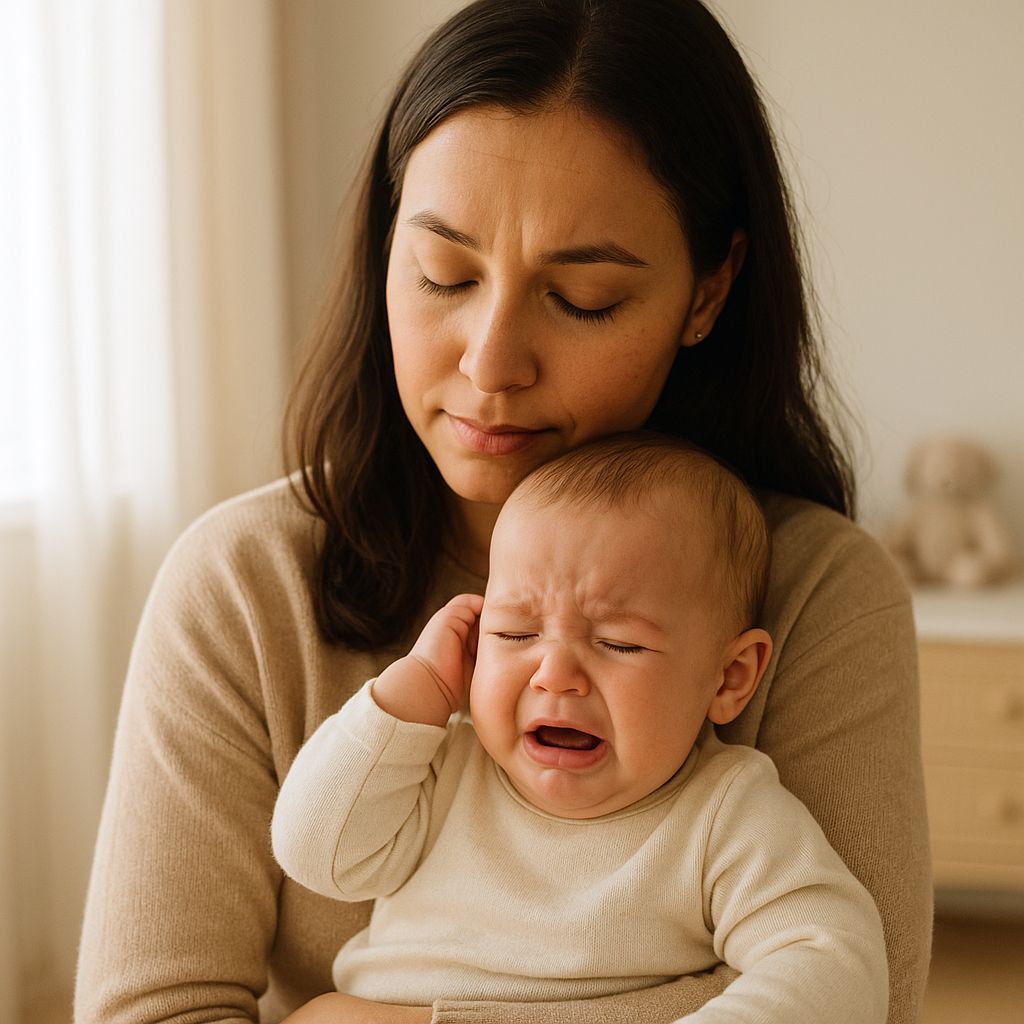
Dealing with Crying and Fussiness
- Stay calm—most passengers are more understanding than you think.
- Try feeding, bouncing, or singing quietly to soothe your baby.
- Ask flight attendants for help if you need it; they’re usually happy to assist families.
Entertainment for Babies
- For young infants, the new sights and sounds are often enough. For older babies, bring a few favorite toys and books.
- Rotate toys to keep things interesting and save a “new” toy for when you need a distraction most.
6. Arriving at Your Destination
Disembarking
- Take your time leaving the plane. Most airlines will let families deplane last so you can gather your things without feeling rushed.
- Don’t forget to collect strollers and car seats at the gate or baggage claim.
Adjusting to New Surroundings
- Give your baby time to adjust to new time zones and surroundings. Stick to familiar routines as much as possible to help them settle in.
- If you’re renting a car, ask in advance about car seat availability or bring your own for safety and comfort.
7. Bonus Tips for Stress-Free Travel
- Travel with a partner if possible, to share the load and take breaks.
- Don't be afraid to ask for help—from flight staff or friendly fellow travelers.
- Remember, flexibility is your best friend! Plans might change, and that’s okay.
- Most importantly, keep a sense of humor. Every flight is an adventure!
Conclusion
Flying with a baby can feel overwhelming, but with careful planning, realistic expectations, and a positive attitude, it’s absolutely doable—and can even be enjoyable. Each trip builds your confidence and creates precious family memories. So pack your bags, grab that boarding pass, and get ready to explore the world with your little travel buddy. Safe travels from all of us at Growing Giggles!
Frequently Asked Questions
- What documents do I need when flying with a baby?
- Most airlines require proof of your baby’s age, such as a birth certificate or passport. For international flights, passports are mandatory for all ages. Always check the specific airline’s requirements before you travel.
- How can I help my baby sleep on the plane?
- Stick to your baby’s usual sleep routine as closely as possible. Bring a favorite blanket or toy, use a baby carrier for comfort, and consider booking a bassinet seat for long-haul flights. Feeding during takeoff and landing can also help soothe your baby to sleep.
- Can I bring formula or breast milk through airport security?
- Yes, parents are allowed to bring baby formula, breast milk, and baby food in reasonable quantities through airport security. Inform the TSA officer at the checkpoint, and be prepared for additional screening if necessary.
- Should I book a separate seat for my baby?
- For babies under 2, most airlines allow them to fly on your lap for free or at a reduced fare. However, booking a separate seat with an approved car seat can provide extra safety and comfort, especially on long flights.
- What are the best seats on a plane when traveling with a baby?
- Bulkhead seats (the first row in each section) often have more space and can accommodate bassinets on long-haul flights. Aisle seats make it easier to get up and move around. Always check with your airline about their seating policies for families.