
Ergonomics in Baby Products: Why It Matters More Than You Think
Most parents spend time thinking about safety. Fewer spend time thinking about ergonomics.
And yet the two are more connected than they might appear. A baby product that places a child in the wrong position — habitually, over weeks and months — isn't creating a dramatic, visible problem. It's creating a quiet, cumulative one. Hips developing under gentle, persistent strain. Core muscles building around a compensating posture. A spine adapting to a slouch that started in a bouncer.
This isn't alarmism. It's simply what happens when a rapidly developing body is shaped by its physical environment — and baby products are a significant part of that environment in the first two years.
Here's what ergonomics actually means in the baby product context, and why it deserves a place in your buying decision.
What Is Ergonomics, in the Baby World?
In adult products — office chairs, keyboards, car seats — ergonomics means designing tools that fit the human body and support it in its natural, low-strain positions.
In baby products, it means exactly the same thing, with one additional consideration: your baby's body is not finished yet. Joints are forming. Muscles are building. Spine curvature is developing. This means that the positions a baby is placed in during the early months actually influence how those structures develop — not just whether they're comfortable in the moment.
Ergonomically designed baby products work with the body's natural developmental trajectory. Poorly designed ones work against it.
The Carrier: Where Ergonomics Is Best Established
The M-Position
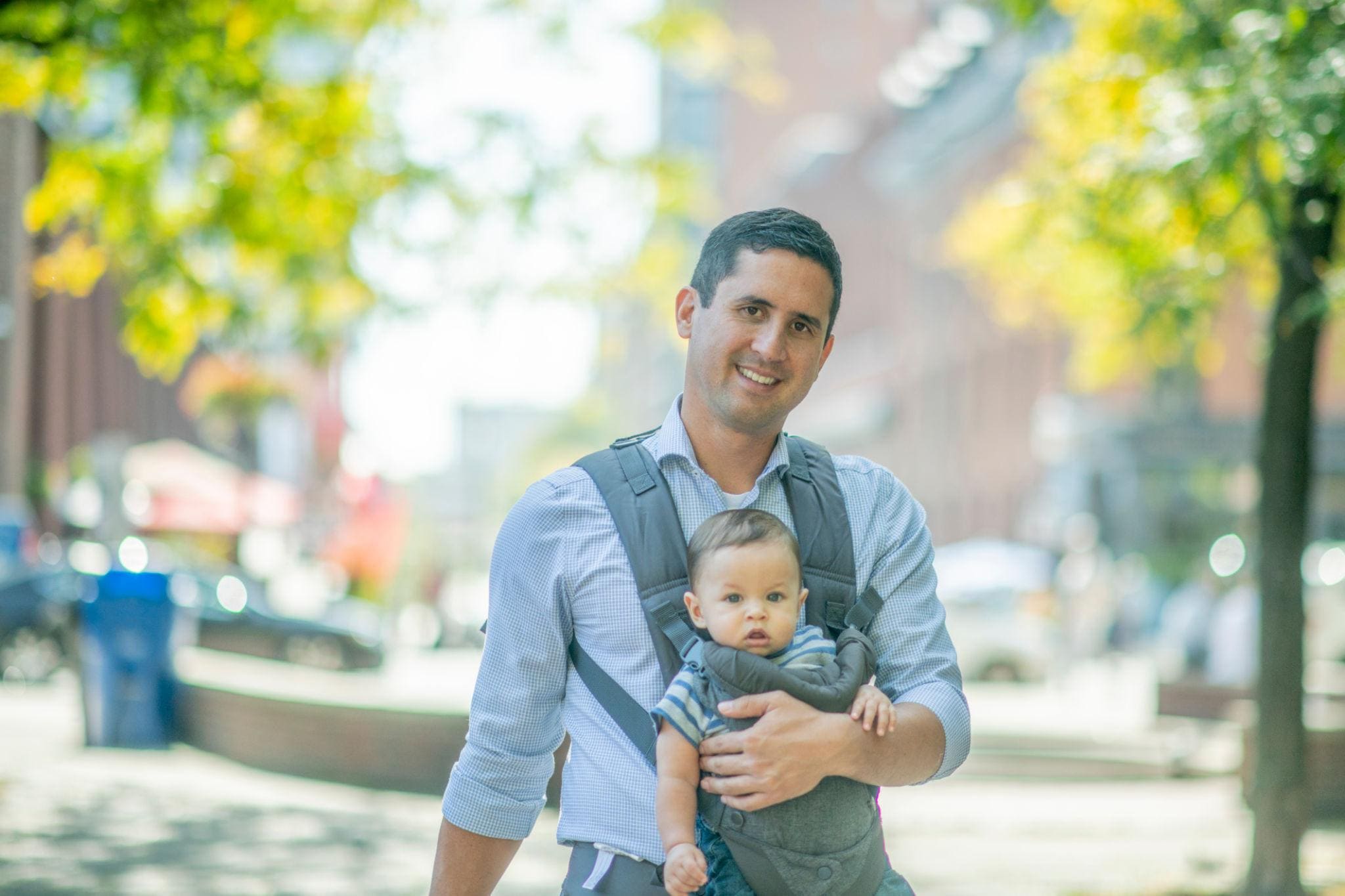
The most important concept in carrier ergonomics is the M-position (also called the frog-leg position). When correctly positioned in an ergonomic carrier, a baby's knees are higher than their bottom, and their thighs are spread out to the sides, supported by the carrier's base. When viewed from the front, their legs form an M shape.
This position mirrors the natural position of a newborn's hips — the same position recommended by paediatric orthopaedic specialists for healthy hip joint development. It keeps the ball of the femur correctly seated in the hip socket as cartilage hardens into bone.
baby Carriers that don't support this position — particularly older-style carriers where the baby hangs by the crotch with legs dangling down — place prolonged stress on the hip joint in an unnatural position. For most babies, this may not cause a clinical problem, but for those with any predisposition to hip dysplasia, it's a meaningful risk.
Head and Spine Support
Newborns have no voluntary head control. baby Carriers must fully support the head until the baby develops this independently, typically around 4 months. A carrier that allows the head to fall forward — even briefly — risks airway compromise.
For the spine, a slight natural curve (the "C-curve" of a newborn) should be maintained rather than forced into a fully straight position. Carriers designed with a padded, structured back panel gently support this curve.
The High Chair: Posture at Every Meal
High chair ergonomics is one of the most overlooked areas in baby product buying — and one of the most consequential, given that your baby will use a high chair for potentially three meals a day over two years.
The Footrest: More Important Than It Looks
When feet dangle from a high chair without support, the body responds by compensating — typically through core instability, forward leaning, or postural adjustment. Imagine sitting at a desk with your feet not touching the ground for every meal, every day. The cumulative effect on your back and core would be noticeable.
For babies, a properly positioned footrest allows feet to rest flat (not tip-toeing, not bent too far back), which creates a stable base for the entire upper body. This makes feeding easier — babies can focus on eating rather than balancing.
What to check: The footrest should be adjustable to follow your baby's growth. Many lower-priced high chairs have a fixed or absent footrest — worth noting when comparing options.
Tray Height and Arm Position
The tray should sit at a height that allows baby's forearms to rest on it comfortably without shrugging or reaching up. Arms slightly forward at a comfortable rest position — not raised, not dropped.
Recline Angle
For younger babies just starting solids (around 6 months), a slightly reclined seat angle provides additional support for those who aren't yet fully stable in an upright position. As trunk control develops, the seat can move more upright.
The Stroller: Spine Position on Every Outing
Recline for Younger Babies
A baby under 6 months should not spend sustained time in a fully upright stroller seat. Before adequate trunk control develops, an upright position places strain on the spine and can result in slumping — which both compresses the spine and can impair breathing in severe cases.
A full flat-recline position (180 degrees) is ideal for newborns. A near-flat position (around 150 degrees) is generally acceptable for babies over 3–4 months who have developing head control.
Many parents purchase an upright stroller based on aesthetics and realise only afterward that it doesn't recline adequately for a young baby. This is a particularly important spec to check before purchasing.
Harness Fit
A harness that's too loose allows forward slumping, which negates the benefit of a properly designed seat. The harness should be snug enough that you can fit two fingers between it and your baby's chest — no more.
Handlebar Height
This one is about parent ergonomics, which matters too. A handlebar at the wrong height means you're either hunching or reaching — both of which cause back strain over years of use. Adjustable handlebars of stroller are a meaningful quality-of-life feature for parents of different heights.
The Bouncer and Rocker: The Semi-Inclined Question
Bouncers and rockers place babies in a semi-reclined position that's comfortable and often sleep-inducing. The ergonomic concern arises with extended duration.
Prolonged time in a semi-reclined seated position can contribute to:
- Positional plagiocephaly (flat head) if baby spends extensive time in one position
- Reduced floor time — which is important for overall motor development
The recommendation from most paediatric physiotherapists: bouncers and rockers are fine for supervised awake time in appropriate durations (under 1–2 hours continuously), but should not replace floor time, tummy time, or independent movement.
Never use for unsupervised sleep.
Key Ergonomic Checklist When Buying Baby Gear
ProductWhat to CheckCarrierM-position for hips, head support, chin-off-chest airway clearanceHigh chairAdjustable footrest, appropriate tray height, recline for young babiesStrollerFull recline for <6 months, snug harness, adjustable handlebarBouncerSemi-recline angle, limit duration, never for unsupervised sleepBaby seat/bouncerHead and neck supported, not too upright for newborns
Conclusion
Ergonomics isn't a premium concern — it's a developmental one. The products your baby spends the most time in should support their body in positions that align with how their joints, muscles, and spine are actually meant to develop.
You don't need to become an expert in biomechanics to make good decisions here. You need to know a few key things to look for — and choose products from brands that have genuinely thought about this, not just checked a certification box.
Your baby's body will remember how it was held. Make it worth remembering well.
Frequently Asked Questions
Q1. How do I know if a carrier is truly ergonomic?
Look for one that supports the M-position and is certified by a hip dysplasia institute.
Q2. Baby seems comfortable in a wrong position?
Comfort doesn’t always mean correct ergonomics.
Q3. Max usage time for baby gear?
Limit 1–2 hours in restrictive gear.
Q4. Are expensive products more ergonomic?
Not always — check features, not price.
Q5. Baby diagnosed with hip dysplasia?
Consult your doctor and avoid non-ergonomic positions.