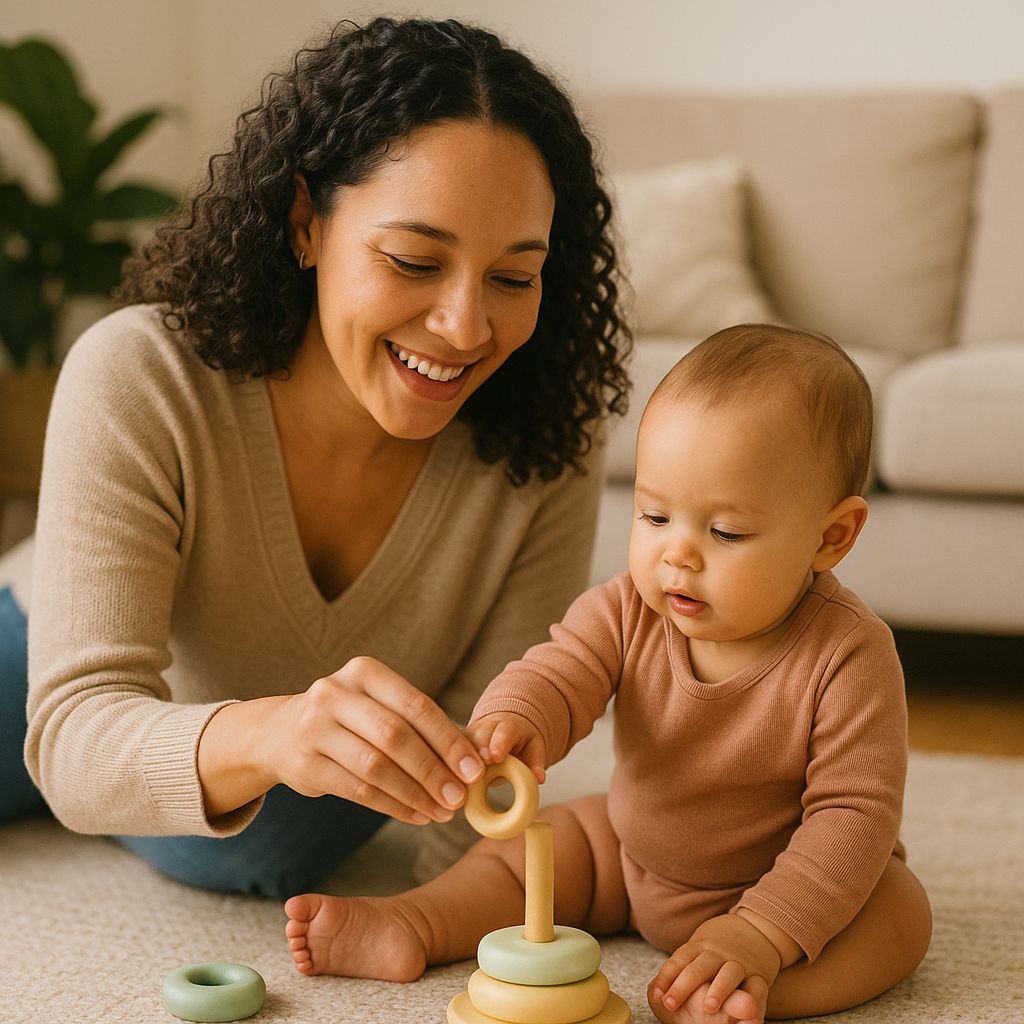

Easy Play Ideas to Keep Your Baby Engaged at Home
By Growing Giggles Editorial Team | Play Activities | All Ages
Being at home with your baby offers countless opportunities for connection, learning, and giggles! But when you’re in the thick of daily routines, it’s easy to run out of ideas for keeping your little one happy and engaged. The good news? Play doesn’t have to be complicated or require a toy store haul. With a dash of creativity and a sprinkle of curiosity, you can turn everyday moments into meaningful playtime adventures.
Why Play Matters for Babies
Play isn’t just about fun—it’s a critical part of your baby’s development. Simple activities can boost your baby's:
- Cognitive skills (problem-solving, cause and effect)
- Physical development (tummy time, reaching, grasping)
- Language and communication (babbling, listening, responding)
- Emotional well-being (bonding, confidence, security)
Plus, playtime is a chance for you and your baby to connect and create joyful memories—no special equipment required!
Setting Up a Safe Play Space
Before you dive into play, create a cozy, hazard-free zone where your baby can explore. Use a soft blanket, play mat, or secure area of the floor. Remove small objects, sharp edges, and anything that could pose a choking hazard. Keep an eye on your baby at all times, especially as they become more mobile.
Easy Play Ideas for Babies (0–12 Months)
1. Tummy Time Fun
Tummy time is essential for strengthening your baby’s neck, shoulders, and core muscles. Make it more engaging by:
- Placing a colorful toy or mirror just out of reach
- Getting down on the floor and making silly faces or sounds
- Laying baby on your chest for a cuddle-powered version
2. Sensory Play with Everyday Items
Babies love to explore with their senses! Try these simple sensory activities:
- Texture baskets: Fill a basket with safe household items (soft fabric, wooden spoon, silicone kitchen tool). Let baby touch, squeeze, and mouth (with supervision) each item.
- Crinkly fun: Give baby a clean, empty wipes package or mylar emergency blanket to scrunch and listen to.
- Water play: Let baby splash their hands in a shallow bowl of water during supervised playtime.
3. Peekaboo and Face Games
Peekaboo never gets old! Try classic face games to delight your baby:
- Hide your face behind your hands or a scarf, then pop out with a big smile.
- Play “copycat” by mimicking your baby’s coos and expressions.
- Use a hand mirror to show your baby’s reflection and make silly faces together.
4. Music and Movement
Babies are naturally drawn to rhythm and music. Try these musical activities:
- Sing simple songs or nursery rhymes with lots of gestures.
- Gently bounce, sway, or dance with your baby in your arms.
- Make DIY shakers with a sealed container filled with rice or pasta (supervised play only!).
5. Rolling and Reaching Games
Encourage your baby to move and stretch:
- Lay baby on their back and roll a soft ball nearby to watch or reach for.
- Place toys just out of reach during tummy time to inspire reaching and scooting.
- Let baby try rolling from belly to back with your gentle support.
6. Storytime Adventures
Even young babies benefit from books! Try:
- Reading board books with bright pictures and simple words
- Pointing to and naming objects in the illustrations
- Letting baby hold or mouth sturdy books during reading time
7. Texture Crawling
Once your baby starts creeping or crawling, create a texture path:
- Lay down towels, soft mats, and safe household items
- Encourage baby to crawl across different surfaces for new sensory input
8. Bubble Magic
Bubbles are mesmerizing for babies! Blow bubbles and let your baby watch, reach, and pop them. Always supervise to prevent bubble mixture from getting in their mouth or eyes.
9. Basket Play
Fill a shallow basket with safe household objects (plastic cups, wooden spoon, soft cloth). Let your baby explore, bang, and discover new sounds and textures.
10. Parent-Baby Yoga or Stretching
Try gentle stretches with your baby on a soft mat, or follow along with a parent-baby yoga video. It’s a relaxing way to connect and introduce movement.
Tips for Successful Playtime
- Follow your baby’s lead: If they’re not interested, switch things up or try again later.
- Keep it short and sweet: Babies have short attention spans—several 10–15 minute sessions work best.
- Rotate activities: Variety keeps things fresh and stimulates different senses.
- Talk and narrate: Describe what you’re doing to boost language development.
- Embrace the mess: Sensory play can get messy, but it’s all part of the learning process!
Making the Most of Everyday Moments
Remember, play doesn’t always require a “set” activity. Everyday routines—diaper changes, bath time, mealtime—are perfect chances for playful interaction. Sing a silly song during a diaper change, splash together in the tub, or play “airplane spoon” at lunch.
The goal isn’t to keep your baby entertained every minute, but to build a foundation for healthy development, curiosity, and connection. When you engage your baby with love and laughter, you’re creating powerful learning moments, no matter how simple the activity.
When to Try New Play Ideas
If your baby seems fussy, overtired, or uninterested, it’s okay to pause and try again later. Every baby has their own rhythm. As they grow, you’ll notice new skills emerging—rolling, sitting, crawling, babbling—and you can adapt your play ideas to match their stage.
Frequently Asked Questions
How much playtime does my baby need each day?
Babies thrive with several short play sessions throughout the day. For infants, even 10–15 minutes at a time is great. Let your baby’s cues guide you—the quality of interaction is more important than the length of play.
What if my baby gets bored with an activity?
Babies have short attention spans and are naturally curious. Switch things up, introduce a new sensory item, or change your location to rekindle their interest. Sometimes, even a new song or funny face does the trick!
Do I need special toys for home play?
No need to splurge! Many household items—soft fabrics, measuring cups, wooden spoons—make wonderful playthings. Just make sure everything is safe, clean, and free from choking hazards.
How can I make playtime safe for my baby?
Always supervise your baby and use age-appropriate materials. Avoid small, sharp, or breakable items, and create a soft play area. Keep playtime positive and pressure-free—your presence is the best “toy” of all!
Final Thoughts: Celebrate Simple Joys
Easy play ideas are truly the heart of early childhood—proof that fun and development don’t require fancy gadgets or complicated routines. With a little creativity, your living room can transform into a magical world of discovery, giggles, and growth. Soak up these precious moments and remember: the best toy your baby could ever have is you!
Happy playing!