
Cognitive Development Activities for Babies: Expert Strategies for Nurturing Young Minds
From the moment of birth, your baby is soaking up the world around them. Every sight, sound, and touch provides an opportunity for growth, laying the foundation for cognitive development that will shape their lifelong learning journey. As parents, understanding how to intentionally nurture your infant’s developing mind can be transformative. This guide from Growing Giggles offers authoritative, research-backed strategies and activities to stimulate cognitive development in babies, helping you foster curiosity, problem-solving, and emotional wellbeing from day one.
Understanding Infant Cognitive Development
Cognitive development refers to the processes through which babies learn to think, understand, remember, and solve problems. In infancy, this growth happens rapidly—babies transition from simple reflexes to complex behaviors like recognizing faces, responding to voices, and exploring their environment.
- Birth–3 months: Sensory exploration, recognizing caregivers, and responding to sounds.
- 3–6 months: Increased awareness, reaching for objects, and beginning to understand cause and effect.
- 6–12 months: Problem-solving, imitation, basic communication, and memory formation.
Every interaction counts. By integrating cognitive development activities into daily routines, you’re giving your baby the tools they need to thrive.
Why Are Cognitive Development Activities Important?
Structured and unstructured activities stimulate neural connections, supporting language acquisition, attention span, memory, and emotional intelligence. Early cognitive stimulation is linked to:
- Enhanced school readiness and learning ability
- Better social skills and emotional regulation
- Stronger parent–child bonds
Investing time in cognitive development activities can set the stage for lifelong success.
Expert-Recommended Cognitive Development Activities for Babies
1. Sensory Play: Stimulating the Senses
Sensory play is fundamental for infant brain development. By exposing your baby to diverse textures, sounds, and sights, you encourage curiosity and neural growth.
- Touch: Offer soft, crinkly, or bumpy fabrics. Let your baby grip rattles or silicone teethers. Create a sensory basket with safe household items (wooden spoon, soft brush, fabric squares).
- Sight: Hang a mobile with bold colors over the crib. Use black-and-white picture cards for newborns. Point out contrasting objects during walks.
- Sound: Play gentle music, shake rattles, or use wind chimes. Narrate your actions with a soothing voice.
- Smell: Introduce mild scents (vanilla, lavender) via clean cloths, always ensuring safety and avoiding strong or allergenic fragrances.
Tips for Sensory Play
- Supervise all play to ensure safety.
- Rotate objects regularly to maintain interest.
- Observe your baby’s reactions and repeat activities they enjoy.
2. Interactive Games: Building Social and Cognitive Skills
Simple games support memory, attention, and social interaction. Some favorites include:
- Peekaboo: This classic game teaches object permanence—the understanding that things exist even when out of sight.
- Pat-a-Cake: Rhythmic hand clapping and singing promote language and coordination.
- Mirror Play: Babies love looking at themselves. Use a baby-safe mirror to encourage self-recognition and facial expressions.
- Imitation: Make faces or sounds for your baby to copy, supporting memory and social learning.
How to Play Effectively
- Use exaggerated expressions and tone to capture attention.
- Pause and wait for your baby’s response—interaction is key!
- Repeat games often, as repetition builds understanding.
3. Language Exposure: Talking, Singing, and Reading
Language is the cornerstone of cognitive development. Even before your baby can speak, they are absorbing sounds, rhythms, and meanings.
- Talking: Narrate your actions, describe objects, and respond to coos and babbles. Use clear, simple language.
- Singing: Lullabies, nursery rhymes, and songs introduce rhythm and vocabulary. Choose repetitive tunes for easy learning.
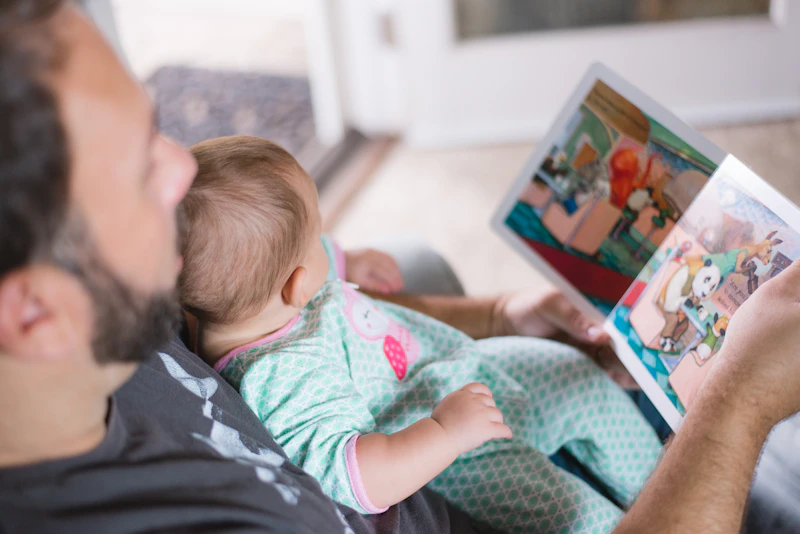
- Reading: Read picture books with bright images. Point to objects and name them. Even newborns benefit from hearing stories.
Tips for Language Exposure
- Make eye contact and use expressive voices.
- Follow your baby’s cues—pause if they seem overstimulated.
- Repeat favorite books and songs to build familiarity.
4. Problem-Solving Activities: Encouraging Exploration
Babies learn by trial and error. Offer safe opportunities to explore and solve simple problems.
- Reach-and-Grab: Place toys just out of reach to motivate stretching and grasping.
- Cause-and-Effect Toys: Use toys that make sounds or light up when pressed.
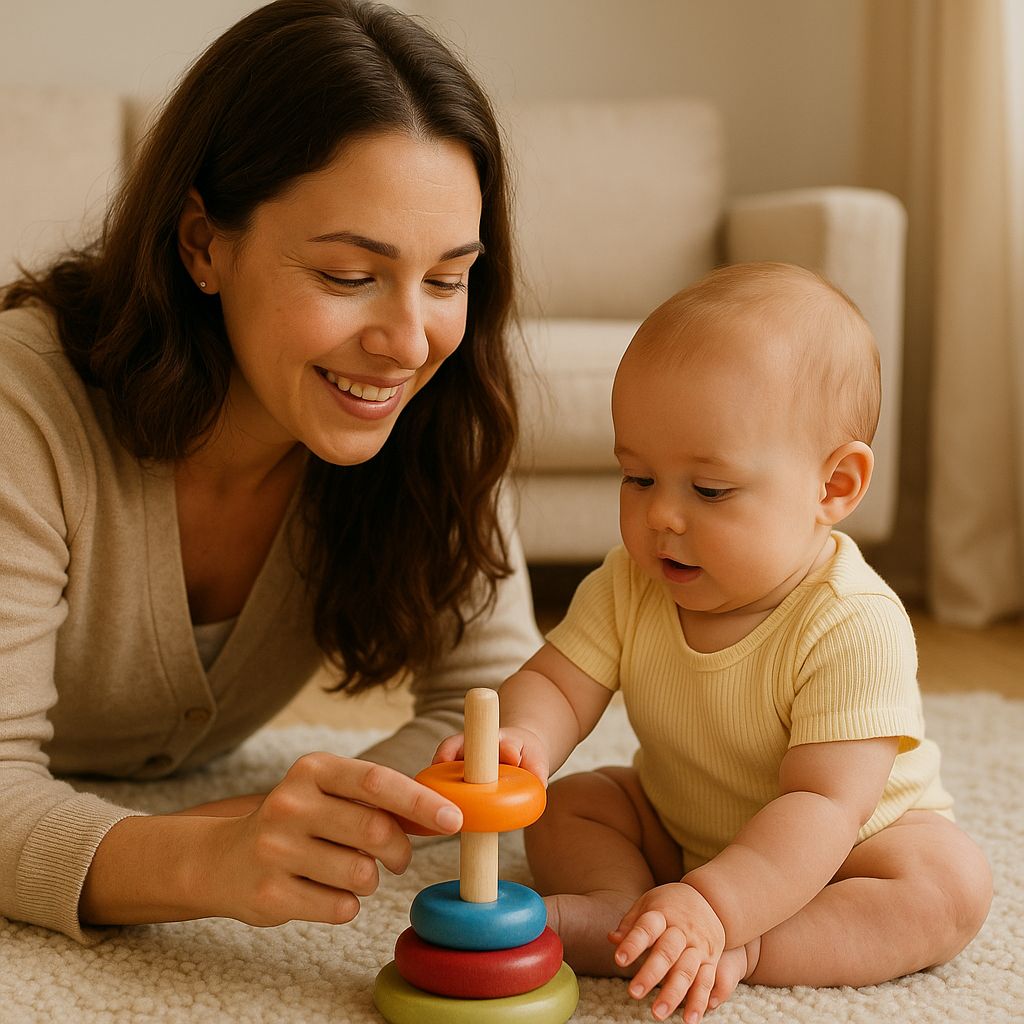
- Stacking: Provide soft blocks or cups for older infants to stack and knock down.
Safety Considerations
- Ensure all toys are age-appropriate and free from choking hazards.
- Supervise exploration, especially with new objects.
5. Daily Routines as Learning Opportunities
Everyday moments are rich with learning potential. Turn routines into cognitive activities:
- Diaper Changes: Talk, sing, and show objects to your baby.
- Bath Time: Let your baby splash, feel different water temperatures, and play with bath toys.
- Feeding: Point out food textures, colors, and flavors (if age-appropriate).
- Bedtime: Establish calming routines with lullabies, gentle touch, and storybooks.
6. Outdoor Exploration: Nature as a Classroom
Fresh air and natural surroundings stimulate the senses and introduce new sights and sounds.
- Take short walks, pointing out trees, birds, and clouds.
- Let your baby feel grass or leaves (supervised and safe).
- Describe what you see and hear, encouraging curiosity.
Adapting Activities to Developmental Stages
Tailor cognitive activities to your baby’s age and milestones. Here are suggestions for each stage:
Newborn (0–3 Months)
- High-contrast visuals (black and white cards)
- Soft music and gentle singing
- Skin-to-skin contact for emotional bonding
Young Infant (3–6 Months)
- Rattles and textured toys
- Mirror play and facial expressions
- Peekaboo with blankets
Older Infant (6–12 Months)
- Stacking and sorting toys
- Cause-and-effect games
- Reading simple picture books
Signs of Healthy Cognitive Development
Look for these cues:
- Curiosity and interest in surroundings
- Responds to voices and recognizes familiar faces
- Begins to imitate sounds and gestures
- Explores objects with hands and mouth
- Shows excitement or frustration with new challenges
Common Questions About Cognitive Development Activities
What are cognitive development activities for babies?
Cognitive development activities for babies are intentional interactions, games, and routines designed to stimulate an infant's brain, encourage learning, and support mental growth. These activities include sensory play, talking to your baby, peekaboo games, and simple problem-solving tasks.
How can I tell if my baby is developing cognitively?
Signs of cognitive development in babies include curiosity, attention to surroundings, recognition of familiar faces, responding to sounds, and beginning to use problem-solving skills like reaching for objects or exploring textures. Regularly engaging your baby in stimulating activities helps nurture these abilities.
Are there specific activities for each age stage in infancy?
Yes, cognitive activities should be age-appropriate. Newborns benefit from visual and auditory stimulation, while older infants (3-12 months) enjoy cause-and-effect toys, peekaboo, and exploring textures. Always adapt activities to your baby's interests and developmental milestones.
Can everyday routines help with cognitive development?
Absolutely. Everyday routines like talking during diaper changes, singing lullabies, narrating actions, and letting your baby explore safe household objects all contribute to cognitive growth. Consistent interaction helps your baby learn language, cause-and-effect, and social skills.
How much time should I spend on cognitive activities with my baby?
There's no set amount of time, but frequent, short sessions throughout the day are most effective. Babies thrive on repetition and variety—integrate cognitive activities naturally into your daily routines for maximum benefit.
Tips for Parents: Making Activities Work for Your Family
- Follow your baby’s cues: If they seem tired or overstimulated, pause and try later.
- Balance structured and unstructured play: Both are valuable for cognitive growth.
- Celebrate milestones: Every new skill is a sign of healthy development.
- Stay flexible: Adapt activities as your baby grows and interests change.
Cognitive Development Activities Checklist
- Sensory play with varied textures and sounds
- Interactive games like peekaboo and pat-a-cake
- Daily language exposure through talking, singing, and reading
- Problem-solving with reach-and-grab and cause-and-effect toys
- Outdoor exploration and nature walks
- Learning opportunities in daily routines
When to Seek Support
All babies develop at their own pace. If you notice significant delays in milestones, lack of curiosity, or difficulty responding to sounds and visuals, consult your pediatrician. Early intervention can make a meaningful difference.
Conclusion: Building a Foundation for Lifelong Learning
Cognitive development activities for babies are not only fun—they’re essential for nurturing curiosity, attention, and problem-solving skills. By incorporating sensory play, interactive games, and language exposure into everyday routines, you’re giving your infant the best possible start. Remember, your loving presence and guidance are the most powerful tools. Embrace each moment, celebrate small victories, and watch your baby’s mind blossom. Growing Giggles is here to support you on this journey—one giggle at a time.