
Baby Sweat Rash vs Allergy: Difference and Treatment Explained
As a parent, seeing any rash on your baby’s delicate skin can be worrying. Two of the most common types are sweat rash (also called prickly heat or miliaria) and allergic rashes. While both may appear as red spots or bumps, their causes, symptoms, and treatments are different. Understanding these differences is crucial for effective management and keeping your baby comfortable. In this comprehensive guide, we explore the distinctions between baby sweat rash and allergies, their causes, symptoms, prevention, and expert-recommended treatment options.
What is Baby Sweat Rash?
Baby sweat rash, medically known as miliaria or prickly heat, is a skin irritation caused by blocked sweat ducts. When a baby sweats, the sweat can get trapped under the skin, especially in hot and humid conditions, leading to tiny red bumps or blisters.
Common Causes of Sweat Rash
- Hot and humid weather
- Overdressing or wrapping baby tightly
- Fever causing increased sweating
- Prolonged skin contact with moisture (e.g., diapers)
Typical Symptoms of Sweat Rash
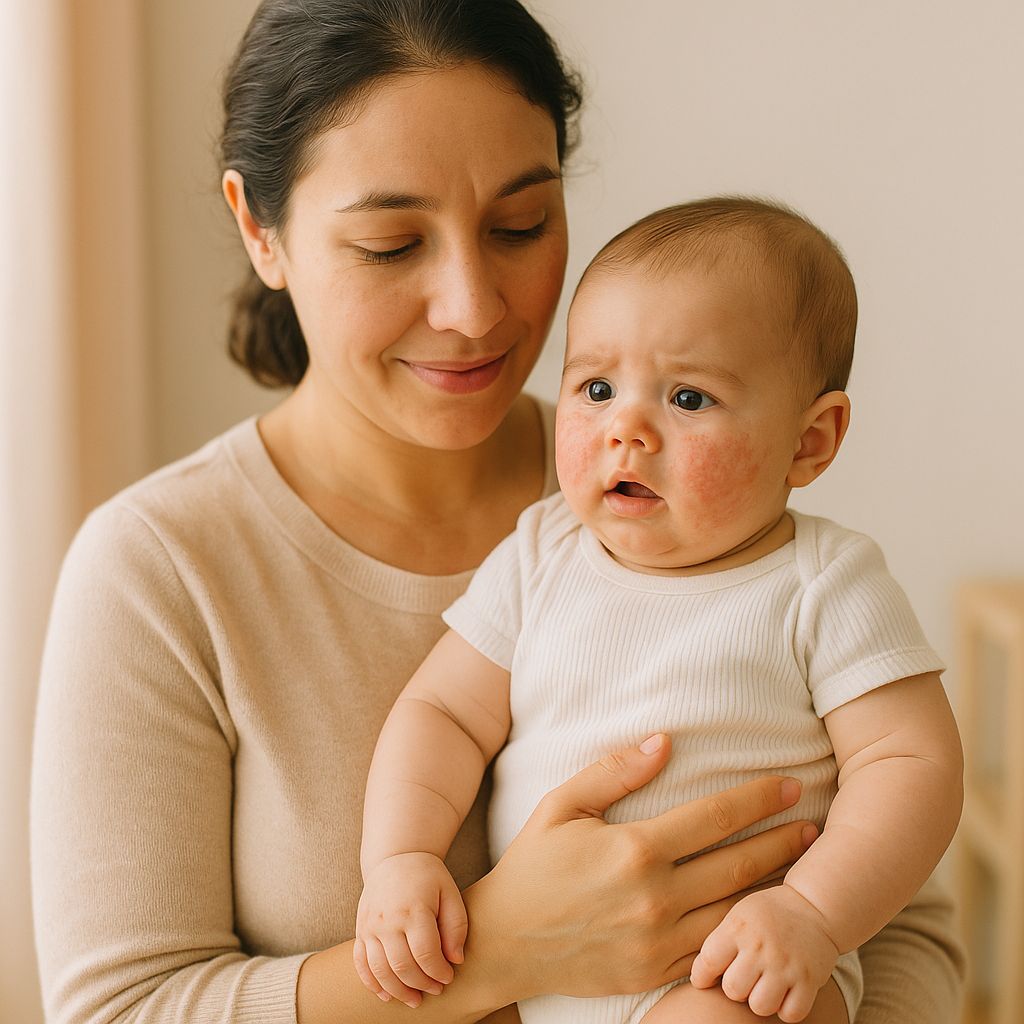
- Small red spots or bumps, sometimes clear blisters
- Appears mostly on neck, upper chest, back, armpits, and skin folds
- Mild itching or prickly sensation
- No swelling or spreading beyond affected areas
What is Baby Skin Allergy?
A skin allergy is an immune reaction triggered by exposure to allergens, such as certain foods, fabrics, detergents, or environmental factors. The immune system perceives these as harmful, releasing chemicals that cause inflammation and rash.
Common Causes of Skin Allergy in Babies
- Foods (milk, eggs, nuts, etc.)
- Soaps, lotions, and detergents
- Fabric dyes or wool
- Pollen, dust mites, pet dander
- Insect bites
Typical Symptoms of Skin Allergy
- Red, itchy patches or hives (raised, pale, and red areas)
- Swelling or oozing
- Rash can appear anywhere on the body, not limited to folds
- Symptoms may worsen with exposure to the trigger
- May be accompanied by other allergic symptoms (runny nose, sneezing, etc.)
Baby Sweat Rash vs Allergy: Key Differences
| Feature | Sweat Rash | Allergy Rash |
|---|---|---|
| Cause | Blocked sweat glands due to heat/humidity | Immune reaction to allergens |
| Appearance | Small red bumps or blisters, mainly in folds | Red, itchy patches, hives, swelling, can appear anywhere |
| Location | Neck, chest, back, armpits, skin folds | Anywhere on body |
| Associated Symptoms | Mild itching/prickly sensation | Intense itching, swelling, sometimes oozing |
| Triggers | Heat, humidity, overdressing | Foods, fabrics, chemicals, pollen, pets |
| Duration | Resolves in few days with cooling measures | Persists until allergen is removed and treated |
How to Diagnose the Rash: Expert Tips
- Observe the location: Sweat rash is more likely in skin folds, allergy can be anywhere.
- Check for triggers: Did it appear after heat exposure or after a new food/product?
- Note associated symptoms: Are there signs like swelling, oozing, or other allergy symptoms?
- Duration: Sweat rash often resolves quickly with cooling; allergies persist until trigger is removed.
- Consult your pediatrician: If unsure, always seek medical advice for proper diagnosis.
Treatment for Baby Sweat Rash
Most cases of sweat rash are mild and resolve on their own. Here’s how to help your baby:
- Keep skin cool and dry: Dress baby in loose, breathable cotton clothes and avoid overheating.
- Frequent baths: Use lukewarm water and gentle, fragrance-free soap. Pat dry, don’t rub.
- Avoid creams and oils: These can block pores further; use only pediatrician-recommended products.
- Keep folds dry: Pay attention to neck, armpits, and diaper area.
- Allow skin to air: Give diaper-free time and avoid tight wraps.
- Monitor for infection: If pus, severe redness, or fever develops, seek medical attention.
Treatment for Baby Skin Allergies
Allergic rashes require identification and avoidance of the trigger, along with symptom relief:
- Remove the allergen: If you suspect a product, food, or fabric, stop use immediately.
- Cool compresses: Help soothe itching and inflammation.
- Gentle skin care: Use hypoallergenic, fragrance-free products.
- Medications: Pediatrician may recommend antihistamines or topical corticosteroids for severe reactions.
- Monitor symptoms: If rash is spreading, accompanied by swelling, breathing difficulty, or fever, seek urgent medical care.
Prevention Tips for Parents
- Dress appropriately: Use loose, cotton clothes and avoid overdressing.
- Maintain cool environment: Use fans, keep rooms well-ventilated.
- Use mild products: Opt for baby-safe, hypoallergenic soaps, lotions, detergents.
- Monitor new foods: Introduce foods gradually; watch for reactions.
- Keep skin dry: Regularly check and dry skin folds and diaper areas.
- Consult doctor before using new products: Always check with your pediatrician for recommendations.
When to See a Pediatrician
Most rashes are harmless and resolve with home care, but consult your pediatrician if:
- Rash is severe, spreading, or oozing
- Baby has fever, is lethargic, or very uncomfortable
- There is swelling, blisters, or signs of infection
- Unsure about the type of rash or it persists beyond a few days
Summary Table: Sweat Rash vs Allergy in Babies
| Aspect | Sweat Rash | Allergy Rash |
|---|---|---|
| Onset | After heat exposure/overdressing | After exposure to allergen |
| Appearance | Red bumps, blisters | Red patches, hives, swelling |
| Location | Folds, neck, back, chest | Anywhere, often exposed areas |
| Management | Cooling, drying, loose clothing | Avoid allergen, medications |
| Medical Attention | If infected or persistent | If severe or systemic |
Expert Advice: Building Healthy Skin Habits
- Regularly observe your baby's skin for changes and rashes.
- Keep a diary of new foods, products, and environmental factors.
- Do not self-medicate for allergic rashes; always consult your pediatrician.
- For babies with sensitive skin, choose clothes and bedding with minimal dyes and chemicals.
Conclusion
Understanding the difference between sweat rash and allergy in babies enables parents to provide the right care and prevent unnecessary discomfort. Always focus on gentle skin care, avoiding triggers, and timely medical consultation when needed. With proper awareness and expert guidance, you can keep your baby’s skin healthy, happy, and rash-free.
Frequently Asked Questions
How can I tell if my baby's rash is an allergy or sweat rash?
Sweat rash usually appears in areas prone to sweating, like neck, armpits, and folds, and looks like small red bumps. Allergic rashes can appear anywhere and often cause itching, swelling, or hives. Monitoring symptoms and triggers helps differentiate. When in doubt, consult your pediatrician.
Is sweat rash dangerous for babies?
Sweat rash is generally harmless and resolves with proper skin care. But if it becomes infected or doesn't improve, seek medical advice.
What are common triggers for baby skin allergies?
Common triggers include certain foods, fabrics, detergents, lotions, pollen, and pets. Identifying and avoiding these triggers is key to preventing allergic rashes.
What is the best way to treat sweat rash in babies?
Keep the baby’s skin cool and dry, use loose cotton clothes, avoid overheating, and gently cleanse the skin. Avoid creams that block pores. For severe cases, consult a doctor.
When should I see a pediatrician for my baby's rash?
See a pediatrician if the rash is severe, spreading, accompanied by fever, oozing, or if the baby is very uncomfortable. Also consult if unsure about the type of rash or if it persists.