
Activities to Strengthen Baby’s Muscles and Coordination: A Complete Guide for Parents
From the moment your baby is born, their little bodies are hard at work developing the muscles and coordination needed for rolling, crawling, standing, and eventually walking. As a parent, you play a pivotal role in supporting this journey. This comprehensive guide explores expert-approved activities to strengthen your baby’s muscles and coordination, ensuring healthy growth and joyful milestones.
Why Are Muscle and Coordination Activities Important?
Muscle strength and coordination are the foundation for all motor skills. These activities:
- Build core, arm, and leg muscles essential for sitting, crawling, and walking
- Enhance balance and body awareness
- Support hand-eye coordination and fine motor skills
- Boost confidence and independence
According to the American Academy of Pediatrics, regular movement and play are key to both physical and cognitive development in infancy.
Understanding Your Baby’s Developmental Stages
Before starting any activity, it’s important to consider your baby’s unique development. Babies grow and master skills at their own pace, but here’s a general timeline:
| Age | Typical Milestones |
|---|---|
| 0-3 months | Lifts and turns head during tummy time, opens hands |
| 3-6 months | Rolls over, holds toys, supports upper body with arms |
| 6-9 months | Sits without support, transfers objects between hands |
| 9-12 months | Crawls, pulls to stand, cruises along furniture |
Safe Practice: Guidelines for Parents
- Always supervise your baby during activities
- Choose a safe, clean, and soft surface for play
- Follow your baby’s cues—stop if they’re tired or upset
Top Activities to Strengthen Baby’s Muscles and Coordination
1. Tummy Time
Why it’s important: Tummy time is the single most effective activity for building neck, shoulder, arm, and core muscles. It also helps prevent flat spots on the back of your baby’s head.
How to do it:
- Place your baby on their stomach on a soft play mat or blanket, several times a day.
- Start with short periods (a few minutes), increasing as your baby gets stronger.
- Get down to their level—talk, sing, or use toys to encourage lifting their head and looking around.
2. Reaching and Grasping Games
Why it’s important: These activities strengthen hand, arm, and shoulder muscles while improving coordination and motor planning.
How to do it:
- Hang colorful toys within your baby’s reach during tummy or back time.
- Encourage reaching by gently shaking or moving toys side to side.
- Allow your baby to grab, shake, and transfer toys between hands.
3. Supported Sitting
Why it’s important: Sitting with support helps babies develop trunk and back muscles needed for independent sitting and posture control.
How to do it:
- Prop your baby in your lap or with pillows around them.
- Support their back and sides as needed.
- Gradually reduce support as your baby gains strength and balance.
4. Rolling Over Practice
Why it’s important: Rolling over builds core strength, balance, and coordination between the upper and lower body.
How to do it:
- Gently encourage your baby to roll by placing a favorite toy just out of reach.
- Guide their motion with a gentle touch, if needed.
- Celebrate successes to keep your baby motivated!
5. Baby Push-Ups
Why it’s important: Lifting the chest off the ground strengthens chest, arm, and shoulder muscles, preparing for crawling.
How to do it:
- During tummy time, place a mirror or toy just above your baby’s eye level.
- Encourage them to push up on their arms to see or reach.
6. Assisted Standing and Cruising
Why it’s important: Standing with support strengthens leg, hip, and trunk muscles, setting the stage for walking.
How to do it:
- Hold your baby upright with feet touching the ground.
- Encourage gentle bouncing and shifting weight from foot to foot.
- As they grow, let your baby cruise along furniture (always supervise!).
7. Crawling and Scooting
Why it’s important: Crawling is excellent for bilateral coordination, using both sides of the body together.
How to do it:
- Place toys just out of reach to encourage movement.
- Use cushions or tunnels for fun obstacle courses.
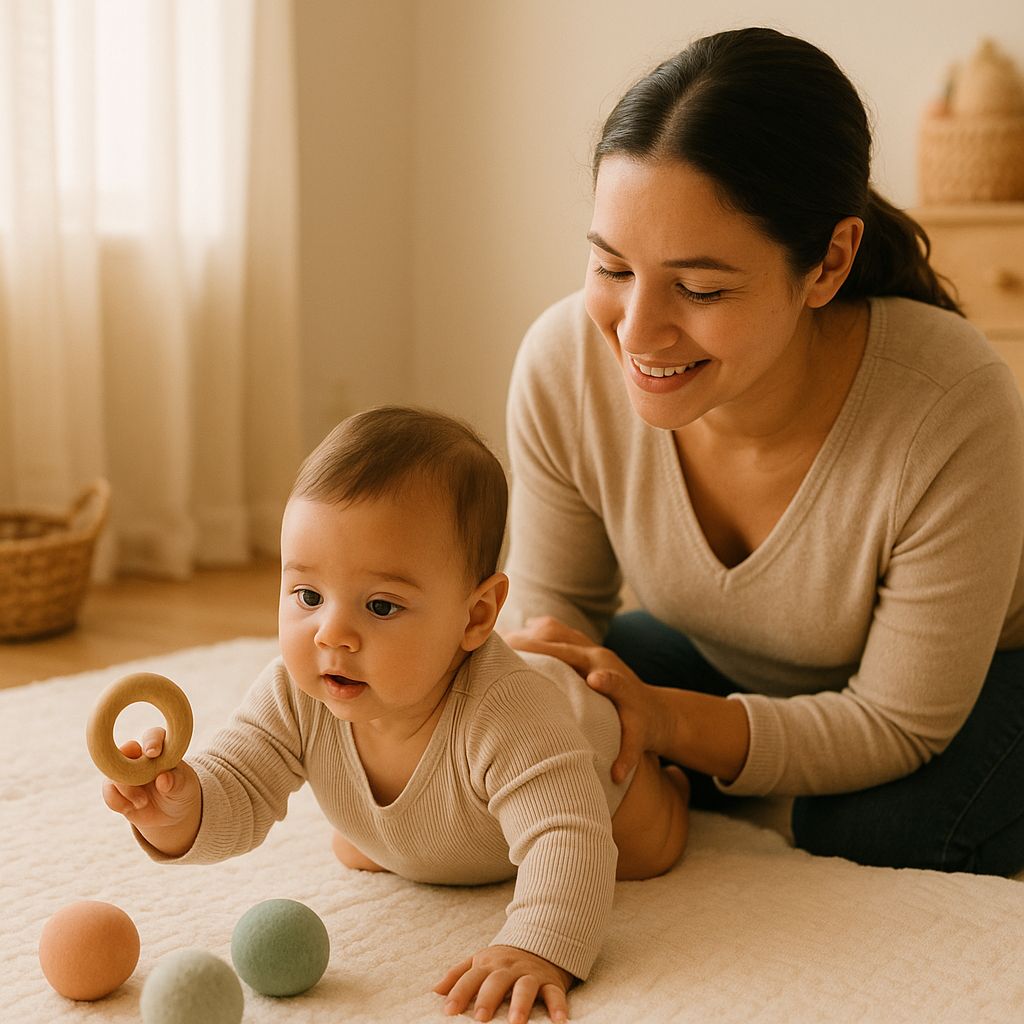
8. Ball Play
Why it’s important: Rolling, reaching for, and passing balls build hand-eye coordination and upper body strength.
How to do it:
- Gently roll soft balls toward your baby and encourage them to grab or push back.
- Use balls of different textures and sizes to keep it interesting.
9. Finger and Toe Play
Why it’s important: Simple games like “This Little Piggy” or tickling toes and fingers enhance fine motor skill development and sensory awareness.
How to do it:
- Sing, count, or gently massage your baby’s hands and feet.
- Offer toys that baby can grasp, squeeze, or shake.
10. Parent-Baby Dance
Why it’s important: Dancing with your baby improves balance and rhythm while strengthening the bond between you.
How to do it:
- Hold your baby securely and sway, bounce, or move gently to music.
- Try rhymes and action songs with accompanying movements.
Household Items as Developmental Tools
You don’t need fancy equipment to support your baby’s muscle and coordination development. Everyday items can be used creatively:
- Pillows – Create safe obstacles for crawling or tummy time.
- Plastic containers – Use for grasping, stacking, and knocking down.
- Scarves and ribbons – Wave and watch together for visual tracking and reaching.
- Mirrors – Babies love looking at their reflection, which encourages movement and curiosity.
Encouraging Progress and Celebrating Milestones
Remember, every baby develops at their own pace. Milestones are guidelines, not deadlines. Encourage your baby’s efforts with smiles, applause, and lots of love—confidence and consistency go a long way.
Warning Signs: When to Consult Your Pediatrician
While variations in development are normal, consult your pediatrician if your baby:
- Seems unusually floppy or stiff
- Doesn’t attempt to lift head by three months
- Isn’t reaching for toys by six months
- Shows significant preference for one side of the body
- Is missing other developmental milestones
Early intervention can make a big difference if concerns arise.
Frequently Asked Questions
- Why is muscle and coordination development important for babies?
- Muscle and coordination development are foundational for essential milestones such as crawling, sitting, standing, and walking. These skills also support cognitive growth, social interaction, and independence.
- At what age should I start muscle-strengthening activities with my baby?
- You can start gentle activities like tummy time from birth. As your baby grows, you can introduce more complex activities that match their developmental stage and abilities.
- How much tummy time does my baby need?
- Aim for several short sessions each day, gradually increasing to about 60 minutes total by 3 months old. Always supervise your baby during tummy time.
- What if my baby doesn’t like certain activities?
- It’s normal for some babies to resist new activities. Try making them more enjoyable with toys or singing, and keep sessions short and positive. Reintroduce activities later if needed.
Conclusion
Supporting your baby’s muscle and coordination development is one of the most rewarding parts of parenting. With simple, consistent, and playful activities, you’ll help your little one build the foundation for a lifetime of movement, exploration, and healthy growth. Remember: follow your baby’s pace, prioritize safety, and celebrate every achievement along the way!