
Activities That Support Cognitive Growth in Babies: Expert Guide for Parents
Cognitive development is the cornerstone of a baby’s overall growth. From the moment a child is born, their brain is actively absorbing information, forming connections, and learning new skills. As parents, understanding which activities support cognitive growth in babies is essential to fostering early learning and setting the stage for lifelong success. This guide explores evidence-based activities, practical routines, and expert strategies to stimulate cognitive skills in your baby, regardless of age or developmental stage.
Understanding Cognitive Growth in Babies
Cognitive growth refers to the development of a baby’s ability to think, learn, remember, and problem-solve. These abilities are influenced by both genetic factors and environmental experiences. Early cognitive development lays the groundwork for language, emotional regulation, social skills, and academic achievement later in life.
- Memory Development: Babies start forming memories as early as a few months old through repeated experiences.
- Attention Span: Their ability to focus improves with age and stimulation.
- Problem-Solving: Simple cause-and-effect activities help build reasoning skills.
- Language Acquisition: Exposure to spoken words and sounds supports vocabulary and communication.
Why Early Activities Matter
Research shows that the first three years of life are a period of rapid brain development. Synaptic connections form quickly, and consistent, positive interactions help strengthen these pathways. Engaging your baby in purposeful activities is crucial for maximizing cognitive growth.
Expert-Recommended Activities for Cognitive Growth
The following activities are designed to stimulate key cognitive skills in babies. These suggestions are flexible and can be adjusted to your child’s age and developmental stage.
1. Sensory Play
Sensory play involves stimulating your baby’s senses—touch, sight, sound, smell, and taste. These activities help babies explore their environment and build foundational skills for later learning.
- Texture Exploration: Offer safe objects with different textures such as soft cloths, rubber toys, or silicone spoons. Let your baby feel, squeeze, and mouth these items.
- Visual Stimulation: Use high-contrast toys and books, especially for newborns. Mobiles or mirrors can capture their attention and encourage visual tracking.
- Sound Discovery: Rattles, gentle music, or your own voice provide auditory stimulation. Sing lullabies or talk to your baby, describing what you’re doing.
- Water Play: Supervised splashing in a shallow tub or with wet sponges helps babies experience new sensations.
2. Interactive Communication
Babies learn best through responsive, interactive communication. Even before they speak, they absorb language and develop social cognition.
- Talking and Narrating: Describe daily activities, name objects, and respond to your baby’s coos and babbles.
- Singing: Nursery rhymes and songs introduce rhythm, repetition, and new vocabulary.
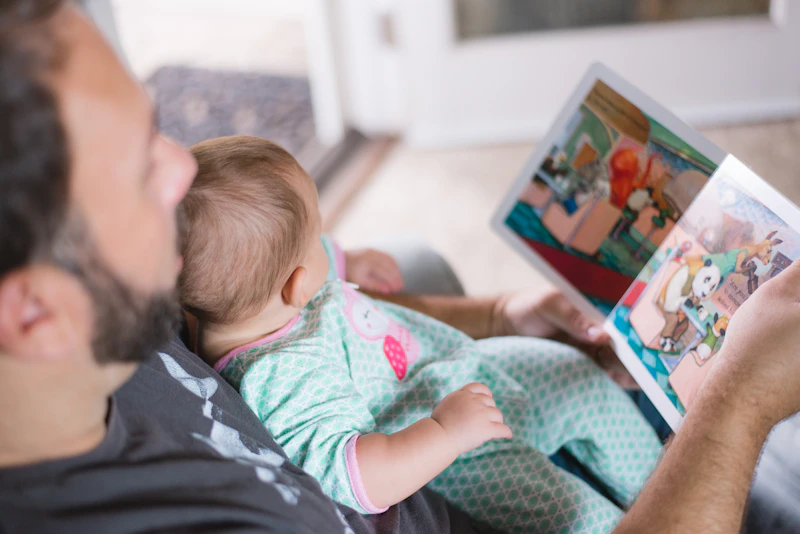
- Reading Aloud: Even newborns benefit from listening to stories. Picture books and simple texts stimulate imagination and attention.
- Face-to-Face Interaction: Make eye contact, mimic facial expressions, and encourage turn-taking during conversations.
3. Problem-Solving Games
Activities that challenge babies to think and solve problems foster cognitive flexibility and reasoning skills.
- Cause-and-Effect Toys: Simple toys that respond to actions—like push-button music boxes or pop-up toys—help babies understand how their actions lead to outcomes.
- Peek-a-Boo: This classic game teaches object permanence, a fundamental cognitive milestone.
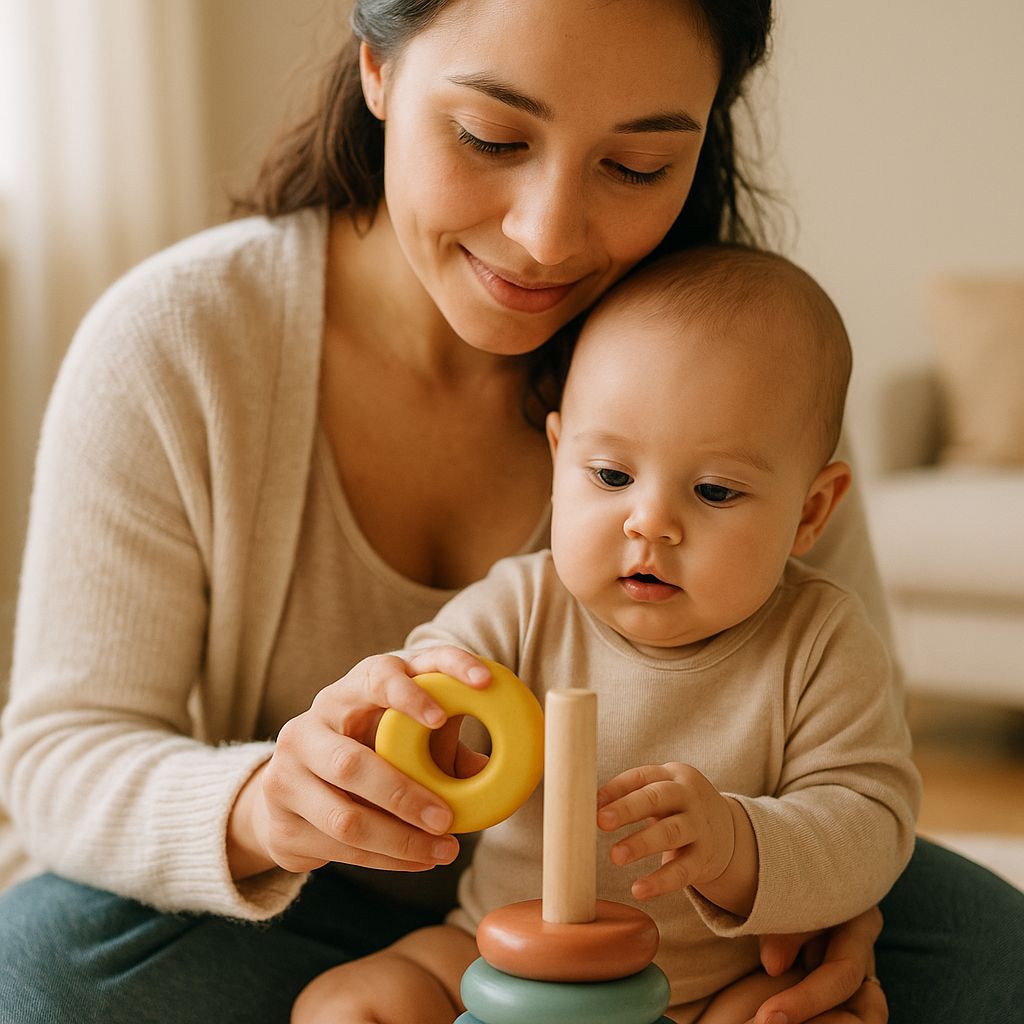
- Stacking and Sorting: Offer stackable blocks or nesting cups to encourage experimentation and spatial awareness.
- Simple Puzzles: Soft, large-piece puzzles are appropriate for older infants and support problem-solving abilities.
4. Movement and Physical Exploration
Physical activities not only develop motor skills but also stimulate cognitive growth by encouraging exploration and spatial reasoning.
- Tummy Time: Essential from birth, tummy time strengthens muscles and gives babies a new perspective on their environment.
- Crawling and Rolling: Allow space for safe movement. Babies learn about cause and effect, distance, and object location as they explore.
- Dancing: Hold your baby and sway or dance together. Movement to music links auditory and physical development.
- Obstacle Courses: For older babies, create a simple course with pillows or toys to crawl around, encouraging problem-solving and persistence.
5. Routine-Based Learning
Daily routines offer consistent opportunities for cognitive stimulation and learning.
- Mealtime Exploration: Offer finger foods and let your baby self-feed to practice coordination and decision-making.
- Bath Time: Describe sensations, colors, and actions. Allow your baby to splash and play with safe toys.
- Bedtime Rituals: Consistent routines with stories and lullabies signal transitions and foster memory.
- Outdoor Walks: Talk about nature, point out sights, and allow your baby to touch leaves or grass.
The Role of Parental Engagement
While toys and materials are helpful, parental involvement is the most critical factor in supporting cognitive development. Responsive communication, encouragement, and shared experiences build trust and motivate babies to explore and learn.
Tips for Maximizing Cognitive Growth
- Follow Your Baby’s Lead: Pay attention to their interests and cues. Adapt activities to match their preferences and developmental stage.
- Repeat and Reinforce: Babies learn through repetition. Repeat games, songs, and routines to help concepts stick.
- Encourage Exploration: Provide a safe environment for your baby to move, touch, and try new things.
- Balance Structure and Flexibility: Structured routines are important, but allow time for spontaneous play and discovery.
- Offer Praise and Support: Celebrate milestones and efforts. Positive reinforcement builds confidence and motivation.
Adapting Activities by Age and Stage
Cognitive development is not one-size-fits-all. Activities should be tailored to your baby’s age, abilities, and interests.
Newborns (0-3 months)
- High-contrast visuals and gentle sounds
- Skin-to-skin contact and facial mimicry
- Soft music and lullabies
- Talking during daily routines
Infants (4-8 months)
- Tummy time and supervised movement
- Rattles and textured toys
- Peek-a-boo and object hiding games
- Responding to babbles and gestures
Older Infants (9-12 months)
- Crawling, pulling up, and cruising
- Stacking, sorting, and simple puzzles
- Reading picture books
- Exploring outdoors and self-feeding
Common Myths About Cognitive Growth
- Myth: Expensive toys are necessary for brain development.
Truth: Parent-child interaction and everyday experiences matter most. - Myth: Babies need structured lessons.
Truth: Playful, responsive engagement is more effective for learning. - Myth: Cognitive skills only develop later.
Truth: Cognitive growth begins at birth and is shaped by early experiences.
Signs of Healthy Cognitive Development
- Curiosity and interest in the environment
- Responsive eye contact and facial expressions
- Exploring objects with hands and mouth
- Babbling, cooing, and imitating sounds
- Trying new movements and solving simple challenges
When to Seek Support
Every baby develops at their own pace. However, consult your pediatrician if you notice:
- Lack of curiosity or interest in surroundings
- Minimal interaction or limited response to sounds and visuals
- Delayed milestones in movement or communication
Conclusion
Supporting cognitive growth in babies doesn’t require expensive toys or elaborate lessons. The most powerful tools are your attention, engagement, and willingness to provide safe, stimulating experiences. By incorporating sensory, communication, problem-solving, and routine-based activities into your daily life, you lay a strong foundation for your child’s lifelong learning and success. Remember, every moment of play, talk, and exploration is an investment in your baby’s brain development.