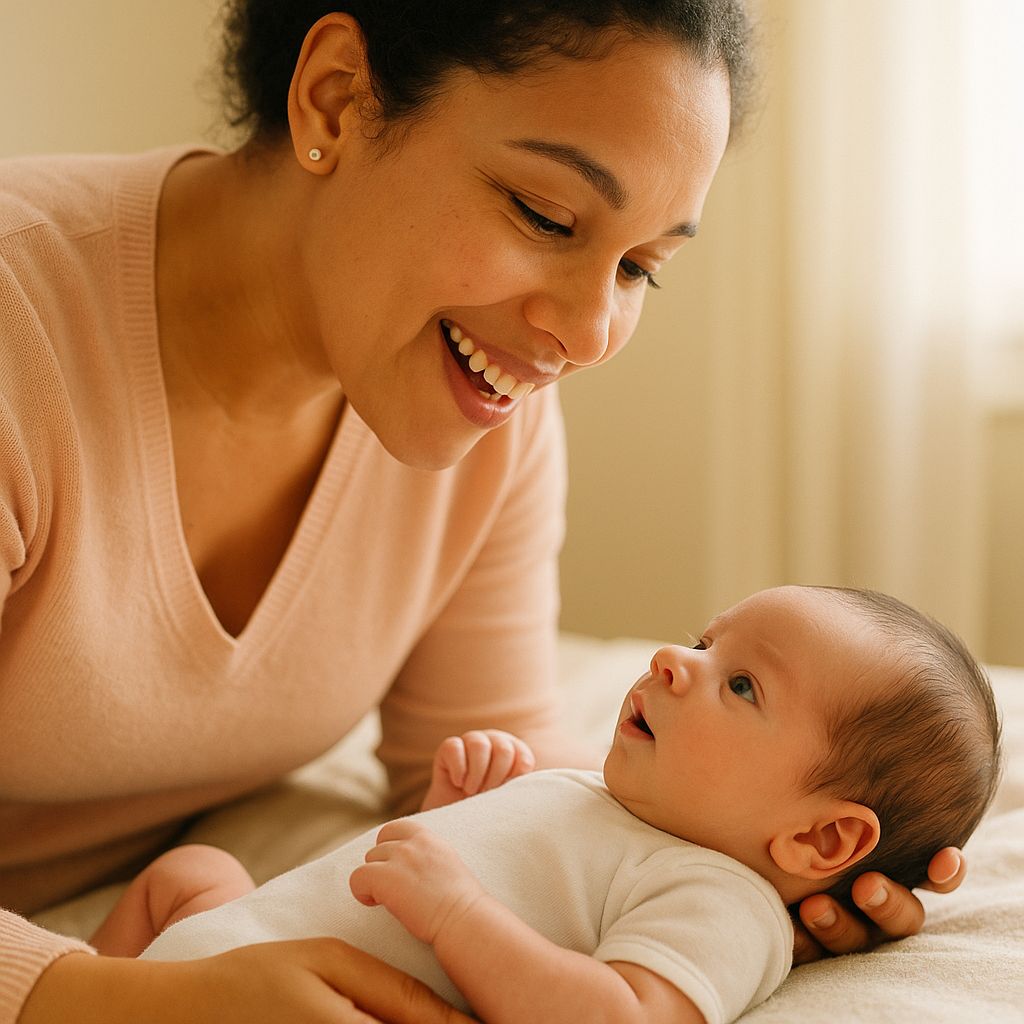

Talking to Your Newborn: Why It Matters
Talking to your newborn may seem one-sided, but mounting evidence from neuroscience, psychology, and developmental pediatrics underscores its profound impact on your baby's growth. From the moment of birth, infants are primed to absorb language, emotion, and social cues from their caregivers. In this article, we examine the physiological, cognitive, and emotional reasons why early verbal interaction is critical, explore practical strategies, and review clinical research supporting these formative exchanges.
The Science of Newborn Brain Development
Newborns arrive with remarkable neural plasticity. Their brains boast over 100 billion neurons, and the first few months are a period of rapid synaptic formation and pruning. According to Harvard University's Center on the Developing Child, the brain's architecture is shaped by early experiences, with language exposure serving as a primary stimulant for neural connectivity.
- Auditory Stimulation: Newborns can recognize their mother's voice as early as the third trimester, and auditory pathways continue developing postnatally.
- Neural Activation: Hearing speech triggers activity in the temporal and frontal lobes—areas associated with language, memory, and social processing.
- Synaptic Growth: Frequent verbal interaction increases synaptic density, laying the groundwork for cognitive skills and emotional regulation.
Language Acquisition: Early Foundations
Infants do not need to understand words to benefit from them. Studies in Developmental Psychology reveal that newborns can differentiate between various speech sounds, rhythms, and intonations. Exposure to spoken language accelerates their ability to distinguish phonemes, which becomes fundamental to later speech and literacy.
Research by Dr. Patricia Kuhl (University of Washington) illustrates that babies exposed to rich verbal environments demonstrate advanced babbling, faster vocabulary acquisition, and improved reading skills in later childhood. The critical window for language development is most receptive within the first year, making parental speech an essential ingredient.
Emotional Bonding and Secure Attachment
Talking to your newborn is not only about language—it is a cornerstone of emotional connection. Responsive verbal communication fosters secure attachment, which has lifelong benefits for mental health and resilience. When parents talk, sing, or read to their infants, they transmit warmth, comfort, and safety.
- Eye Contact: Engaging with your baby visually and verbally strengthens social-emotional bonds.
- Responsive Interaction: Pausing to listen and mimic your baby's coos or facial expressions encourages trust and communication.
- Oxytocin Release: Positive verbal exchanges trigger oxytocin, the 'bonding hormone,' in both parent and infant.
Speech Development: Building Blocks for Communication
Babies start communicating from birth through cries, coos, and gestures. Talking to your newborn helps them learn the patterns of conversation—turn-taking, tone, and rhythm. Clinical trials demonstrate that babies who are spoken to regularly begin to mimic sounds sooner, experiment with babbling, and eventually articulate words more rapidly.
Speech therapists recommend narrating daily routines, describing objects, and using expressive tone (known as 'parentese') to attract attention and stimulate learning. Both quantity and quality of conversation matter; richer, more varied vocabulary exposure correlates with higher language proficiency.
Benefits for Preterm and High-Risk Infants
For premature infants or those in neonatal intensive care, verbal interaction is even more crucial. Studies from The Journal of Pediatrics show that preemies exposed to parental speech and singing exhibit improved oxygen saturation, weight gain, and neurodevelopmental outcomes. Interventions such as reading aloud in the NICU are now standard in many hospitals.
Speech exposure acts as a buffer against stress, reduces cortisol levels, and supports emotional self-regulation. This is particularly important for infants facing medical challenges or separation from parents.
Practical Strategies for Talking to Your Newborn
- Narrate Your Actions: Describe what you are doing, even simple tasks like diaper changes or feeding, to provide context and vocabulary.
- Use Sing-Song Tone: Babies respond well to exaggerated pitch and rhythm, which helps them focus and recognize patterns.
- Engage in Eye Contact: Pair your words with facial expressions and gestures to enhance understanding and emotional connection.
- Pause and Respond: Allow your newborn time to coo or move, then respond as if you are having a conversation. This teaches turn-taking.
- Read Aloud: Simple picture books, poems, or even magazine articles expose your baby to varied language and tone.
- Use Accurate Language: Mix baby talk with correct vocabulary to model proper speech while maintaining engagement.
Common Concerns and Misconceptions
Many parents worry that newborns 'can't understand,' so talking feels awkward. In reality, the auditory and emotional benefits occur regardless of comprehension. Another misconception is that only mothers should talk; fathers, siblings, and caregivers all contribute uniquely to language exposure and bonding.
There is no risk of 'over-talking.' Babies thrive in environments rich with conversation, music, and reading. For families with multilingual backgrounds, exposure to multiple languages is not confusing—it enhances cognitive flexibility and problem-solving skills.
Clinical Evidence: Research Highlights
- Hart & Risley (1995): Children exposed to higher volumes of language in infancy scored better on IQ and academic tests at age three.
- NICU Reading Programs: Preterm infants read to daily in the NICU demonstrated faster auditory processing and greater expressive language at 18 months (The Journal of Pediatrics, 2014).
- Parentese Studies: Babies whose caregivers used exaggerated pitch and slower speech showed increased attention and improved phoneme recognition (Kuhl et al., 2017).
Long-Term Outcomes
Early language exposure predicts not only speech and literacy skills, but also emotional intelligence, social competence, and academic success. Secure attachment formed through verbal interaction mitigates risk for behavioral disorders and supports resilience in stressful environments.
Language-rich environments are associated with:
- Higher vocabulary and reading proficiency
- Better problem-solving and reasoning skills
- Reduced risk of developmental delays
- Improved emotional regulation and empathy
Conclusion
Talking to your newborn is a powerful, evidence-based practice that shapes their brain, fosters emotional security, and accelerates language development. Parents, caregivers, and healthcare providers play a pivotal role in maximizing these formative interactions. Whether narrating daily routines, singing lullabies, or reading aloud, every word enriches your baby's early environment and lays the foundation for lifelong learning.
Embrace the science: your voice matters from the very first day.