Simple Ways to Improve Toddler Vocabulary: Expert Tips for Everyday Success
Watching your toddler discover the world, one word at a time, is one of parenting’s greatest joys. From their first “mama” or “dada” to the excited chatter of “doggy!” and “bye-bye,” every new word is a milestone. But how can you help your little one build a robust vocabulary, setting the stage for confident communication and lifelong learning? The good news: You don’t need fancy flashcards or expensive programs. Everyday moments are packed with opportunities to nurture language development, and with a few simple strategies, your toddler’s vocabulary can blossom.
Why Vocabulary Matters for Toddlers
Vocabulary isn’t just about knowing words—it’s the foundation for reading, expressing emotions, and understanding the world. Early language skills are linked to school success, social confidence, and even problem-solving abilities. The toddler years (ages 1-3) are a critical window for vocabulary growth, as children’s brains are primed to absorb language rapidly.
Everyday Strategies to Boost Toddler Vocabulary
1. Talk, Talk, Talk!
One of the simplest ways to improve toddler vocabulary is by talking with your child. Narrate your day, describe what you’re doing, and ask questions—even if your toddler isn’t ready to answer yet.
- Example: “I’m washing the dishes. The water is warm and bubbly!”
- Use varied vocabulary: Instead of “big,” try “huge,” “gigantic,” or “enormous.”
- Respond to your child’s babbles or words, expanding on what they say (“Doggy!” — “Yes, that’s a brown doggy. He’s wagging his tail!”)
2. Read Aloud Every Day
Reading together is a powerful (and fun!) way to expose toddlers to new words, sentence structures, and ideas.
- Choose books with bright pictures, repetitive phrases, and simple stories.
- Ask questions about the pictures (“What’s that? Can you find the cat?”)
- Pause to explain new words (“‘Giggle’ means to laugh quietly.”)
- Repeat favorite stories—toddlers learn by hearing words again and again.
3. Sing Songs and Recite Rhymes
Music and rhymes make learning words memorable and enjoyable. Classic nursery rhymes (“Twinkle, Twinkle Little Star,” “Itsy Bitsy Spider”) and silly songs introduce rhythm, rhyme, and repetition—building blocks of language.
- Encourage your toddler to join in, even if it’s just humming or clapping.
- Add hand motions or dance moves for extra engagement.
- Invent your own songs about daily routines (“We’re brushing our teeth, brush, brush, brush!”)
4. Play Together—and Name Everything
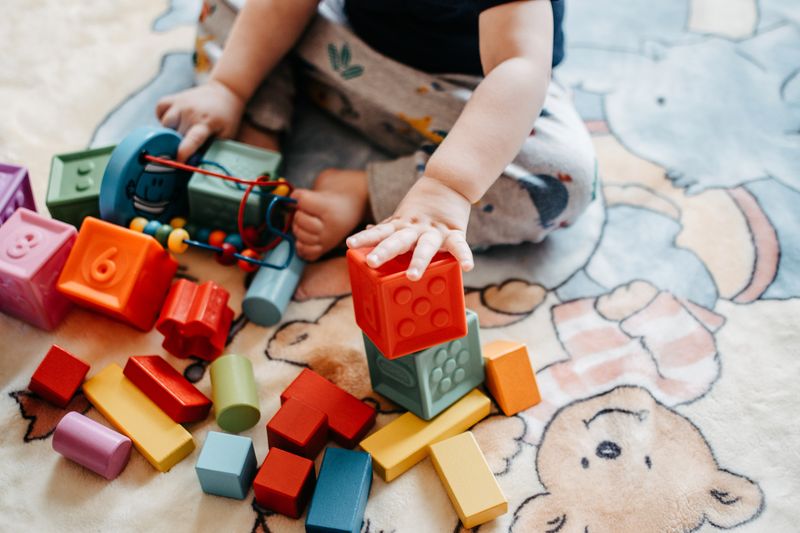
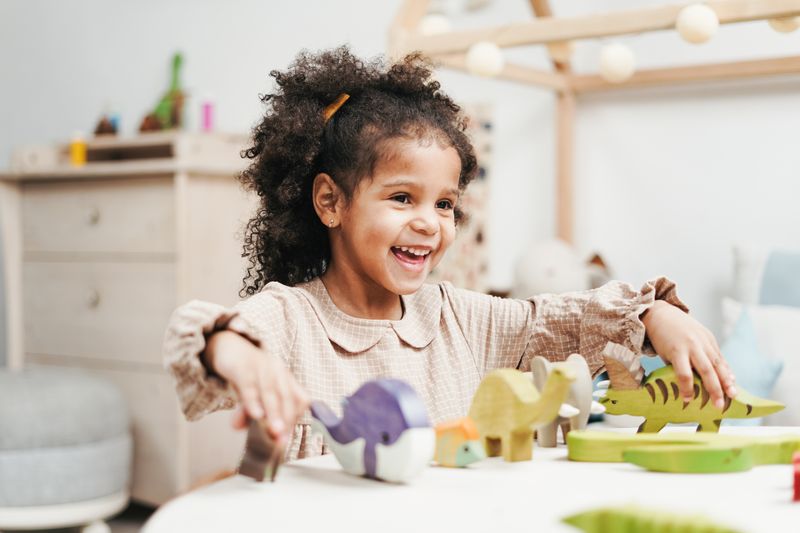
Playtime is packed with vocabulary opportunities. Whether you’re building blocks, playing dress-up, or exploring outside, name objects, actions, and feelings.
- “Let’s stack the red block on the blue block.”
- “You look happy. Are you excited to play?”
- “This ball is round and bouncy!”
Make it interactive by asking your toddler to point, repeat, or describe what they see.
5. Encourage Conversation, Even If It’s Simple
Toddlers may not be ready for long chats, but even simple exchanges foster vocabulary growth.
- Ask open-ended questions: “What do you see?” “How does that taste?”
- Wait for your child’s response, then build on it (“Yummy!” — “Yes, apples are sweet and crunchy!”)
- Use facial expressions and gestures to help your child understand meaning.
6. Use Real-Life Experiences as Learning Moments
Trips to the grocery store, park, or doctor’s office are perfect for learning new words.
- At the store: “Can you find the banana? Bananas are yellow and curved.”
- At the park: “Let’s swing! The swing goes high and low.”
- At home: “We’re baking cookies. This is flour, and that’s sugar.”
Describe what you see, hear, and do. This helps your child connect words to real-world objects and actions.
7. Limit Screen Time and Choose Interactive Play
While some educational shows or apps can introduce words, real-life interactions are far more effective. The American Academy of Pediatrics recommends limited screen time for toddlers, focusing instead on play, conversation, and reading.
- Choose toys that encourage talking (puppets, dolls, pretend play sets).
- Join your toddler in play, modeling new words and phrases.
- If you use screens, watch together and discuss what you see (“What color is the bear’s hat?”)
8. Celebrate Effort and Progress
Every new word is a victory! Encourage your toddler by showing excitement when they try to say something new, even if it’s not perfectly pronounced.
- Repeat the word correctly, gently (“Yes, ‘elephant!’ Elephants are big and gray.”)
- Give positive feedback (“Great job! You said ‘ball.’”)
- Record milestones in a journal or share them with family members.
Common Challenges—and How to Overcome Them
Shyness or Quietness
Some toddlers are naturally quiet or shy. Don’t worry! Keep offering opportunities to talk, but avoid pressuring your child. Focus on playful, low-stress interactions.
Mixing Up Words or Mispronunciations
Mix-ups are normal. Gently model the correct word, but don’t insist on perfection. Celebrate attempts, and remember that speech clarity improves with practice.
Bilingual Households
Bilingual toddlers may mix languages or take longer to speak fluently in each, but exposure to multiple languages is beneficial. Speak both languages naturally, and offer books, songs, and conversations in each.
Recommended Activities to Boost Vocabulary
- Picture Books: Simple storybooks or “word books” with labeled pictures.
- Sorting Games: Sort objects by color, shape, or type, naming each as you go.
- Pretend Play: Use dolls, stuffed animals, or toy cars to act out simple stories.
- Nature Walks: Explore outdoors and talk about what you see (“This flower is pink. Look at the green leaves!”)
- Cooking Together: Describe ingredients, utensils, and actions (“We’re stirring the batter. This is a spoon.”)
- Family Story Time: Share stories from your childhood or invent silly tales together.
Signs of Healthy Language Development
- By age two: Using 50-100 words, combining two words (“more juice”), understanding simple instructions.
- By age three: Using 200+ words, forming simple sentences, asking questions.
- Enjoys listening to stories and songs, recognizes familiar names and objects.
Every child develops at their own pace. If you’re concerned about your child’s language progress, consult your pediatrician or a speech-language pathologist.
Frequently Asked Questions
- How many words should a toddler know?
- Most toddlers know around 50-100 words by age two, but every child develops at their own pace. By age three, many can use 200+ words and form simple sentences.
- What can I do if my toddler’s vocabulary seems delayed?
- If you’re concerned, talk to your pediatrician or a speech-language pathologist. Early intervention is key, and there are many strategies to help, such as reading, talking, and engaging in word games. Remember, each child grows at their own pace.
- Are screen-based learning apps helpful for toddler vocabulary?
- While some apps may be educational, interactive, real-life conversations and play are proven to be far more effective in boosting vocabulary. Limit screen time and focus on engaging activities together.
- How can bilingual households support vocabulary growth?
- Expose your toddler to both languages naturally through conversations, books, and songs. Bilingualism can boost cognitive development and doesn’t hinder vocabulary acquisition.
- Is it normal for toddlers to mix up words or mispronounce them?
- Absolutely! Word mix-ups and mispronunciations are part of normal language development. Gently model correct pronunciation and celebrate your child’s efforts.
Conclusion: Every Word Counts!
Growing your toddler’s vocabulary doesn’t require special tools—just a loving, engaged approach to everyday life. Talk, read, sing, and play together. Celebrate every attempt, and remember that your patience and encouragement are the best gifts you can give. With these simple strategies, your toddler’s vocabulary will flourish, laying the groundwork for confident communication and lifelong learning.
If you’re ever concerned about your child’s language development, don’t hesitate to seek advice from professionals. Otherwise, enjoy the journey—those giggles, stories, and new words are memories you’ll cherish forever!