
Raising an Independent Toddler: Small Habits That Build Lifelong Confidence
Toddlerhood is, at its core, a long negotiation between a child's urgent need to do everything themselves and their actual capacity to do very few things without help. “Me do it” is not stubbornness. It is developmental programming. The drive for autonomy — to act on the world, to have an effect, to be capable — is one of the most fundamental human motivations, and it arrives, loudly, around 18 months.
The question for parents is not whether to support independence. It's how to support it in ways that actually work — that build genuine confidence and capability rather than frustration on both sides.
Why Independence Is Built in Small Moments, Not Grand Gestures
We tend to think of independence as a destination — a child who can eventually get dressed alone, make their own snack, entertain themselves for an hour. But independence is built through the accumulation of thousands of small moments where a child was allowed to try something difficult, struggle with it, and either succeed or receive just enough support to get there.
The moments that build independence are unglamorous: letting a two-year-old put on their own shoes even though it takes eight minutes and they go on the wrong feet. Letting a toddler pour their own water even though some will spill. Letting them choose between two dinner options even when both choices are equally good. These are not parenting strategies. They are the texture of a childhood that teaches capability.
The Montessori Insight That Every Parent Can Use
Montessori education is built on a single foundational insight: children are capable of far more than we typically allow, and the environment either supports or frustrates their natural drive to develop.
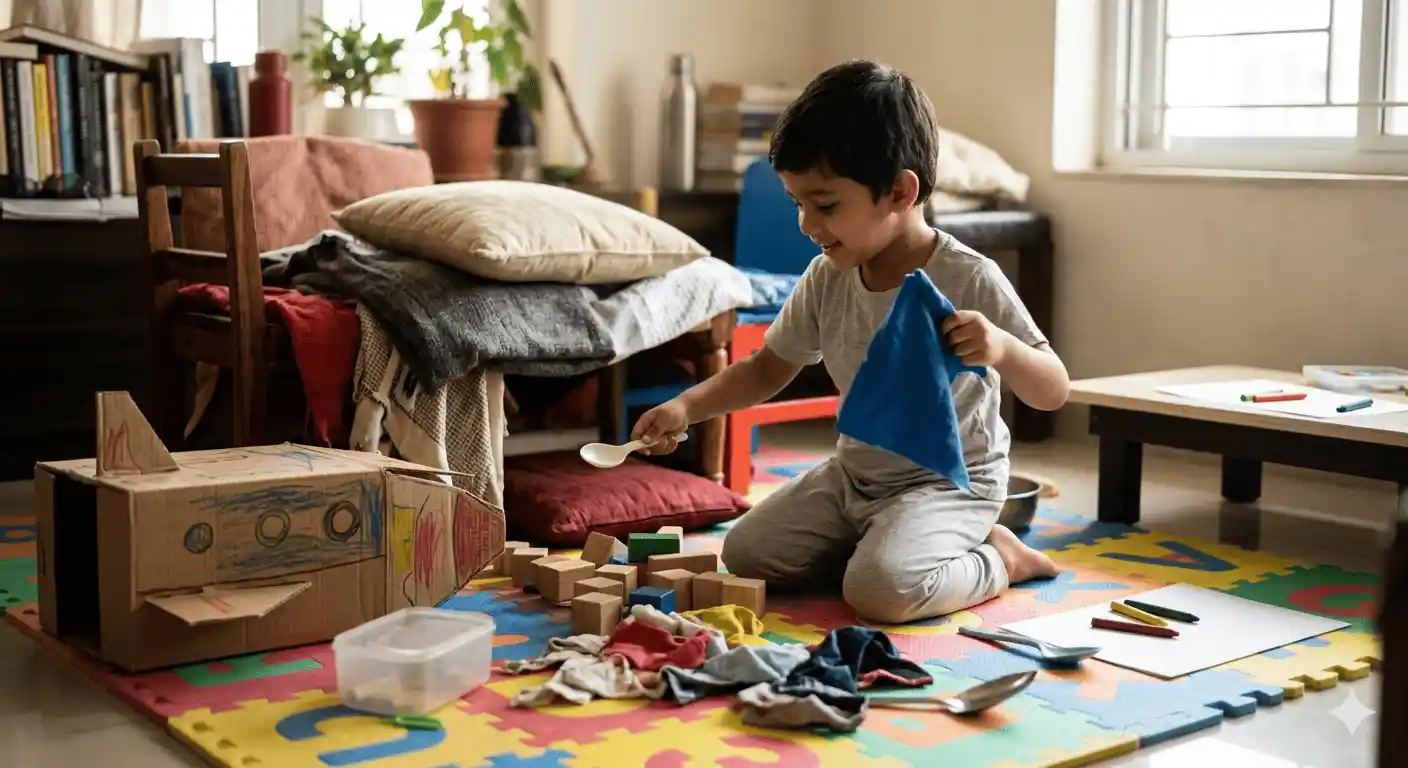
You don't need a Montessori school to apply this. You need to look at your home through a toddler's eyes. Can they reach their cup? Can they access their books? Is there a low hook for their own bag? Is there a step stool in the bathroom so they can wash their own hands without being lifted?
A child who can access and manage their own environment is a child who is constantly practising independence — in the most natural, undramatic way possible.
Movement and Physical Confidence
Physical competence is a foundation for broader confidence. A toddler who trusts their body — who knows they can climb that step, walk that path, balance on that surface — carries that trust into other challenges. Physical timidity, often created by overly protective environments, translates into other forms of hesitance.
This doesn't mean removing all safety measures. It means calibrating them. A baby learning to walk needs a safe surface and space, not constant hands-on assistance for every step. A toddler who falls on a soft play mat, gets up, and keeps going learns something essential: setbacks are manageable.
Creating a safe, free-movement space at home is one of the most practical investments in toddler confidence. A designated area where they can move, climb, tumble, and explore without constant “careful!” is more valuable than most structured activities. Explore this range of play mats and safety equipment designed to support independent movement in Indian homes.
Practical Independence: The Daily Rituals That Build It
Getting dressed
Offer two choices of clothing. Toddlers who choose are more likely to cooperate. Clothes with simple fastenings — no tiny buttons — allow genuine self-dressing practice from around 2.5 years.
Eating
Let them feed themselves from as early as 6 months with finger foods. Mess is the price of learning the pincer grip, self-regulation, and hunger awareness.
Tidying
A toddler who “helps” tidy up at 18 months will — with consistency — genuinely tidy at 3. Make it a ritual, not a command.
Toileting
The transition from nappy to toilet is one of the most visible independence milestones. A child who can access their own potty seat independently, at their own pace, builds confidence faster than one who waits for adult assistance for every step.
A child-height potty seat they can use independently — especially one with an integrated step — removes a significant barrier to self-directed toileting. Browse this range of potty training seats and toddler essentials designed for the child who is ready to do it themselves.
What Independence Is Not
Independence is not self-sufficiency. A toddler who feels securely attached — who knows you are nearby, interested, and reliably present — explores more freely and more confidently than one who is pushed toward independence prematurely. Secure attachment and independence are not opposites. Attachment is, in fact, the launchpad.
The goal is not a child who doesn't need you. It's a child who knows they can do hard things — and also knows you are there when they can't.
Frequently Asked Questions
Q: At what age should a toddler be able to dress themselves?
A: Most toddlers begin attempting to dress themselves around 2 years and can manage simple clothing (elastic waists, velcro shoes) independently by 3 years. The timeline varies widely.
Q: How do I encourage independence without pushing too hard?
A: Follow the child's lead. Offer opportunities without forcing them. Praise effort rather than outcome. Step in only when genuinely needed — not as a reflex.
Q: Is it bad to do things for my toddler instead of letting them try?
A: Occasionally, no. Consistently, yes — if the child is capable of attempting the task. The key is distinguishing between support (holding the cup steady while they pour) and substitution (pouring for them entirely).
Q: My toddler gets frustrated when they can't do things alone. How do I help?
A: Frustration tolerance is itself a skill built through experience. Acknowledge the feeling (“that was really hard”) without solving the problem immediately. Offer a small amount of help if needed, and let them complete the task themselves.
Q: How does a child's play environment affect their independence?
A: Significantly. A child who can access their own books, toys, and play space without adult assistance practices independence continuously. Low shelving, open bins, and a clear floor space are environmental supports for autonomy.