
Potty Training Seat: How to Make the Transition Calm, Clean, and Confident
There is no milestone in early parenting that generates more anxiety — or more unsolicited advice — than potty training. Everyone has an opinion. Every opinion contradicts someone else’s. And underneath all of it is a toddler who will do things entirely in their own time, regardless of method.
When Is the Right Time to Start?
The short answer: when your child shows readiness, not when the calendar says so.
Common signs of potty training readiness include staying dry for two hours or longer, recognising the urge to go, showing curiosity about the toilet or older children using it, and being able to communicate their needs.
Most children become ready somewhere between 18 months and 3 years. Starting before they are developmentally ready often makes the process longer and more stressful. Starting when they are genuinely ready usually makes training smoother and far less frustrating.
When your toddler begins showing these signs, having the right setup already prepared can make a huge difference. Explore StarAndDaisy’s Potty Training Seat collection designed for comfortable and confident transitions.
Standalone Potty vs Training Seat
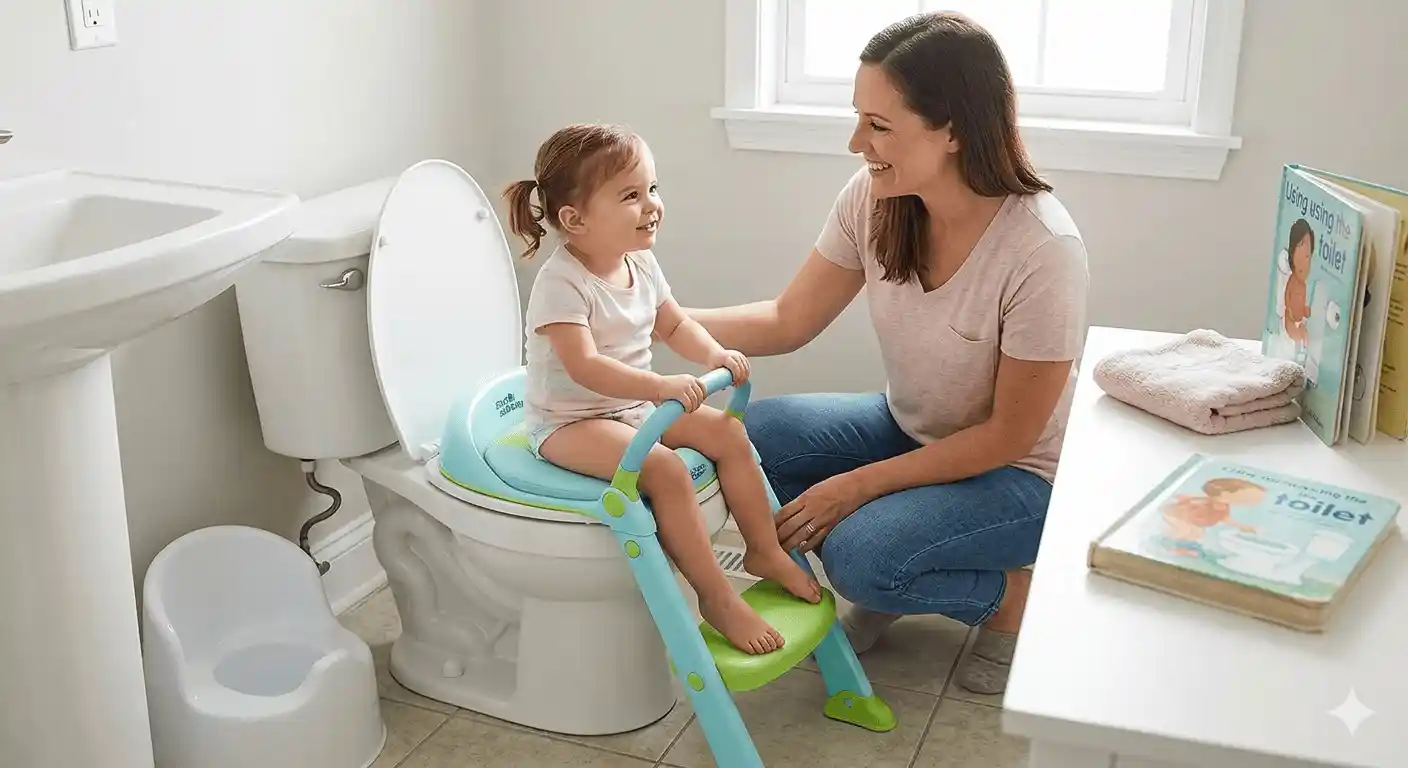
There are two common options for potty training: a standalone potty that sits on the floor, or a training seat that attaches directly to the regular toilet.
A floor potty is usually easier for younger toddlers because it is low, accessible, and can be moved wherever needed. A toilet training seat, however, helps children become comfortable using the actual toilet and removes the need for a later transition.
Many families choose to use both — starting with a standalone potty during the early learning phase and gradually moving to a toilet seat trainer once the child becomes more confident and coordinated.
The Equipment Details That Actually Matter
Soft, Cushioned Seat
Hard plastic seats can feel uncomfortable for toddlers. A soft, cushioned surface encourages children to sit longer and feel more relaxed during training.
Non-Slip Base
Toddlers move enthusiastically and unpredictably. A potty seat that slides or tips can quickly damage their confidence and create fear around using it.
Easy-to-Clean Design
Accidents are a completely normal part of potty training. Smooth surfaces and removable components make cleaning much easier for parents.
Step Stool Integration
For children using the regular toilet, independent access matters. Built-in steps or accompanying step stools help toddlers climb safely and confidently.
Splash Guard
Especially helpful for boys, a splash guard reduces mess and makes the process more manageable for everyone involved.
StarAndDaisy’s Potty Training Range
StarAndDaisy’s potty training seats are thoughtfully designed around the practical realities of toilet training — featuring cushioned seating, stable non-slip bases, easy-clean materials, and integrated step-stool options that encourage independence.
Explore the complete StarAndDaisy Potty Training Seat range designed to make one of parenting’s most challenging transitions feel significantly calmer and more manageable.
The Only Mindset Advice Worth Taking
Stay calm. Every accident is neutral — not a failure, not something to punish, and not a reason for frustration.
Follow your child’s lead. Create a relaxed environment. Celebrate progress gently. Children who feel calm and supported during potty training often gain confidence faster — not because of any magical method, but because the atmosphere around the process feels safe.
Frequently Asked Questions
Q: What age should potty training start?
A: Most children begin showing readiness signs between 18 months and 3 years. It is best to follow your child’s individual development rather than focusing on a fixed age.
Q: How long does potty training usually take?
A: Daytime potty training typically takes around 2–4 weeks once a child is developmentally ready and practice is consistent. Night-time training often takes longer.
Q: Should I use rewards during potty training?
A: Small rewards such as praise or stickers can motivate some children. Keep rewards simple, immediate, and positive, and gradually reduce them once the habit becomes routine.
Q: What if my child is scared of the toilet?
A: Fear of toilets is very common in toddlers. A standalone potty placed at floor level often feels less intimidating. Avoid pressure or forcing the process, as it usually increases resistance.
Q: Are StarAndDaisy potty seats suitable for Indian bathrooms?
A: Yes. StarAndDaisy potty training seats are designed to fit standard Indian toilet sizes and include non-slip bases suitable for wet bathroom flooring.