
Playpen and Play Mats: Giving Your Baby a Safe World to Explore
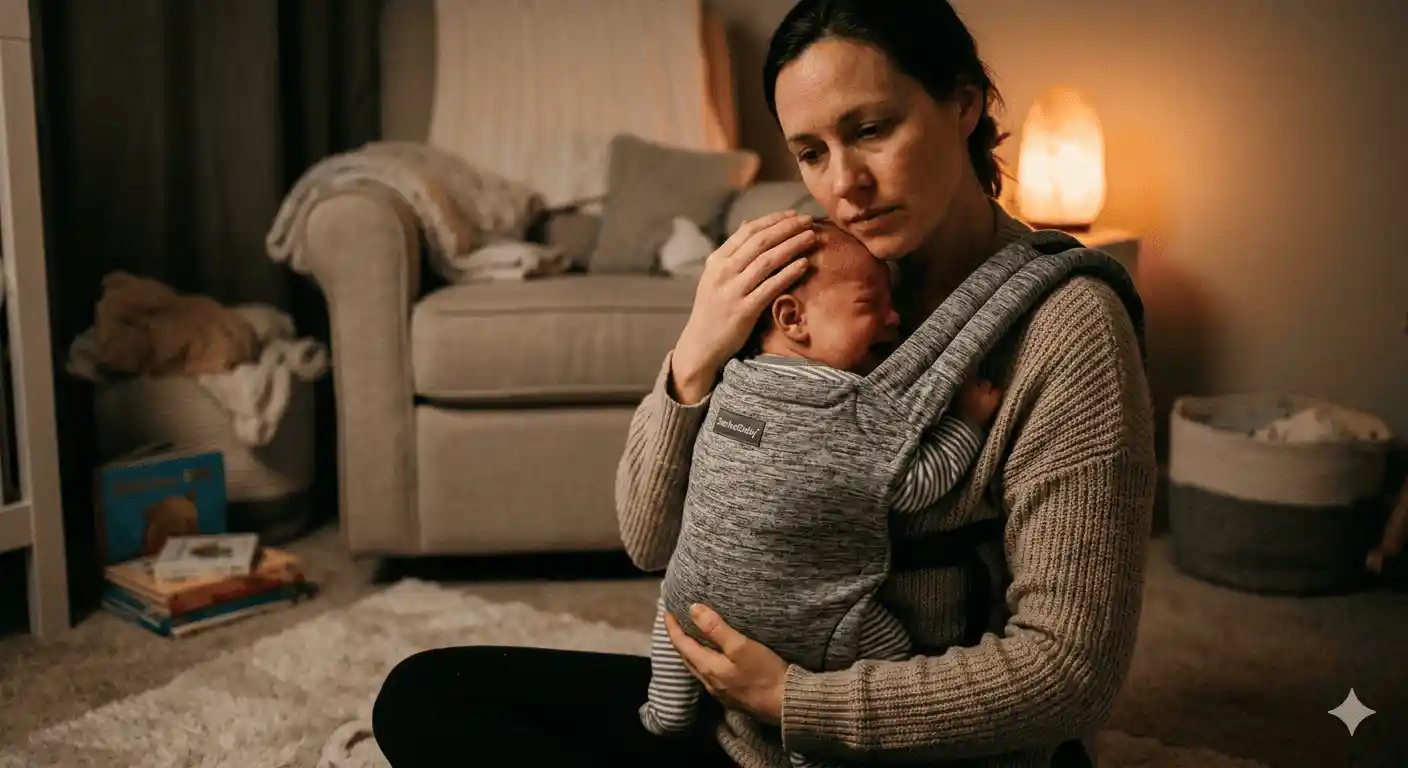
At around four months, something shifts. Your baby stops being a largely stationary little human and begins the relentless, curious project of exploring everything within reach. This is wonderful. It is also the moment you look around your home and realise it contains approximately forty-seven things that are definitely not baby-safe.
The Case for a Dedicated Play Space
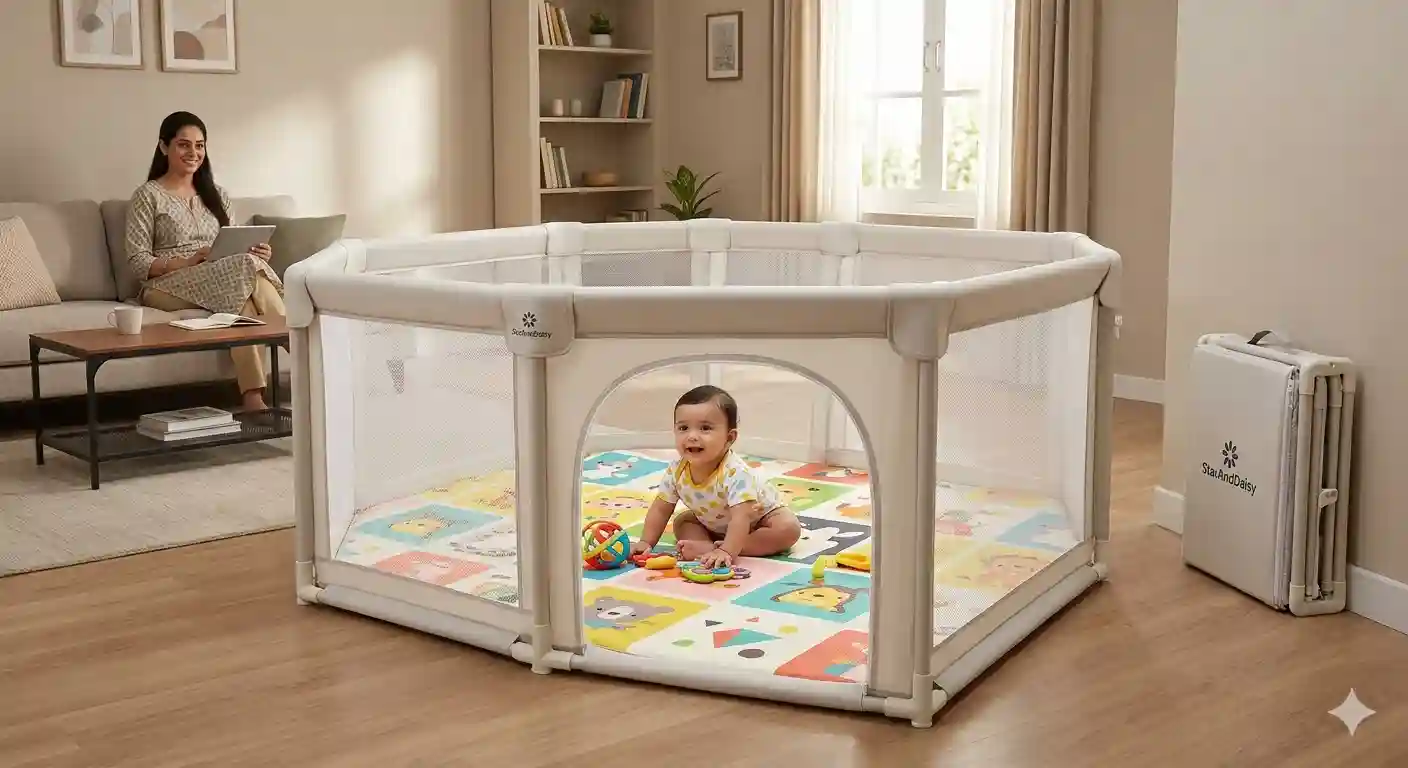
A playpen or a defined play mat area gives your baby a safe boundary — not a restriction, but a carefully curated little world where everything within reach is secure, engaging, and developmentally appropriate.
It allows you to step a few feet away to make tea, answer the door, or fold laundry without conducting a constant risk assessment of the entire room.
Dedicated play spaces also begin teaching babies that there are places designed for play and exploration — an early form of environmental understanding that becomes surprisingly valuable during toddlerhood.
Explore StarAndDaisy’s Playpen and Play Mat collection — thoughtfully designed safe spaces for curious Indian babies.
Play Mats and Sensory Development
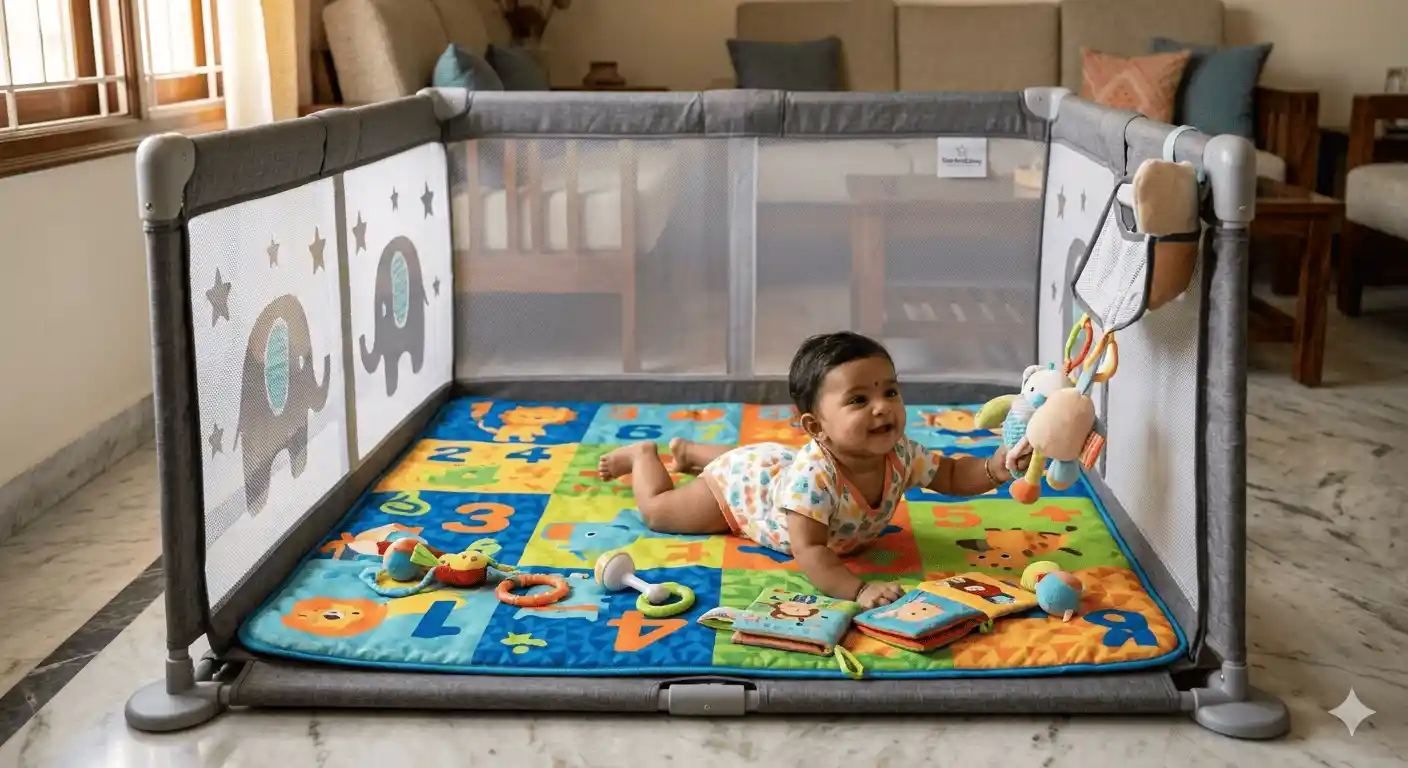
A good play mat offers much more than soft padding. It becomes your baby’s first sensory environment.
Different textures under tiny hands and feet, contrasting patterns for visual stimulation, and cushioned surfaces for safe movement all contribute to healthy sensory and motor development.
Tummy time is significantly more comfortable on a padded play mat than on a hard floor. Babies who regularly spend time on their tummy often develop stronger neck control, improved core strength, and better motor coordination.
For Indian homes with tile or marble flooring — surfaces that can feel hard and cold — a cushioned play mat is especially valuable. It encourages longer and more comfortable floor play sessions.
Choosing a Playpen for Indian Homes
Size
The ideal playpen should be large enough for crawling, rolling, and movement, while still fitting comfortably into your living room or bedroom.
Breathable Mesh Sides
Mesh sides improve airflow and visibility, both of which are especially important in warm Indian weather.
Non-Toxic Materials
Everything babies touch eventually ends up in their mouths, so safe, non-toxic materials are essential.
Easy Setup and Folding
If a playpen takes too long to assemble, parents naturally stop using it regularly. Foldable designs make storage and daily use far more practical.
Stable Base
A sturdy structure is important once babies begin pulling themselves to standing. The playpen should remain stable and secure during movement.
StarAndDaisy’s Playpen and Play Mat Range
StarAndDaisy’s playpens are designed to be quick to assemble, easy to fold, and durable enough for energetic babies and toddlers.
Their play mats are cushioned, wipeable, and visually engaging without becoming overstimulating. Explore the complete StarAndDaisy Playpen and Play Mat range created to give babies a safe world to explore — and parents a moment to breathe.
Frequently Asked Questions
Q: When should I introduce a playpen?
A: Most parents introduce a playpen around 3–4 months, once babies begin spending more awake time on the floor and showing curiosity about movement and exploration.
Q: Are playpens safe for overnight sleeping?
A: Only if the playpen is specifically certified and designed as a sleep-safe space. Standard playpens are intended for supervised daytime use only.
Q: What size play mat works best for Indian living rooms?
A: A play mat around 150 x 150 cm provides enough space for rolling, tummy time, and crawling while fitting comfortably into most Indian homes.
Q: How do I clean a play mat?
A: Most play mats can be cleaned using a damp cloth and mild soap. Always follow the manufacturer’s cleaning instructions for deeper sanitisation.
Q: At what age do babies outgrow a playpen?
A: Most babies comfortably use a playpen until around 18–24 months. After that, a larger designated play area is usually more suitable.