
One-Time vs Reusable Baby Products: What’s Worth Buying?
As a parent, the choices you make for your baby ripple through your daily life—sometimes literally, when it comes to diapers and wipes. The debate between one-time (disposable) and reusable baby products is as old as parenting itself. With growing awareness of sustainability and the need to manage budgets, the question is: Which baby products are truly worth buying as reusable, and when is disposable the smarter option?
Why This Debate Matters
From diapers to bottles, the baby gear aisle is packed with options. Some are marketed for single use, others for longevity. Your choices impact your family’s budget, convenience, and the environment. Let’s unpack the facts, myths, and real-life stories behind disposable vs reusable baby products.
Defining the Terms
- One-time (Disposable) Products: Designed for single use and then tossed. Examples include diapers, wipes, nursing pads, and some feeding accessories.
- Reusable Products: Made to be washed and used multiple times. Examples include cloth diapers, washable wipes, silicone feeding containers, and bibs.
The Pros and Cons of Disposable Baby Products
Advantages
- Convenience: No washing, just use and toss.
- Portability: Great for travel, outings, and emergencies.
- Availability: Widely available and easy to restock.
Drawbacks
- Cost: Ongoing purchases add up.
- Waste: Fill landfills and can impact the environment.
- Sensitivity: Some babies react to chemicals in disposable products.
The Pros and Cons of Reusable Baby Products
Advantages
- Cost-effective: Higher upfront cost, but cheaper over time.
- Eco-friendly: Less waste, reusable items can be passed on or resold.
- Customizable: Many reusables come in fun patterns and adjustable sizes.
- Gentler: Often made from natural fibers, better for sensitive skin.
Drawbacks
- Maintenance: Requires washing and care.
- Upfront Investment: Can be pricier at first.
- Learning Curve: Some products, like cloth diapers, require practice.
Product-by-Product Breakdown: What’s Worth Buying?
Diapers
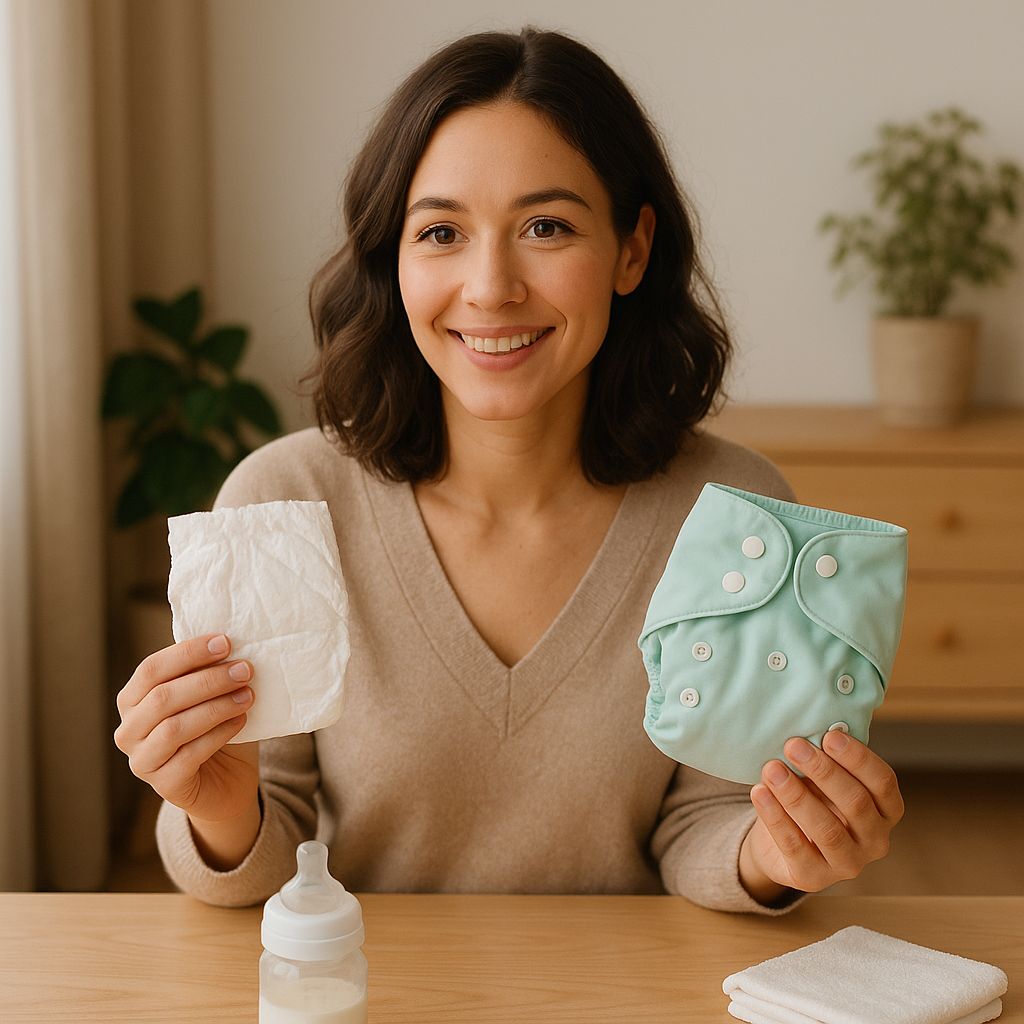
Disposable Diapers are the norm for many families, offering unmatched convenience. However, cloth diapers have made a comeback for their eco-friendliness and long-term savings. A typical baby uses about 2,500 diapers in their first year! That’s a lot of waste and money.
- Reusable Recommendation: Cloth diapers are worth buying if you’re willing to invest time in washing and maintenance. Modern designs make them easy to use and stylish.
- Disposable Recommendation: Keep a stash for travel and emergencies. Many parents opt for disposables during nighttime or outings.
Wipes
Disposable wipes are convenient but generate significant waste. Reusable cloth wipes can be washed and reused, saving money and reducing environmental impact.
- Reusable Recommendation: Buy a set of cloth wipes for home use. They clean just as well and are gentle on baby’s skin.
- Disposable Recommendation: Use disposables when out and about or when you need a quick clean-up.
Bibs
Most parents use reusable bibs, as they’re easy to wash and last through multiple meals. Disposable bibs are helpful for travel or parties.
- Reusable Recommendation: Invest in a few high-quality bibs; silicone ones are especially durable.
- Disposable Recommendation: Keep a small pack handy for messy outings.
Feeding Containers & Bottles
Reusable bottles and containers are a must. They’re durable, easy to clean, and often BPA-free. Disposable bottles are rare and mostly used in hospital settings.
- Reusable Recommendation: Buy sturdy bottles and containers, and sterilize regularly.
- Disposable Recommendation: Only consider for emergencies or travel.
Clothing
Baby clothing is inherently reusable—unless you opt for single-use hospital gowns or disposable booties. Buying durable, high-quality clothes ensures longevity and lets you pass them down or resell.
- Reusable Recommendation: Always! Look for organic cotton or bamboo for extra comfort.
- Disposable Recommendation: Only for medical or special cases.
Nursing Pads
Disposable nursing pads are convenient but create waste. Reusable pads are soft, washable, and cost-effective.
- Reusable Recommendation: Try reusable pads for daily use.
- Disposable Recommendation: Useful for travel or emergencies.
Swaddles & Blankets
These are always reusable. Choose quality fabrics that wash well and last.
- Reusable Recommendation: Invest in a few good swaddles and blankets.
Cost Analysis: What Do You Really Save?
Let’s crunch some numbers:
- Cloth Diapers: Initial investment ($200-$500), lasts through multiple children, can be resold.
- Disposable Diapers: Average spend ($800-$1,500/year).
- Reusable Wipes: $20-$40 for a set, vs $200/year for disposables.
- Reusable Bibs: $10-$30 for several, lasts years.
Over time, reusable products can save hundreds, if not thousands, of dollars. Plus, you can pass them on or sell them.
Environmental Impact: The Big Picture
Disposable baby products contribute significantly to landfill waste. In the US alone, over 20 billion disposable diapers are thrown away annually. Reusable products reduce your family’s footprint and teach your child about sustainability from the start.
Choosing reusable when possible isn’t just about saving money—it’s about helping the planet.
Practical Tips for Making the Switch
- Start Small: Try a few reusable items before making a big investment.
- Mix & Match: Use disposable for travel, reusable for home.
- Set Up a Washing Routine: Modern washers make cleaning easy.
- Join Parenting Groups: Get advice and buy secondhand gear.
- Look for Quality: Durable goods last longer and perform better.
Real Parent Stories: What Works in Everyday Life
"We started with disposable diapers but switched to cloth after seeing the savings. It’s not as hard as it sounds, and our baby’s skin is happier, too." – Lindsay, mom of two
"I use disposable wipes when I’m out with my twins, but at home, cloth wipes are the way to go. They’re softer and save money." – Carlos, dad of twins
"Reusable bibs are a must! I just throw them in the wash with towels, and they’re good as new. Silicones are especially easy to clean." – Priya, mom of one
Frequently Asked Questions
- Are reusable baby products always better than disposable ones?
- Not necessarily. Reusable products often offer long-term savings and environmental benefits, but disposable items can be more convenient, especially for travel or emergencies. The best choice depends on your family’s needs, routines, and priorities.
- Which baby products are best bought as reusable?
- Cloth diapers, wipes, bibs, feeding containers, and clothing are commonly purchased as reusable items. They tend to last longer, reduce waste, and are cost-effective over time.
- Are reusable baby products hard to clean?
- Most reusable baby products are designed for easy cleaning. With modern materials and washing machines, maintenance is manageable. Some parents find the extra effort worthwhile for the savings and sustainability.
- Can I mix disposable and reusable baby products?
- Absolutely! Many families use a combination—such as cloth diapers at home and disposables for outings—to balance convenience, cost, and eco-friendliness.
- Do reusable baby products save money?
- Over time, yes. The upfront cost is higher, but reusables can be used for multiple children or resold, making them a smart investment for many families.
Conclusion: What’s Worth Buying?
There’s no one-size-fits-all answer. For most families, a blend of reusable and disposable baby products offers the best balance of convenience, savings, and sustainability. Reusable diapers, wipes, bibs, bottles, and clothing are smart investments, while disposable items have their place for travel and emergencies.
Think about your family’s routines, budget, and values. Start with a few reusable items and see what works. Over time, you’ll find your perfect mix—and your baby will thank you for it!