
Hydration Needs for Toddlers: A Parent’s Guide to Keeping Little Ones Refreshed
When you’re chasing after your energetic toddler, you know firsthand how much they move, play, and explore. But did you know their hydration needs are just as demanding as their curiosity? Whether you’re navigating the summer heat or managing everyday routines, understanding hydration needs for toddlers is essential for their growth, health, and happiness.
Why Hydration Matters for Toddlers
Water is the foundation of health—especially for toddlers, whose bodies are still developing. Proper hydration supports:
- Digestion and nutrient absorption
- Temperature regulation
- Healthy skin and organ function
- Physical and cognitive development
Because toddlers have a higher ratio of water to body weight than adults, dehydration can happen quickly, with even mild fluid loss affecting their well-being.
How Much Water Should Toddlers Drink?
Parents often wonder: how much water should toddlers drink? The answer isn’t one-size-fits-all, but general guidelines help:
- 12–24 months: About 1–1.3 liters (4–5 cups) of fluids daily
- 2–3 years: Up to 1.3 liters (5 cups) per day
This includes water, milk, and juice. Water should be the main beverage, with milk as the secondary option. Limit juice to no more than 4 ounces (120 ml) per day, and avoid sugary drinks.
Sources of Hydration for Toddlers
Hydration doesn’t just come from water! Here’s where toddlers get their fluids:
- Water: The gold standard for hydration.
- Milk: Provides hydration plus important nutrients like calcium and vitamin D.
- Juice: 100% fruit juice in small amounts.
- Water-rich foods: Fruits (watermelon, strawberries, oranges), vegetables (cucumber, lettuce, tomato), soups, yogurt.
Encourage a mix, focusing on water and milk, with juice and water-rich foods supplementing their daily intake.
Best Drinks for Toddlers
When it comes to choosing drinks, keep it simple and healthy:
- Water: Always offer first.
- Milk: Whole milk is recommended for toddlers under 2; switch to low-fat milk after age 2.
- Juice: If offered, stick to 100% fruit juice and limit to 4 oz/day.
- Avoid: Soda, sweetened drinks, sports drinks, and artificially flavored waters.
For toddlers who resist plain water, try infusing it with fresh fruit or serving it in a fun, colorful cup.
Recognizing Toddler Dehydration Signs
Toddlers can’t always tell you when they’re thirsty. Here are signs to watch for:
- Dry lips and mouth
- Fewer wet diapers (less than 6 per day)
- Dark yellow urine
- Irritability or fussiness
- Lethargy or sleepiness
- Sunken eyes
- Poor skin elasticity (skin ‘tents’ when pinched)
If you notice these signs, offer fluids right away. Severe dehydration requires immediate medical attention.
Hydration Needs in Different Situations
Hydration needs for toddlers can change based on activity level, weather, and health:
- Hot weather: Increase fluids during summer or heatwaves
- Active days: After running, jumping, or playing outdoors, offer extra water
- Illness: Fever, diarrhea, or vomiting increase fluid loss
Always monitor your toddler for signs of dehydration if they’re sick or especially active.
Parent-Tested Tips for Keeping Toddlers Hydrated
Getting a toddler to drink enough can be a challenge! Try these strategies:
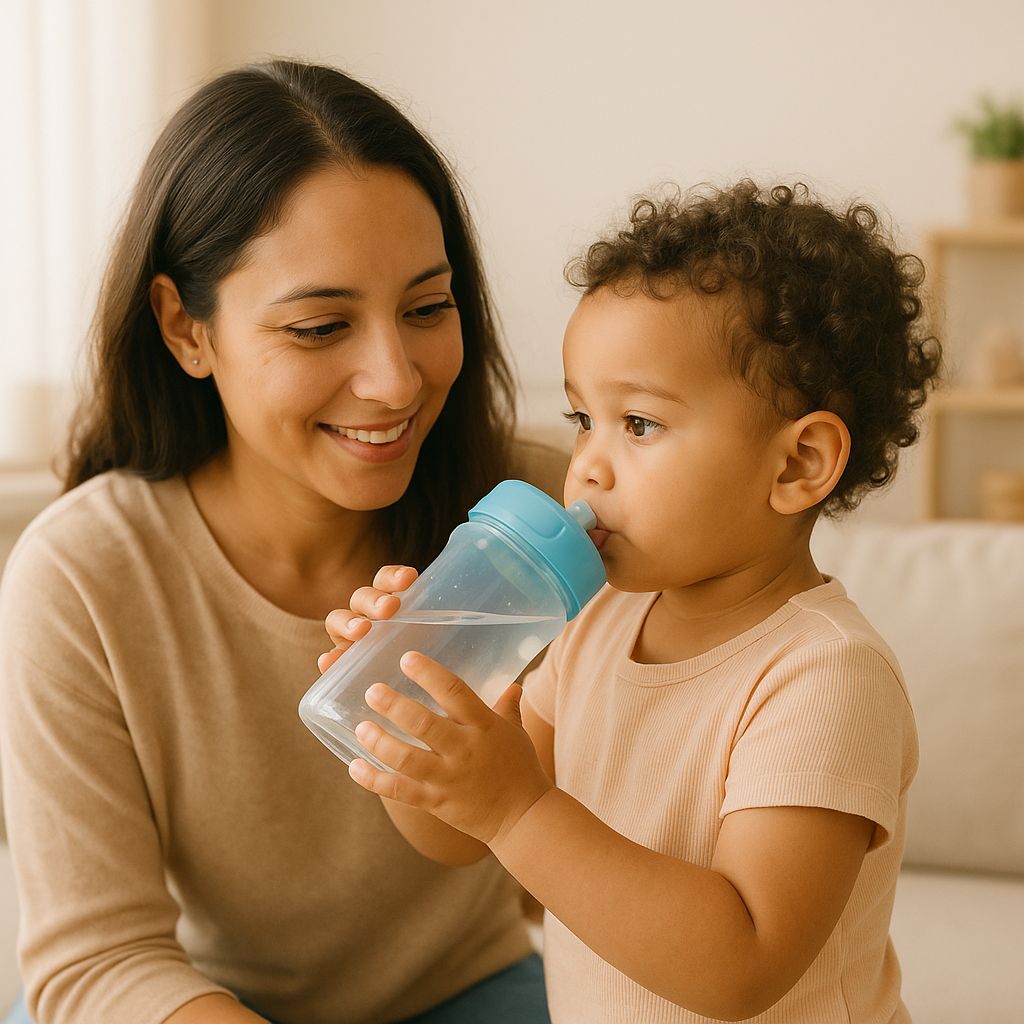
- Offer water regularly: Keep a sippy cup within reach and remind your child to take sips throughout the day.
- Make it fun: Use themed cups, silly straws, or let your toddler choose their water bottle.
- Lead by example: Drink water with your child—toddlers love to imitate!
- Serve water-rich foods: Include fruits and veggies at snack time.
- Infuse water: Add slices of cucumber, berries, or citrus for natural flavor.
- Routine reminders: Offer water after play, before meals, and at bedtime.
- Celebrate hydration: Praise your child when they take a drink (a sticker chart can help, too!).
Common Hydration Challenges and Solutions
- “My toddler refuses water!” Try serving water cold, using novelty cups, or giving water-rich snacks.
- “They want juice all day!” Dilute juice with water, offer water first, and limit juice to special occasions.
- “I forget to offer drinks!” Set phone reminders or incorporate water breaks in daily routines.
Hydration and Toddler Nutrition: Why Balance Matters
Hydration isn’t just about water—it’s a key part of overall toddler nutrition. Milk provides protein, calcium, and vitamins. Water-rich foods offer fiber and antioxidants. Limiting sugary drinks prevents cavities and unhealthy weight gain.
Start healthy habits early. Toddlers who learn to prefer water are more likely to make good choices as they grow.
Expert Answers to Parents’ Top Hydration Questions
- How much water should toddlers drink each day?
- Most toddlers need about 1–1.3 liters (4–5 cups) of fluids daily, including water, milk, and juice. Water should make up the majority of their fluid intake.
- What are the signs of dehydration in toddlers?
- Common signs include dry mouth, fewer wet diapers, dark urine, irritability, lethargy, sunken eyes, and poor skin elasticity.
- Can toddlers drink juice or flavored water?
- Small amounts of 100% fruit juice are okay (no more than 4 oz/day), but water and milk should be prioritized. Avoid sugary or artificially flavored drinks.
- How can I encourage my toddler to drink more water?
- Use fun cups, offer water-rich foods, lead by example, and offer water regularly throughout the day—especially after play and meals.
- Do hydration needs change when toddlers are sick or active?
- Yes! Increase fluids during hot weather, fever, diarrhea, or after active play to prevent dehydration.
Hydration Safety: What Parents Need to Know
While hydration is vital, avoid overhydration (water intoxication). It’s rare, but can occur if toddlers consume excessive water in a short period. Stick to recommended amounts, and offer a balance of milk and water.
Always supervise your toddler while drinking, especially when using cups or bottles to prevent choking.
Making Hydration a Healthy Habit
Create family routines that encourage hydration:
- Water at every meal
- Sippy cup in the stroller or diaper bag
- Offer water after outdoor play
- Include water-rich foods in snacks and meals
These habits set the stage for lifelong health and wellness.
When to Consult a Doctor
If your toddler shows signs of dehydration that don’t improve with fluids, or if they are vomiting, have diarrhea, or a fever, consult your pediatrician. Severe dehydration needs medical care.
Hydration Checklist for Parents
- Offer water regularly throughout the day
- Limit juice and sugary drinks
- Include water-rich foods in meals
- Monitor for signs of dehydration
- Increase fluids during hot weather or illness
- Use fun cups to encourage drinking
Conclusion: Refresh, Replenish, Repeat!
Hydration is a simple yet powerful way to support your toddler’s health. Start with water, add milk, and sprinkle in water-rich foods for a balanced approach. Watch for signs of dehydration, make hydration fun, and teach your child the value of refreshing their body with every sip.
With these expert tips, you can confidently nurture your toddler’s hydration needs—one giggle and gulp at a time!