
How to Clean Baby Bottles and Feeding Tools Properly: A Clinical Guide for Newborn Parents
Maintaining impeccable hygiene for baby bottles and feeding tools is a non-negotiable aspect of newborn care. The neonatal period is characterized by increased vulnerability to bacterial, viral, and fungal infections, mainly due to the immature immune system of newborns. According to clinical guidelines from the American Academy of Pediatrics (AAP) and the Centers for Disease Control and Prevention (CDC), proper cleaning and sterilization of feeding equipment can significantly reduce the risk of gastrointestinal and respiratory infections, allergic reactions, and other health complications in infants.
Why Proper Cleaning Matters
Newborns have developing immune systems that are especially susceptible to pathogens found in residual milk, formula, or breast milk. Contaminated feeding tools can introduce bacteria such as Escherichia coli, Staphylococcus aureus, and fungi like Candida species, leading to infections ranging from mild gastroenteritis to severe systemic illnesses.
Inadequate cleaning may also contribute to the development of biofilms—layers of microbes adhering to bottle surfaces—making subsequent cleaning and sterilization more difficult. Research published in Pediatrics highlights that improper bottle hygiene is a leading cause of bottle-fed infant infections globally.
Clinical Steps for Cleaning Baby Bottles and Feeding Tools
1. Disassemble All Parts
- Remove nipples, rings, caps, and any detachable components.
- Disassembly allows thorough cleaning and prevents bacterial buildup in hidden crevices.
2. Rinse Immediately After Feeding
- Rinse each item under running water to remove milk residue before it dries and hardens.
- This step reduces the risk of bacterial colonization and facilitates easier cleaning.
3. Wash Thoroughly with Soap and Hot Water
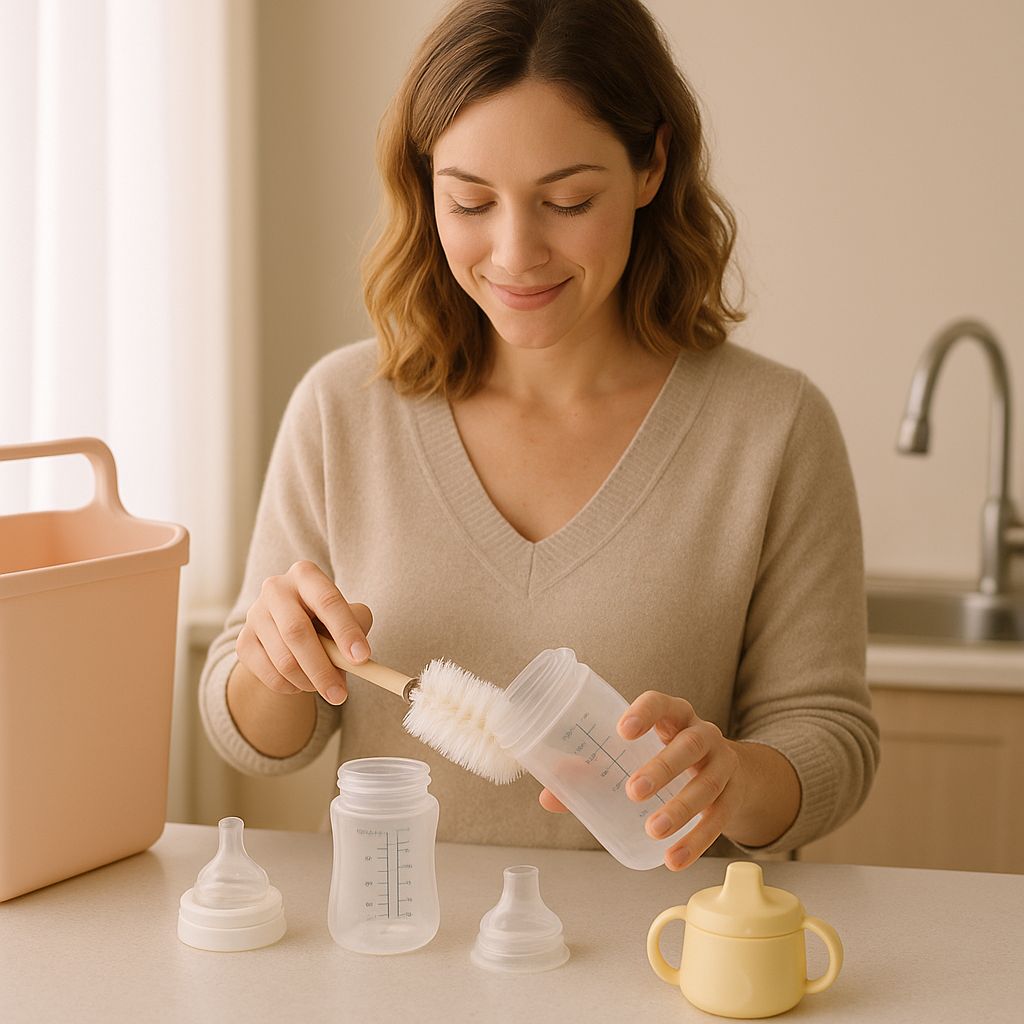
- Use a dedicated bottle brush and mild, fragrance-free dish soap.
- Scrub all surfaces, including inside bottles, nipples, and threads.
- Pay special attention to the nipple holes and bottle necks, which are prone to residue accumulation.
- Do not use sponges or brushes meant for general kitchen use, as these may harbor bacteria.
4. Rinse Well
- Rinse all tools under running water to remove soap and loosened debris.
- Residues of soap or cleaning agents may be harmful if ingested by infants.
5. Dry Completely
- Allow bottles and components to air-dry on a dedicated, clean rack or towel.
- Avoid drying with kitchen towels, which may introduce lint or bacteria.
- Ensure bottles are fully dry before storage to prevent mold and mildew growth.
Sterilization: When and How
Cleaning removes visible dirt and milk, but sterilization eliminates microorganisms. For newborns, especially those under three months, premature infants, or those with compromised immunity, sterilization is strongly recommended.
Methods of Sterilization
- Boiling: Submerge bottles, nipples, and feeding tools in boiling water for at least 5 minutes. Allow to air-dry on a clean rack. Ensure all parts are heat-resistant.
- Steam Sterilizers: Electric or microwave steam sterilizers are efficient and easy to use. Follow manufacturer's instructions for cycle duration and placement.
- Chemical Sterilization: Use clinically approved sterilizing solutions or tablets (e.g., sodium hypochlorite) as per instructions. Rinse thoroughly afterward to remove chemical residue.
- Dishwasher: Most dishwashers with a hot water cycle (≥60°C or 140°F) can effectively sanitize bottles. Ensure bottles and parts are labeled dishwasher-safe.
Frequency of Sterilization
- For newborns and vulnerable infants, sterilize feeding tools at least once daily.
- After each feeding, clean thoroughly; sterilize after exposure to illness or contamination.
- As baby grows (3+ months), frequency may decrease, but sterilization after illness remains essential.
Special Considerations for Formula vs. Breastmilk Feeding
Both formula and breastmilk residues support microbial growth, but formula may be more prone to bacterial contamination due to its composition. Sterilization is particularly crucial for formula-fed infants.
Cleaning Breast Pump Parts
- Disassemble all parts in contact with milk.
- Wash, rinse, and dry as with bottles.
- Sterilize daily, especially for newborns and premature infants.
- Consult manufacturer guidelines for specific cleaning instructions and compatibility with sterilization methods.
Safe Storage Practices
- Store cleaned and sterilized bottles in a closed, clean container or dedicated cabinet.
- Do not assemble bottles while damp; moisture promotes mold and bacteria.
- Inspect bottles regularly for cracks, cloudiness, or damage that may harbor bacteria.
- Replace nipples that show signs of wear, thinning, or sticky residue.
Common Mistakes to Avoid
- Using general kitchen sponges or brushes for bottle cleaning.
- Allowing bottles to air-dry in unsanitary environments.
- Storing bottles assembled while still damp.
- Skipping sterilization, especially during the newborn stage.
- Neglecting regular inspection and replacement of nipples and bottles.
Research and Recommendations
Clinical studies, including those published in the Journal of Infection Control, demonstrate that diligent cleaning and sterilization protocols are associated with reduced infection rates in bottle-fed infants. The CDC recommends exclusive use of dedicated bottle brushes and sterilization for infants under 3 months. The AAP stresses the importance of immediate rinsing and daily sterilization, particularly in hospital and daycare settings.
Cleaning Other Feeding Tools: Pacifiers, Spoons, Cups
- Pacifiers should be washed and sterilized daily, and after each drop or contamination.
- Spoons and cups for newborns should be washed and sterilized as with bottles.
- Inspect pacifiers for cracks and replace regularly.
Summary Table: Cleaning and Sterilization Steps
| Step | Action | Frequency |
|---|---|---|
| Disassemble | Remove all parts | Every use |
| Rinse | Under running water | Immediately after feeding |
| Wash | Soap and brush | Every use |
| Rinse | Remove soap | Every use |
| Dry | Air dry | Every use |
| Sterilize | Boil/steam/chemical | Daily for newborns |
| Store | Closed, clean container | After drying |
Conclusion
Proper cleaning and sterilization of baby bottles and feeding tools is a cornerstone of newborn care, rooted in clinical evidence and global best practices. Parents should follow expert-recommended steps to protect their infants against preventable infections and ensure safe feeding environments. Regular inspection, correct technique, and adherence to guidelines will promote healthy growth and minimize risks during this vulnerable stage.
References
- American Academy of Pediatrics. "Bottle Feeding Safety Guidelines" (2021).
- Centers for Disease Control and Prevention. "Infant Feeding and Hygiene" (2022).
- Journal of Infection Control. "Impact of Bottle Hygiene on Infant Health" (2020).
- Pediatrics. "Risks of Improper Bottle Cleaning" (2018).
- World Health Organization. "Safe Preparation, Storage and Handling of Powdered Infant Formula" (2007).