
How to Choose Educational Toys for Babies: A Comprehensive Guide for Parents
Choosing the right toys for your baby is more than just picking something cute or colorful. The toys you select can play a crucial role in your little one’s development—supporting sensory exploration, motor skills, language development, and cognitive growth. With a market flooded with options, it can be difficult to determine which toys are genuinely educational and suitable for your baby’s unique needs.
Why Are Educational Toys Important for Babies?
Educational toys are designed to stimulate one or more aspects of a child’s development. While all play has value, toys labeled as 'educational' offer purposeful opportunities for babies to practice key skills, such as grasping, stacking, sorting, and problem-solving. These experiences help lay the groundwork for future learning and emotional resilience.
Understanding Your Baby’s Developmental Stages
Babies grow and change rapidly during the first year of life. Understanding your baby’s developmental stage is vital when choosing appropriate toys:
- 0-3 Months: Newborns are drawn to high-contrast colors, gentle sounds, and objects that encourage visual tracking.
- 3-6 Months: Babies begin to reach for objects, grasp, and explore with their mouths. Toys that crinkle, rattle, or have different textures are ideal.
- 6-9 Months: Sitting, rolling, and crawling start. Look for toys that encourage movement and cause-and-effect play (e.g., pop-up toys, rolling balls).
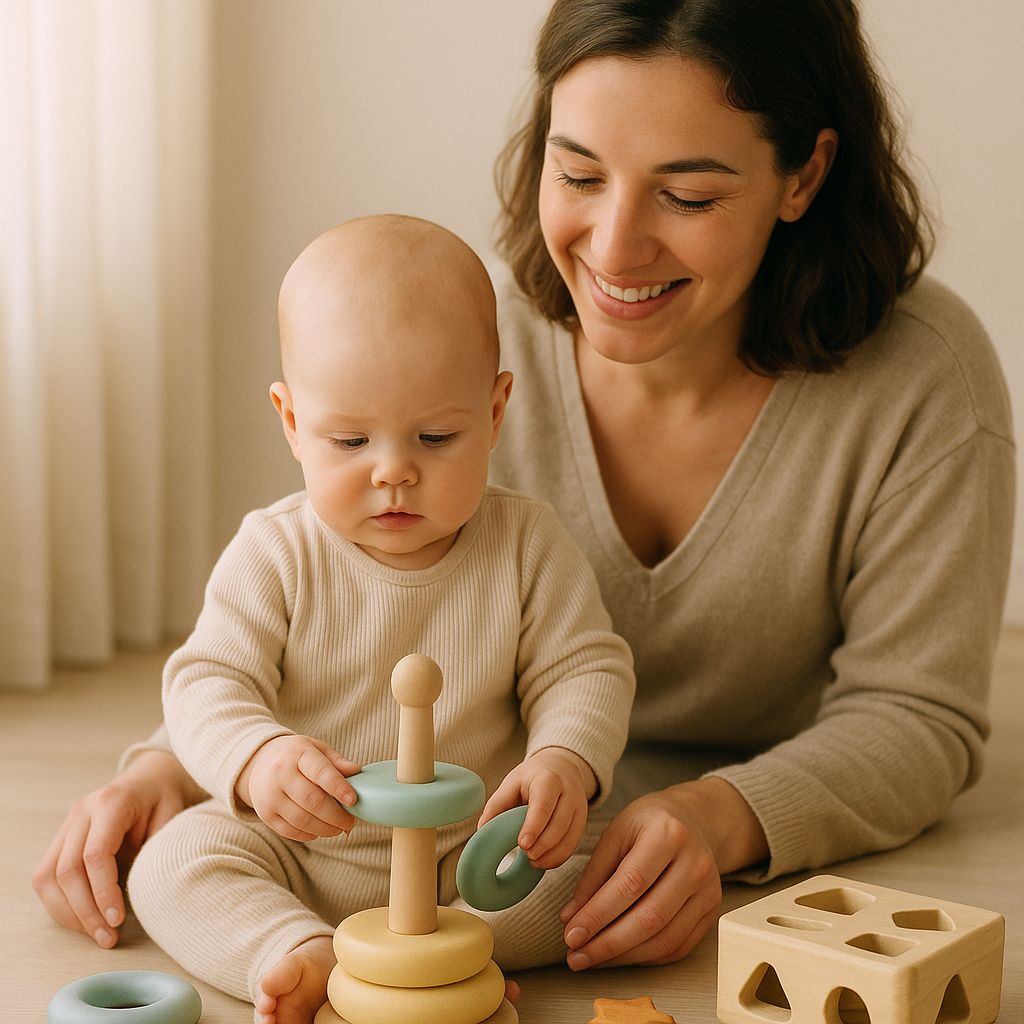
- 9-12 Months: Babies love to bang, stack, and sort. Simple shape sorters and stacking rings encourage problem-solving and fine motor skills.
What Makes a Toy Educational?
Not all toys labeled as 'educational' live up to the name. Here’s what to look for:
- Promotes Active Engagement: The best toys encourage babies to explore, manipulate, and interact rather than passively watch or listen.
- Supports Developmental Skills: Choose toys that nurture sensory, motor, language, or cognitive skills appropriate for your baby’s age.
- Open-Ended Play: Simple toys with multiple uses foster creativity and problem-solving.
- Safe and Durable: Materials should be non-toxic, easy to clean, and free from small parts.
Key Factors to Consider When Choosing Educational Toys for Babies
- Age Appropriateness
Always check the manufacturer’s recommended age range, but also consider your baby’s individual developmental pace. A toy that’s too advanced may frustrate your baby, while one that’s too simple may not hold their interest. - Safety
Look for toys that are free from small parts, sharp edges, or toxic materials. Ensure toys are sturdy and can withstand chewing, dropping, or throwing. Certifications such as ASTM, CPSIA, or EN71 can indicate compliance with recognized safety standards. - Materials and Construction
Babies explore primarily with their mouths. Opt for toys made from BPA-free plastics, untreated wood, organic cotton, or food-grade silicone. Avoid painted or varnished toys unless labeled non-toxic. - Sensory Stimulation
Toys that provide a variety of textures, sounds, and colors stimulate your baby’s senses and encourage exploration. Examples include soft cloth books, textured balls, and rattles. - Developmental Value
Consider what skills a toy helps develop—does it encourage grasping, stacking, crawling, or problem-solving? Look for toys that grow with your baby and offer increasing challenges. - Ease of Cleaning
Babies’ toys inevitably end up in their mouths. Choose toys that are easy to wash and disinfect.
Top Types of Educational Toys for Babies
Below are some of the most beneficial categories of educational toys for babies, along with examples and tips for use.
1. Sensory Toys
Examples: Soft fabric books, textured balls, crinkle toys, rattles, and teethers.
These toys stimulate touch, sight, and hearing. Sensory play is crucial for brain development and helps babies learn about the world around them.
2. Cause-and-Effect Toys
Examples: Pop-up toys, busy boards, musical instruments, and rolling balls.
When babies realize their actions make something happen (e.g., pressing a button causes a song to play), they develop an understanding of cause and effect, which is foundational for problem-solving skills.
3. Manipulative and Fine Motor Toys
Examples: Stacking rings, shape sorters, nesting cups, and bead mazes.
These toys help strengthen hand-eye coordination, dexterity, and finger strength—critical for later skills like writing.
4. Gross Motor Toys
Examples: Soft balls, push-and-pull toys, crawl-through tunnels, and activity gyms.
Gross motor toys encourage movement, balance, and core strength, facilitating physical milestones like crawling and walking.
5. Language and Cognitive Toys
Examples: High-contrast board books, interactive sound books, and simple picture cards.
Reading with your baby and exposing them to words, pictures, and sounds builds early language and cognitive skills.
Tips for Maximizing the Value of Educational Toys
- Rotate Toys Regularly: Keep a few toys out at a time and switch them every week or two. This maintains your baby’s interest and encourages deeper play.
- Engage with Your Baby: No toy can replace the value of parental interaction. Play alongside your baby, narrate what you are doing, and follow their cues.
- Less Is More: Babies thrive with fewer, high-quality toys rather than an overwhelming abundance of options. Focus on toys that encourage exploration and imagination.
- Follow Your Baby’s Interests: Notice which toys your baby returns to and how they use them. Adapt future choices to align with their preferences and developmental needs.
Common Mistakes to Avoid When Choosing Baby Toys
- Choosing toys with too many bells and whistles, which can overstimulate or distract babies.
- Buying toys that are above or below your baby’s developmental stage.
- Neglecting safety, especially with hand-me-down or older toys that may not meet current standards.
- Relying too heavily on electronic or screen-based toys; real-world manipulation is best for development.
Budget-Friendly Tips for Selecting Educational Toys
- You don’t need to buy the most expensive toys; everyday household items (like measuring cups or fabric scraps) can offer great learning experiences.
- Swap toys with other parents, visit local toy libraries, or buy second-hand (checking for recalls and wear).
- DIY simple toys, such as sensory bottles, fabric squares, or homemade shakers, always ensuring safety and durability.
Conclusion: The Power of Play in Early Development
Choosing educational toys for your baby is about more than labels or price tags. It’s about offering safe, age-appropriate, and engaging opportunities for your child to learn and explore. By understanding your baby’s developmental needs and focusing on quality, open-ended play, you foster their growth and lay the foundation for lifelong learning.
Remember, the best toy is one that is played with alongside a loving caregiver. Your attention, encouragement, and participation are what truly make any toy educational. Happy playing!
Frequently Asked Questions
- What are the safest materials for baby toys?
- The safest materials for baby toys are non-toxic, BPA-free plastics, untreated wood, 100% organic cotton, and food-grade silicone. Always check for certifications and avoid toys with small parts, sharp edges, or harmful chemicals.
- How many toys should my baby have at one time?
- It’s best to offer a few toys at a time—too many can overwhelm your baby. Rotating toys every few weeks keeps playtime fresh and encourages deeper engagement with each item.
- When should I introduce educational toys to my baby?
- You can introduce simple educational toys as early as the first few months, focusing on sensory stimulation and motor skill development. Adapt the complexity of toys as your baby grows and reaches new milestones.