
Best Baby Cribs: Features to Look For
Welcoming a new baby is a joyful and overwhelming experience. Among the most important decisions for expectant and new parents is choosing the perfect crib—a safe, cozy haven where your little one will spend countless hours sleeping, napping, and growing. With a seemingly endless array of options on the market, how do you discern which crib truly meets the needs of both your baby and your family?
Why the Right Crib Matters
Your baby's crib is more than just a piece of furniture; it's a crucial investment in their safety and comfort. A well-chosen crib provides a secure environment while complementing your nursery's style and adapting to your family's evolving needs. This guide will help you understand the essential features of the best baby cribs, so you can make an informed, confident decision.
1. Safety First: Crib Safety Standards and Certifications
Above all, safety is paramount. The best baby cribs adhere to rigorous safety standards set by organizations like the U.S. Consumer Product Safety Commission (CPSC) and ASTM International. Look for certification from the Juvenile Products Manufacturers Association (JPMA), which indicates the crib has passed independent testing for structural integrity and chemical safety.
- No drop-side rails: Drop-side cribs are banned in the U.S. due to safety hazards.
- Slat spacing: Slats should be no more than 2 3/8 inches apart to prevent your baby’s head from getting stuck.
- Sturdy hardware: All screws and bolts should be secure with no missing or loose parts.
- Non-toxic finishes: The crib’s finish should be free from lead, phthalates, and other harmful chemicals.
2. Convertible Cribs: Longevity and Value
Convertible cribs have become increasingly popular with modern families. These cribs can transform into toddler beds, daybeds, and sometimes even full-sized beds, adapting as your child grows. While typically more expensive up front, convertible cribs can save money in the long run by eliminating the need for additional beds.
When considering a convertible crib, check:
- Conversion kits: Are they included, or must they be purchased separately?
- Ease of assembly: Can you convert the crib without professional help?
- Sturdiness in each form: The crib should remain stable during and after conversion.
3. Adjustable Mattress Heights
Most high-quality cribs offer two to four mattress height settings. This feature is essential for both safety and convenience:
- Newborn stage: Set the mattress higher for easy access to your infant.
- Sitting and standing stages: Lower the mattress as your baby grows to prevent climbing or falling out.
Adjustable heights make nighttime soothing and diaper changes easier, while keeping your curious toddler secure as they become more mobile.
4. Crib Mattress Support and Compatibility
The mattress support system is the foundation of your baby's sleep environment. The best baby cribs feature robust, adjustable mattress support platforms—often made from metal or strong wooden slats.
- Firmness: The support should not sag or flex.
- Standard size: Ensure the crib fits a standard-sized crib mattress snugly, with no gaps larger than two fingers between the mattress and crib sides.
Always use a crib mattress that meets safety standards and is designed for infants. Avoid soft, plush mattresses or adding extra padding, which can increase SIDS risk.
5. Eco-Friendly and Non-Toxic Materials
Parents are increasingly concerned about indoor air quality and reducing their baby’s exposure to toxins. Look for cribs made from sustainably sourced hardwoods, such as beech or maple, and those finished with non-toxic, water-based paints or stains. Certifications to look for include:
- GREENGUARD Gold: Indicates low chemical emissions for improved indoor air quality.
- FSC Certified Wood: Ensures the wood is responsibly harvested.
These eco-friendly choices promote a healthier nursery and peace of mind.
6. Size, Style, and Nursery Fit
Cribs come in various styles, from classic to modern, and in different sizes to fit every space:
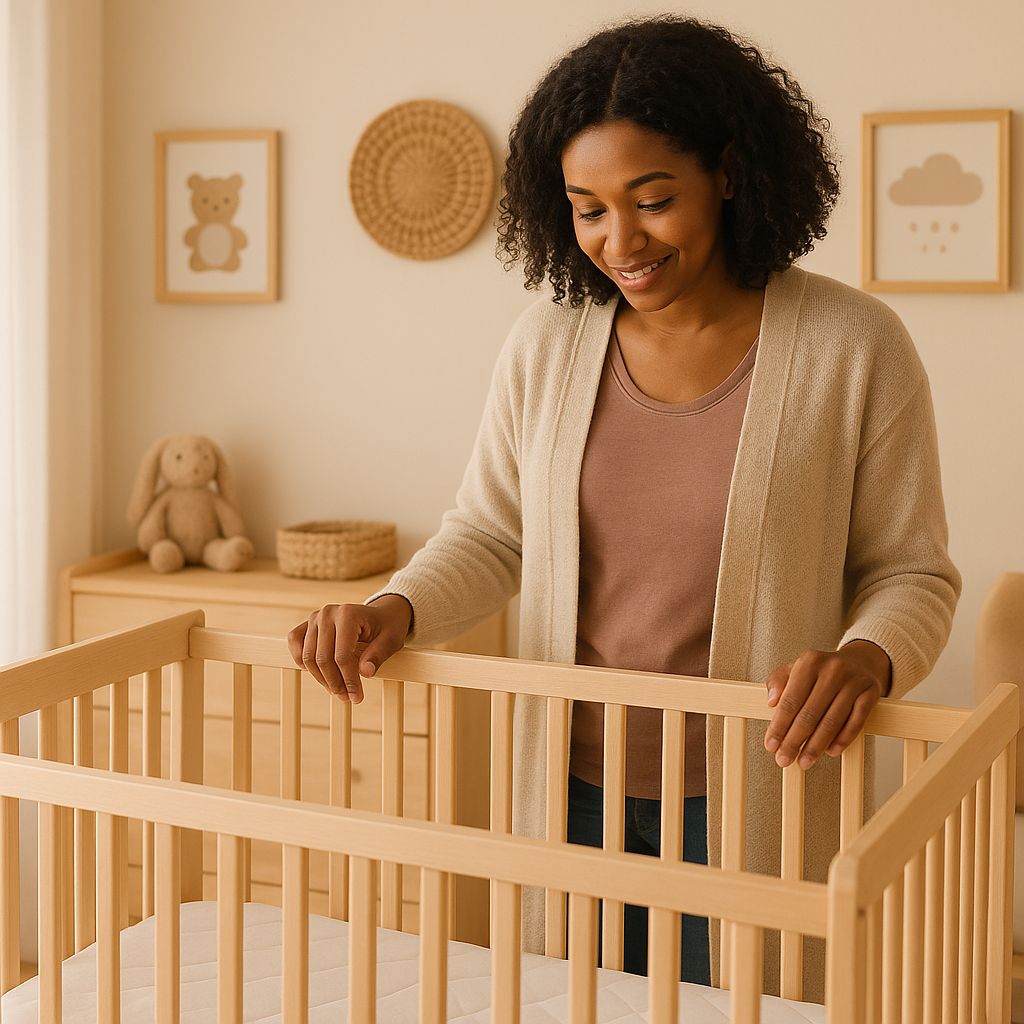
- Standard cribs: Most cribs are about 52 x 28 inches, fitting standard crib mattresses.
- Mini cribs: Ideal for smaller nurseries or shared rooms; requires a mini crib mattress.
- Portable cribs: Often foldable or on wheels for easy movement and travel.
Choose a design that complements your nursery décor and fits your family’s space. Some cribs feature built-in storage drawers or changing tables, offering extra functionality for compact rooms.
7. Ease of Assembly and Maintenance
Read reviews and product details to ensure the crib is simple to assemble, with clear instructions and all necessary hardware included. Consider cribs with:
- Removable, washable components: Such as teething rails or mattress covers.
- Durable finishes: Resistant to scratches, teeth marks, and everyday wear.
Check for warranties and customer support options in case you need replacement parts or assistance.
8. Price and Budget Considerations
Baby cribs range widely in price, from budget-friendly models under $150 to designer cribs over $1,000. While cost is a factor, remember that safety and durability should never be compromised. Look for cribs that provide the best value for your budget, considering long-term use and included features.
Don’t forget to factor in the cost of a quality crib mattress, conversion kits (if needed), and bedding accessories.
9. Popular Crib Styles and Trends
Current trends in nursery furniture include:
- Mid-century modern designs: Clean lines and neutral colors.
- Rustic or farmhouse styles: Natural wood finishes and vintage details.
- Convertible and minimalist cribs: Versatile, space-saving, and easy to accessorize.
Whatever your style, always prioritize safety and practicality over aesthetics.
10. What to Avoid When Buying a Crib
- Secondhand cribs: Use with caution; older models may not meet current safety standards.
- Drop-down sides: Banned due to injury risks.
- Missing or broken parts: Never use a crib with damaged or incomplete components.
- Improper mattress fit: Gaps between the mattress and crib sides are hazardous.
Expert Tips for Choosing the Best Baby Crib
- Research brands and read reviews: Look for consistent positive feedback regarding safety, ease of use, and durability.
- Check for recalls: Visit the CPSC website to ensure your chosen crib model hasn’t been recalled.
- Inspect before assembly: Verify all parts are included and intact.
- Register your crib: So you’ll be notified in case of recalls or safety notices.
Conclusion: Creating a Safe and Cozy Nursery
Choosing the right crib is a foundational step in preparing for your baby’s arrival. By focusing on safety certifications, convertible features, adjustable mattress heights, non-toxic materials, and a style that fits your space, you’ll create a nursery that’s as functional as it is beautiful.
Remember, the best baby crib is one that meets rigorous safety standards, suits your family’s lifestyle, and provides a comfortable, nurturing environment for your child to rest and grow. Invest the time to research, and you’ll enjoy peace of mind knowing your little one has the best start possible.
Frequently Asked Questions
- What safety certifications should a baby crib have?
- Look for cribs certified by the Juvenile Products Manufacturers Association (JPMA) and ensure they meet ASTM International and U.S. Consumer Product Safety Commission (CPSC) standards.
- Is a convertible crib worth the investment?
- Yes, convertible cribs can transition from a crib to a toddler bed, and sometimes even to a full-sized bed, offering great value and longevity.
- How do I know if a crib is made from non-toxic materials?
- Check manufacturer specifications for non-toxic finishes, GREENGUARD Gold certification, or details about sustainably sourced wood and safe paints or stains.
- Can I use a secondhand crib safely?
- Secondhand cribs should be used with caution. Ensure they comply with the latest safety standards, aren't recalled, and haven't been modified. Avoid older models with drop sides.