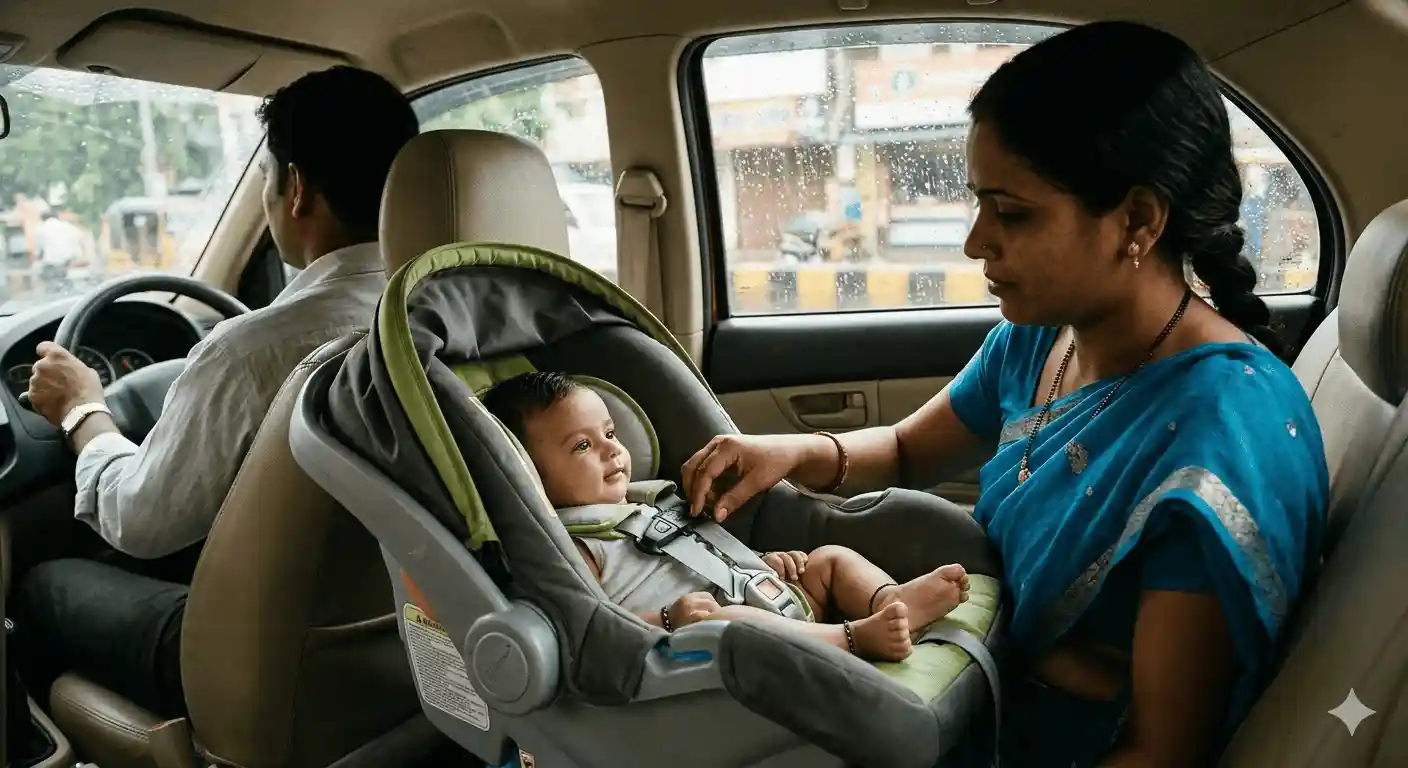

In India, car seat use remains low — a reality with serious consequences given the country's road safety statistics. Many parents are aware they should use one but are uncertain about which type, how to install it, or when to transition between stages. This guide covers all of it.
Why Car Seats Matter More Than You Think
An infant car seat, correctly used, can reduce infant death in car accidents by up to 71%. That statistic is worth sitting with. Your lap is not a safe restraint system — in a crash at even moderate speed, the force generated exceeds what any adult can hold against. A properly installed car seat is your baby's most important piece of safety equipment.
Types of Car Seats by Age
Infant seats (rear-facing only): for newborns to approximately 9–13kg. Convertible seats: can be used rear-facing for infants and then forward-facing as they grow. Combination/booster seats: for toddlers and older children. For the first year of life, rear-facing is always safer — it distributes crash forces across the entire back, head, and neck.
An infant car seat with a compatible base that clicks into your stroller frame creates a travel system — baby moves seamlessly from car to stroller without being disturbed. For the first 6 months especially, this convenience is significant for outings.
How to Install Correctly
Incorrect installation is far more common than most parents realise. The seat should not move more than 1 inch in any direction when gripped at the belt path. The harness chest clip should be at armpit level. The harness should be snug — you should not be able to pinch fabric at the shoulder. After every installation, do the inch-of-movement test.
Rear-Facing: Keep Them There Longer
The recommendation from global paediatric safety bodies is to keep children rear-facing as long as the car seat allows — not just until they turn 1 or reach a certain weight. Modern rear-facing seats support children up to 18kg. Rear-facing is significantly safer in frontal crashes, which are the most common type.
Common Mistakes to Avoid
Installing the seat at the wrong recline angle for a newborn (should be 30–45 degrees for infants who cannot hold their heads up). Using a second-hand seat of unknown history. Dressing your baby in thick coats under the harness (it prevents snug fit — dress them warmly, then put a blanket on top). Transitioning to forward-facing too early.
Pair your car seat with a car seat travel bag for checked luggage when flying — it protects the seat from baggage handling damage that you might not see but that could compromise its structural integrity in a crash.
The Law in India
As of 2019, Indian Motor Vehicles Act amendments require car seats for children under 4 years, with provisions for older children using appropriate restraints. Awareness is growing, and correct seat use is both a legal requirement and the most powerful safety decision you can make for your child every time you drive.
❓ FAQs
Q: When should my baby start using a car seat in India?
A: From the very first car journey home from the hospital. There is no safe alternative to a correctly installed infant car seat, regardless of journey length.
Q: Can I use a second-hand car seat?
A: Only if you know the full history — that it has never been in a crash, is not expired (most seats have a 6-year lifespan), and has all original parts. When in doubt, buy new.
Q: How do I know if my car seat is installed correctly?
A: Do the inch-of-movement test: grip the seat at the belt path and push side-to-side and forward-backward. Movement should not exceed 1 inch. The seat should also be at the correct angle for your baby's age.
Q: When can my baby face forward in the car seat?
A: Ideally, keep them rear-facing until they reach the maximum weight limit of their rear-facing seat, not just until age 1. Most quality convertible seats support rear-facing to 18kg.
Q: Is it legal to use a car seat in the front seat?
A: In most countries, placing a rear-facing car seat in the front is prohibited if the airbag is active — it can cause fatal injury. If you must use the front seat, disable the passenger airbag. Check your car's manual and local regulations.